What was your role when the Nazi’s came? What did your country do? What would you do?
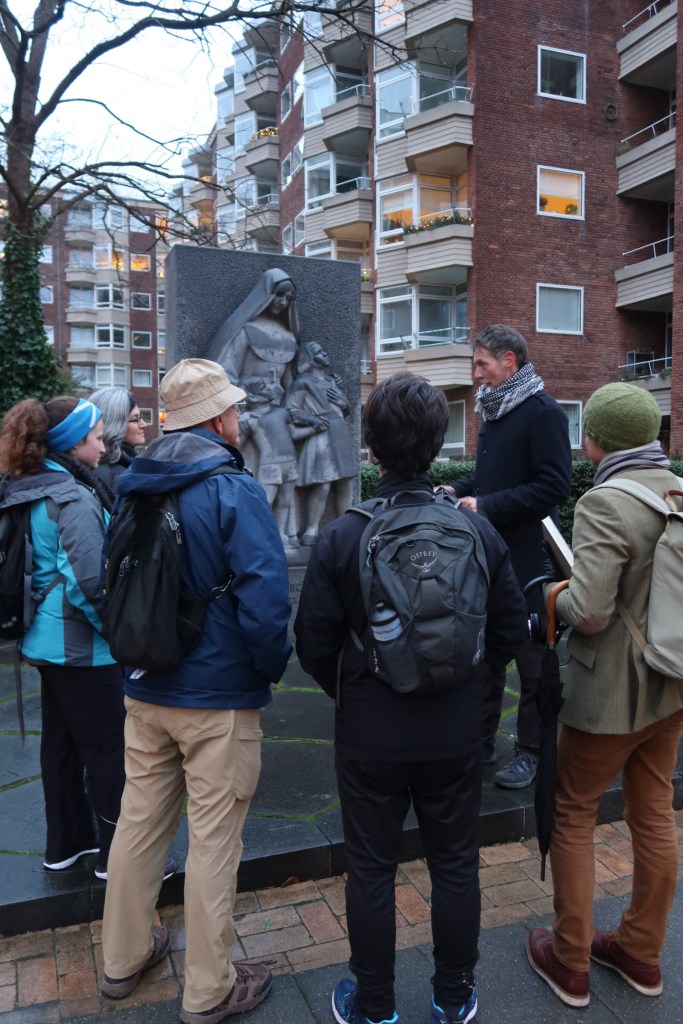
As we walked the streets of Copenhagen early this morning with our high school history teacher turned tour guide, Mads Kristian, we asked and were asked these and other questions.
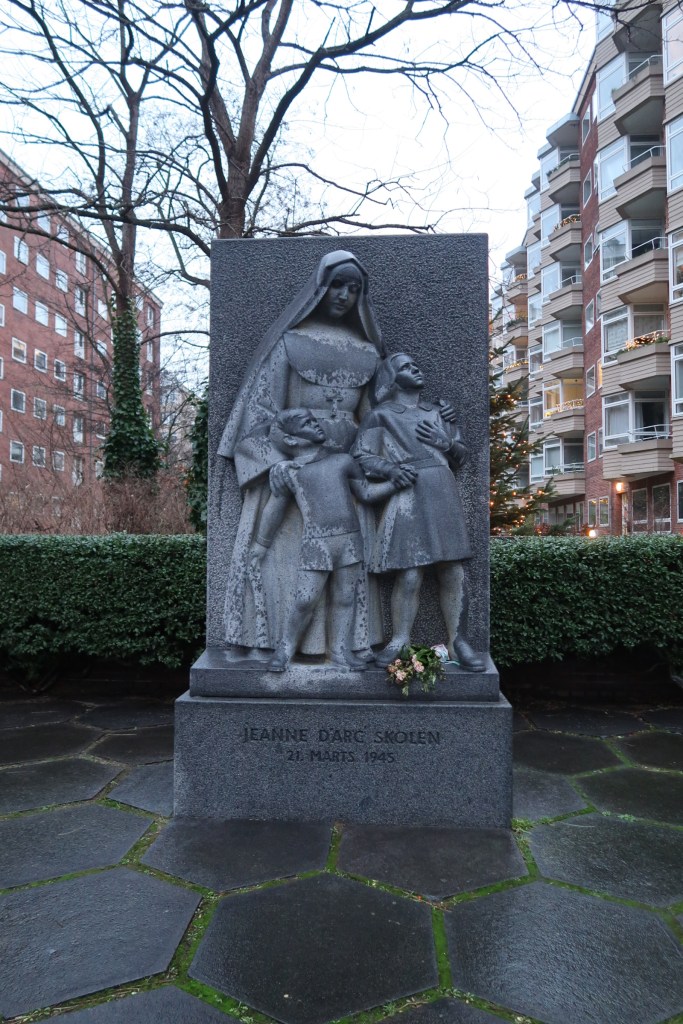
We started the tour at sunrise at the memorial of the worst civilian disaster during the war, an errant bombing run on top of Jeanne d’arc Catholic School for poor city kids. Over 18 nuns and 86 students perished March 21, 1945, just less than two months before liberation. The British bombers intended target was the Gestapo headquarters where 26 Danish Resistance fighters were imprisoned. “Operation Carthage” was and is seen as a great success with 18 Resistance fighters being freed, Gestapo headquarters and files destroyed, but 8 Resistance leaders died and then there was the leveling of innocents at the school house.
During WW II, Denmark was seen at best neutral and at worst a colloborating country with Germany. It surrendered in Sept 1940 after only a few hours of resistance and for many reasons was one of the only countries that kept its King and Parliament functioning alongside the Nazi command structure. It was known as the “cream front” due to its fairly easy posting.
Mads had family members that grew up in that poor neighborhood and had gone to that school, but all that remains of their alma mater is a statue of two children looking up into the sky as the bombers came and a nun in full habit holding their shoulders protectively.
Down the boulevard we stopped to see large concrete blocks bolted flat onto what we thought was just the sidewalk. Then we noticed the fading Royal Seal and Josiah correctly guessed its true purpose as a bomb shelter. There enough built to house over 100,000 residents.
Around the corner, he pointed to a basement apartment where he had lived. Across the street there had been a large transistor factory that was successfully blown up by the Danish resistance. This being Copenhagen, the plan of course included a bike, a cargo bike specifically, loaded down with explosives and it was also audio recorded onto a gramophone. This bombing, another sabotage raid of a rifle factory, and other smaller activities by the resistance helped convince the Allies to treat Denmark as a friend rather than a foe at the end of the war.
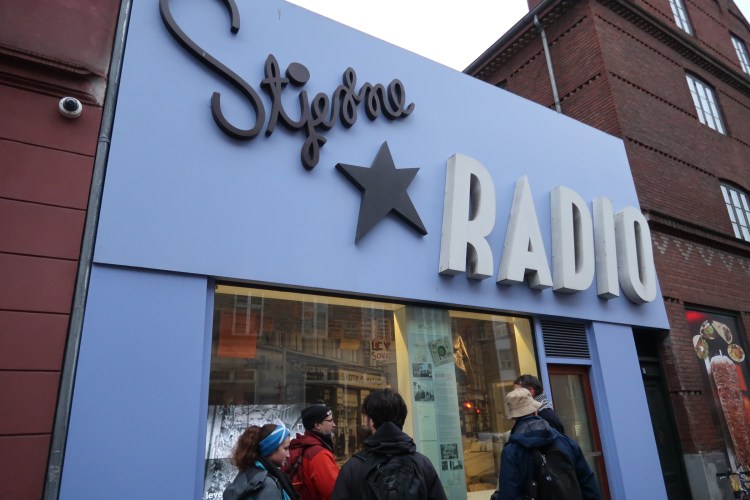
One storefront, the Star Radio Station, has been kept in the same condition as it was when it openly defied the Occupiers, even holding Resistance meetings in the back rooms. They played American and British music and many resistance members took on English nicknames. We stopped for coffee near one memorial plaque to a Resistance fighter “Mix” who was shot in a public square as he tried to escape custody.
There were also those partial to the Germans and they too assasinated others, like resistance sympathizers, and even bombed a movie house to pay back the film operator who they believed had purposely damaged a German film.
At one stop we walked through a storefront into the private square in back where they have refurbished what was a big dance hall that was also known for playing American standards. They would change to the appropriate German songs when alerted by their spotters. Mads shared a story of his Uncle Henry who was arrested after refusing to give up his seat to returning Danish Army members who had joined the Nazi cause. “I at least took down a few prior prior to being arrested.”
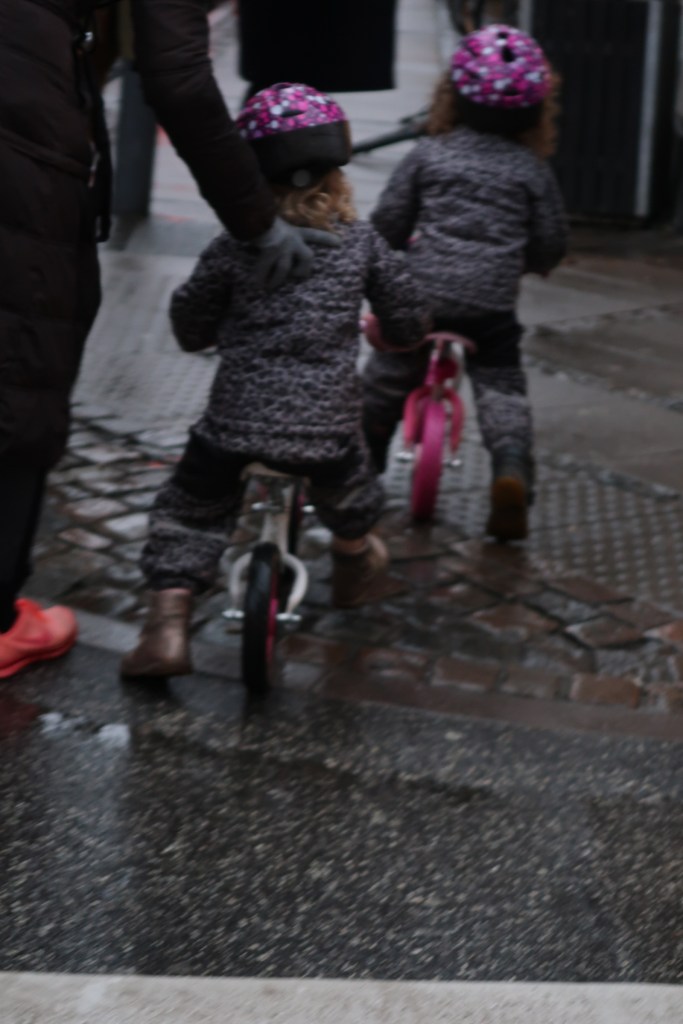
All of this past history was being told as current history was being written. One parent hurried by after her two 4-year olds who careened by on their mini bikes wearing the very practical and common snow suits. We walked through a playground named the “shooting grounds” (not kidding) due to it’s long history of an upper class rifle club that operated inside the City through the war and up into the 1950’s. For safety reason they erected an enormous ornate red brick wall, which we mistook for a cathedral’s front door. Now it has wooden parrot kids slide in honor of the clubs now famous annual ritual which was aptly named, “shoot the parrot.” The winner was treated to free drinks for the year until next year’s winner. This is now a common saying used to wish someone good luck.
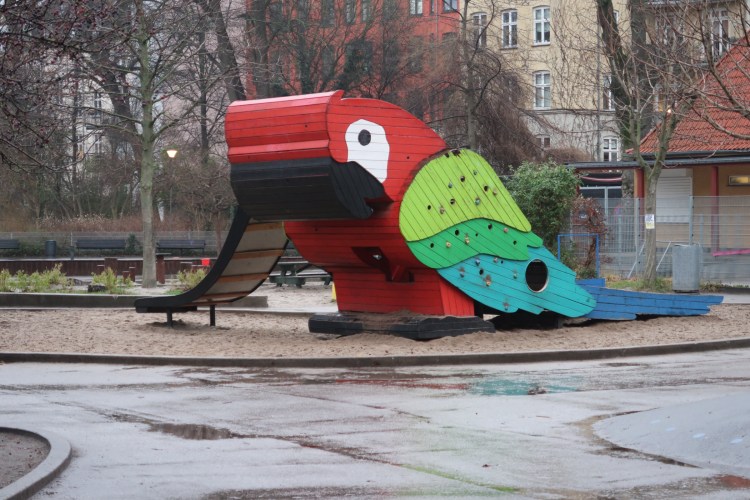
Doesnt it look like bullet holes in that climbing wall on the side?
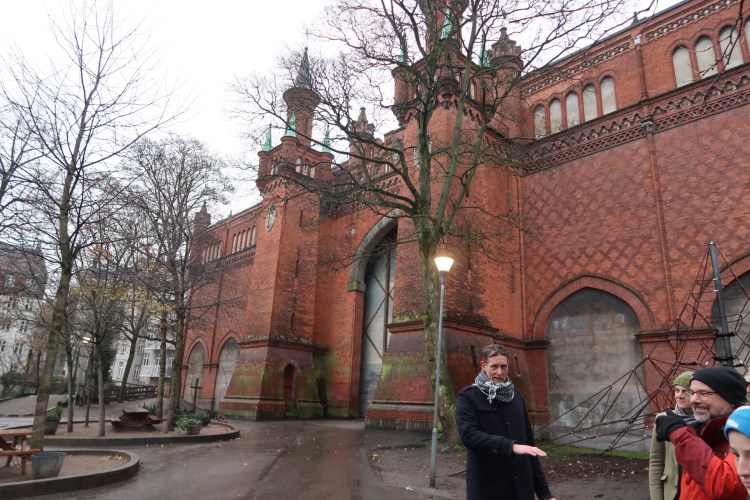
We confirmed it was not a church as we went through the opening onto the open street on the other side
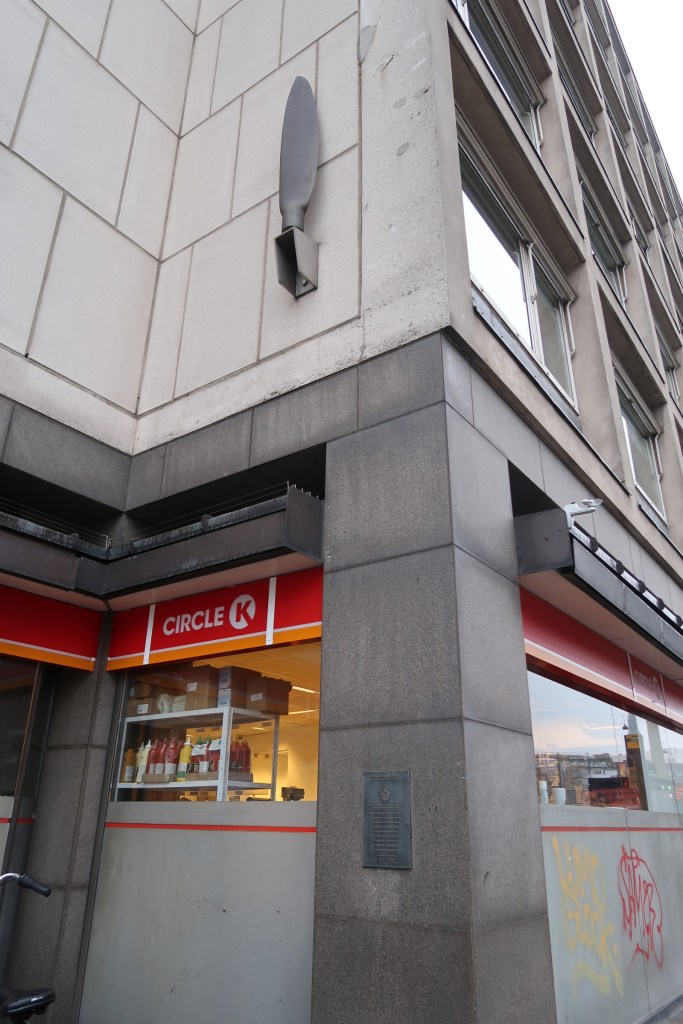
We ended the tour at the site of the reconstructed building which housed the Gestapo headquarters. It is in the heart of downtown, a half-block from the famous maritime area, nyhavn, which we had just visited two days prior. Tourists and locals walk by the mini-mart on the first floor and if you look up you see a propellor mounted on the side of the building and the pilots names on another small plaque in honor of this historic bombing raid. Next to the office building’s front door are the names of those Resistance fighters who lost their lives.
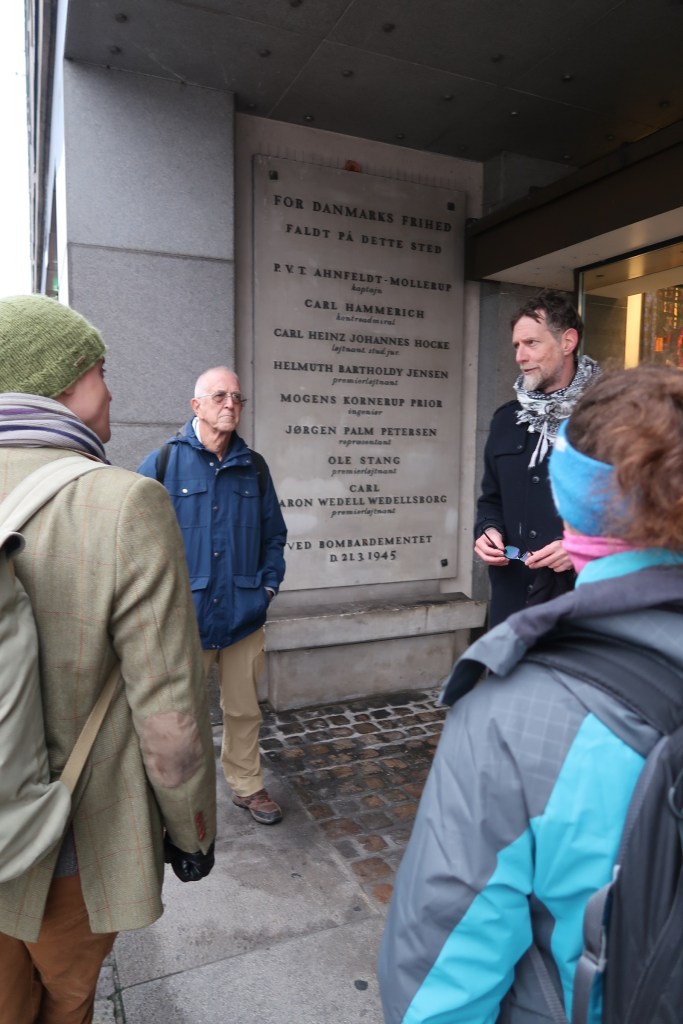
We finished up with a few final stories -there are endless stories of bravery – such as how one German officer in coordination with a few Danes, evacuated the local Jews safely to Sweden before they were rounded up by the SS. We go by the movie theater, which Josiah and I just watched the last Star Wars installment, and heard how it had always been a movie theater and club. The day after liberation the Club formerly known as “The German Club” was quickly renamed “The British Club.” There was the lawlessness at the end of the war as many claimed more significant roles in the Resistance and falsely claimed their neighbors as collaborators to settle old scores.
The stories and histories layered upon each other and once again I was left wondering about who is telling whose stories? How do these stories survive and how is the truth found between all of these variations.
I wish that you all may continue to tell your own stories and for good measure “May you also shoot the parrot.”

 Siri and David Adventures