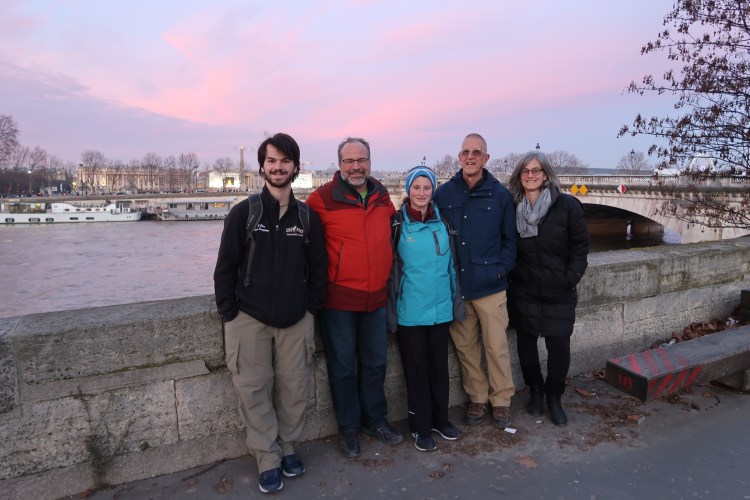

Our last day in Paris was a slower day to enjoy the city. Started off with a morning walk along the Tuileries as the the sun rose, a nice breakfast in our local cafe (see earlier post), then as everyone woke up we walked along the fast flowing and partially flooded Seine.
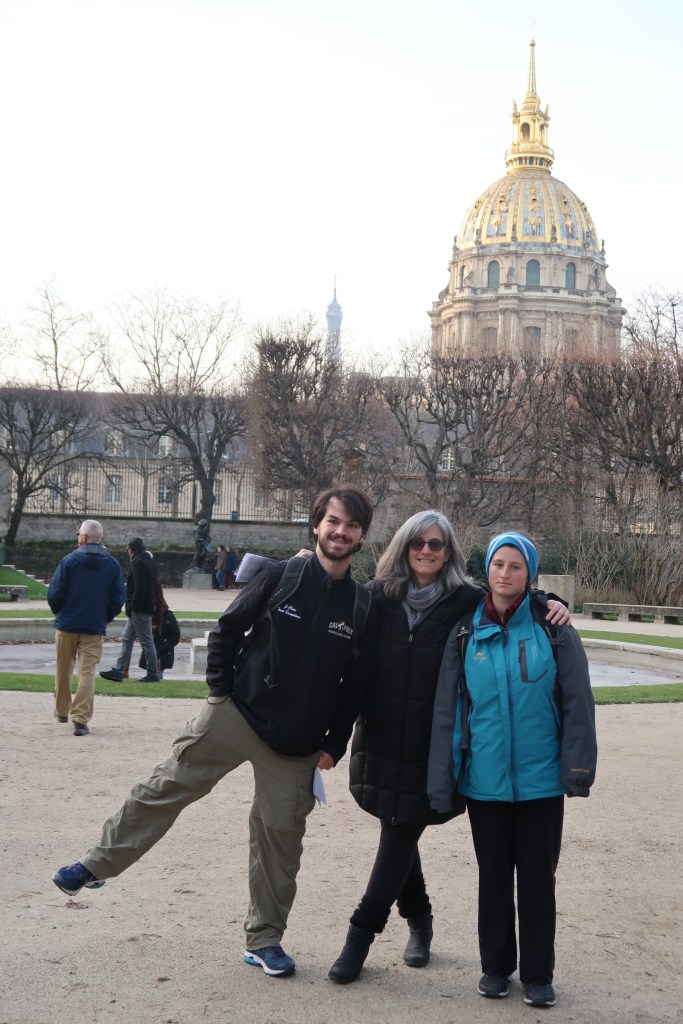
We stopped at the Hôtel de Invalides and visited the Musée de l’Armée where we learned France’s view of the World Wars. Met up with our former exchange students, Lola and Olatz for lunch, then headed over to the Musèe de Rodin, and walked back along the Seine while the sun set. We finished up our final day playing cards, eating snacks and drinking a nice bottle of French wine and tried out our Angelina’s macrons.
Along the way we met up with what seemed like a senior’s social group on the front lawn of the Hôtel des Invalades playing a competitive game of pétanque or boule, like bocce ball but with smaller metal balls. They would start by throwing the smaller ball, the cochonnet or pallino, from a designated circle they placed on the hard packed dirt ground. They would only throw it about 8 yards. I found out later this allowed one to strategically knock your opponent’s ball by landing on it, which they did several times. We had a nice chat as the first person had fun by telling us the way to win was to be very far away from the cochonnet, which is where his ball had landed.
The French version of the World Wars starts in 1871, with the military loss to Germany and loss of territory. Then it is a continuous story of the French embracing and modernizing their military, creating alliances and hardening borders, then moving onto other important issues, military defeats and some victories, and starting again. It was most interesting to see they didn’t view the artificial breaks we create in our retelling of World I and II. They do mention the importance of the Americans in both wars and note how we had the luxury of time, often six months or more to mobilize our armed forces, whereas the French seemed to have had the Germans immediately invading their country.
It was harder to fully understand how they dealt with the differences of the de Gaulle resistance French forces and the Vichy government, but they had a full section on Charles de Gaulle’s personal story. Always more to understand when learning from another’s perspective.
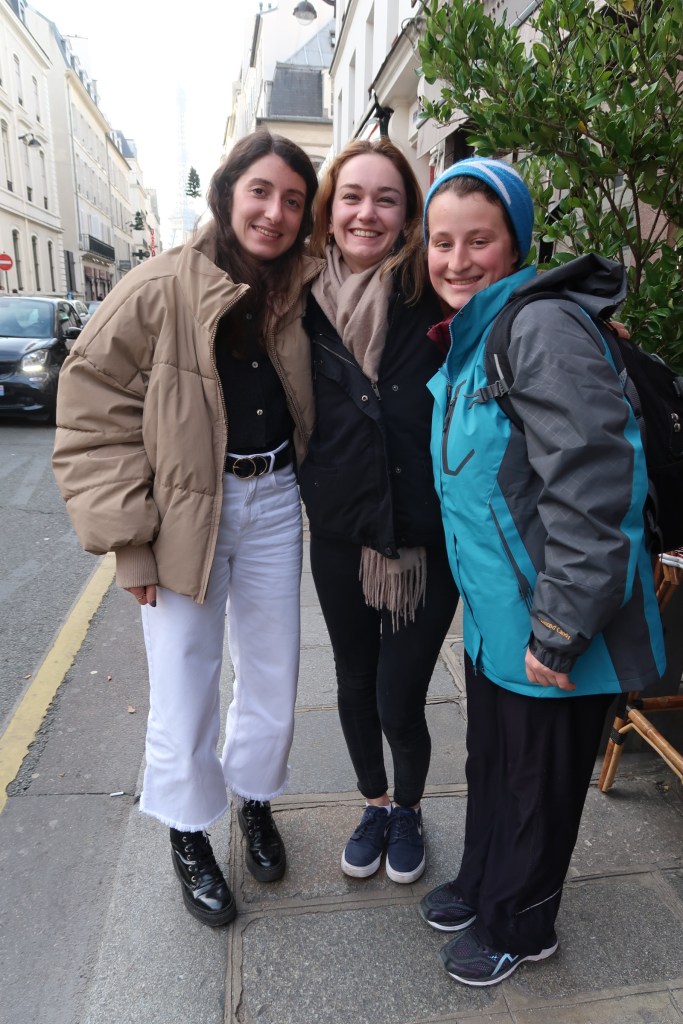
Samara had a wonderful time reconnecting with our former exchange students Lola and Olatz, who stayed with us only a few weeks eight years ago, but the connection is still there. Olatz flew in from Bilbao Spain and Lola had to deal with local transportation issues to meet us all weekend. We found out that Lola met her boyfriend on Tinder and that she wants to be a journalist to tell the real news stories going on. Olatz is going back to get her Masters Degree in Business marketing. Samara has already started to plan for their next rendezvous, which looks to be sometime in 2021 for a seven day horse ride in Ireland. We say goodbye to our friends till next time.
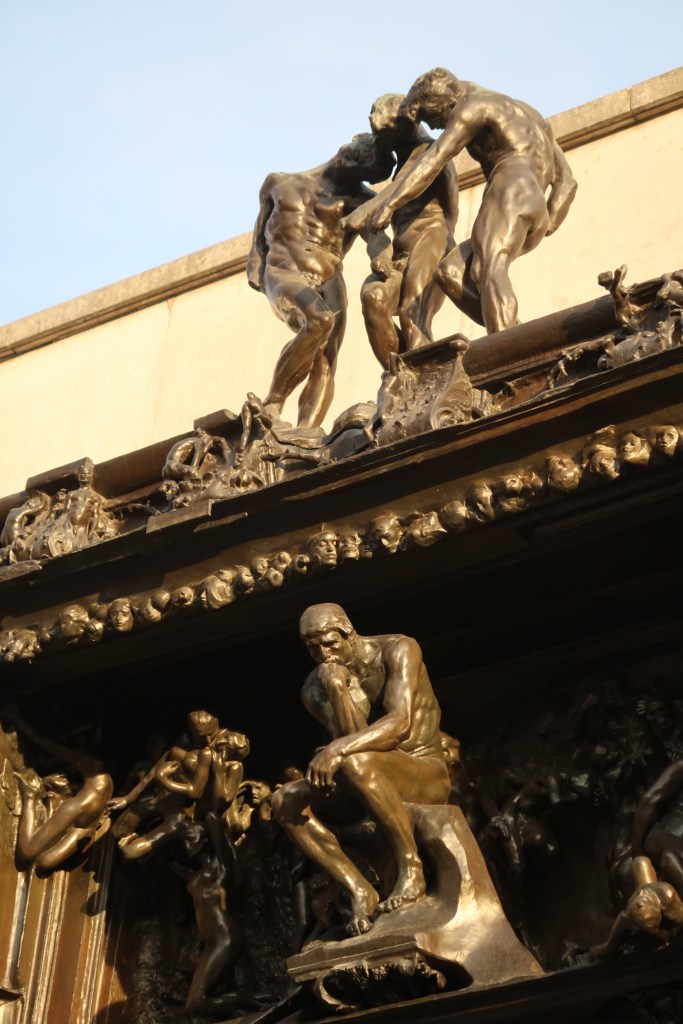
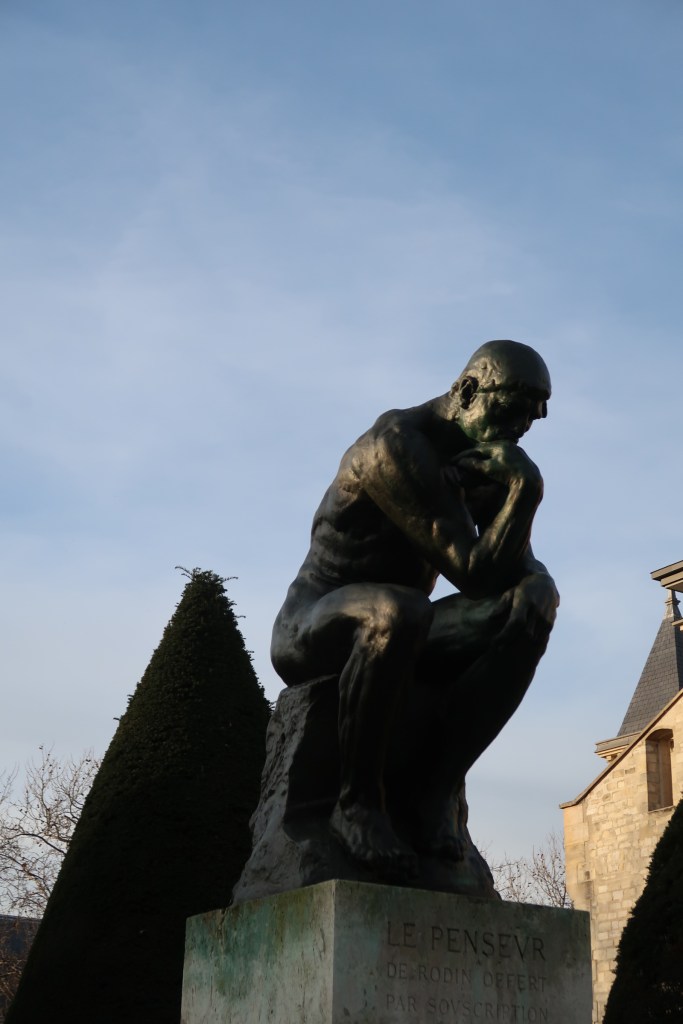
Our last museum is at Rodin’s workshop during his final years. As we walk the grounds, I am reminded of Siri and I celebrating our graduation with friends at Stanford’s Rodin Sculpture Garden. We see the original Thinker and Gates of Hell and other amazing works where Rodin actually lived. As the sun begins to set, we say goodbye for now to our last Paris museum stop.
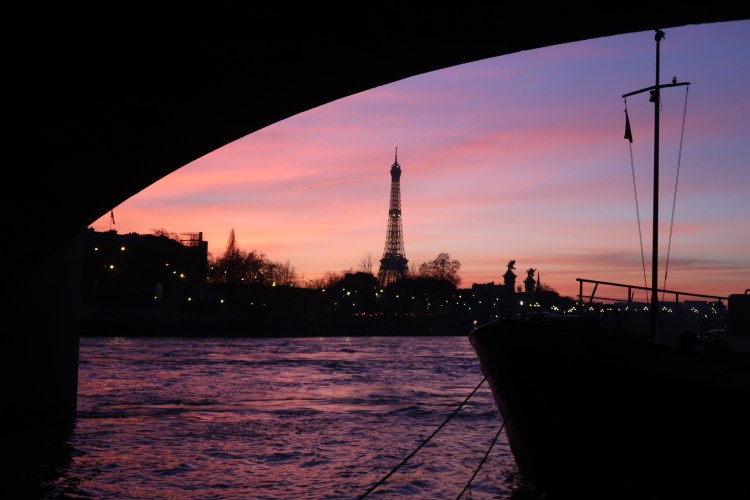
We walk along the Seine and are treated to our own spectacular light show as the sun sets on this spectacular city. Josiah stays behind to take even more photos as we head back to our apartment. A quick stop to the local market and we are supplied for snacks, wine and treats for the evening card game.
Now we are off for our final leg of our journey to see Barcelona. We are looking forward to a bit warmer climate and another exciting culture and place to learn about.


 Siri and David Adventures