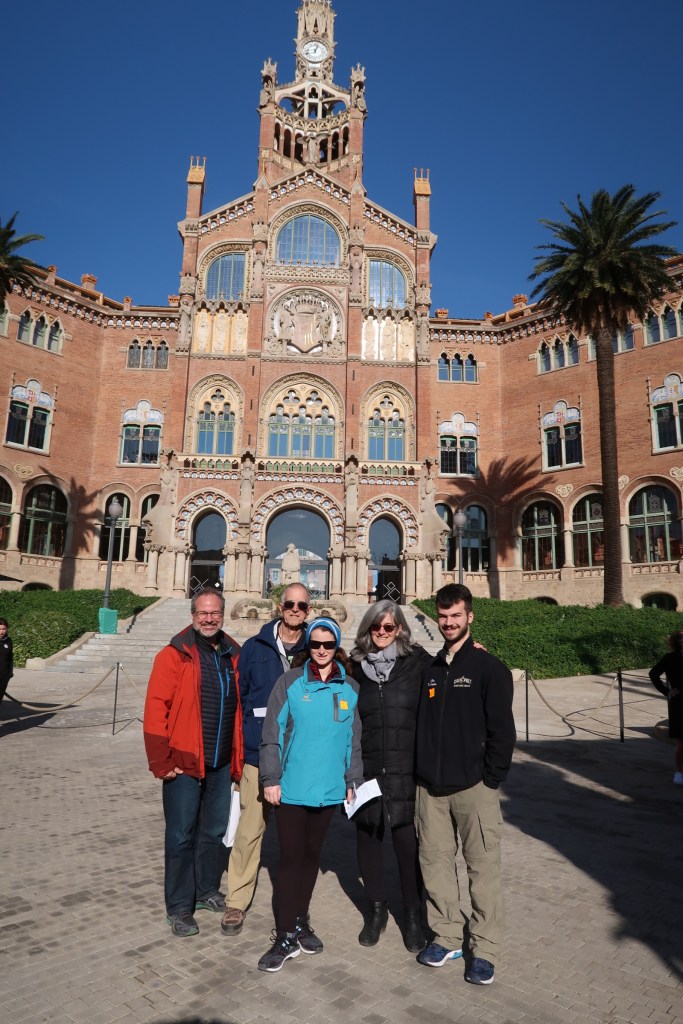
Just a few blocks and a diagonal street from our neighborhood of Sangrada Familia
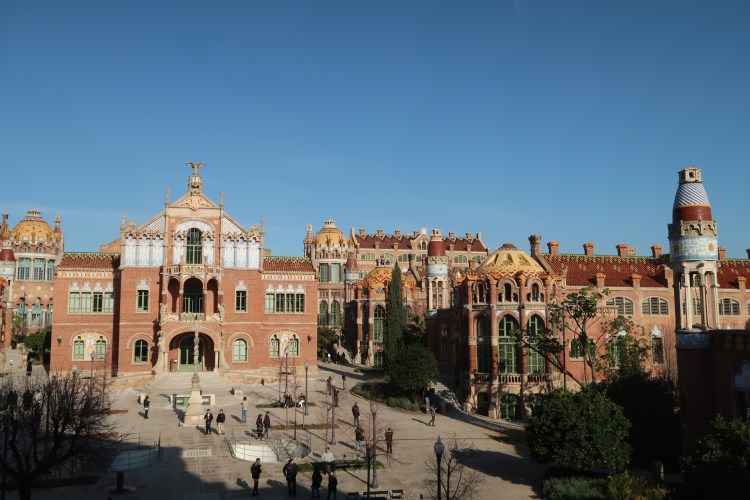
The operating room is where Spain’s first heart transplant was done in 1988
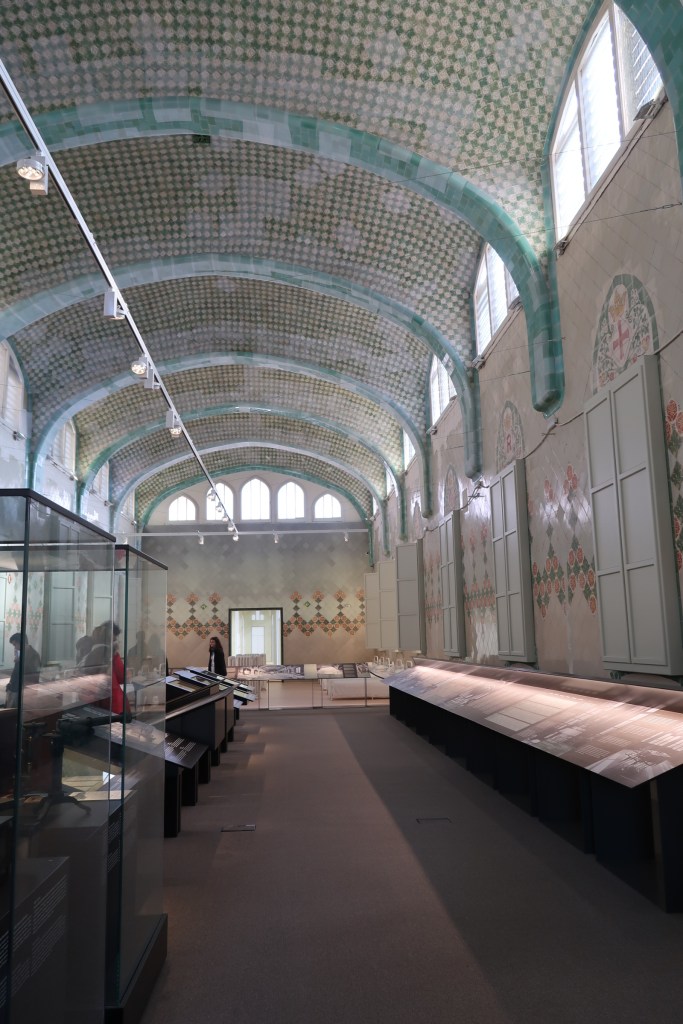
Before Spain created universal healthcare in the 1980’s, the public hospitals are where the poor received their care. Starting in 1401, Barcelona created a partnership between its Catholic Church and its 100-member (!) city council to create a Public Hospital which also educated its orphans. Due to the increasing population and the nearby factories, it relocated its new Public Hospital in the outskirts of town, near Sagrada Familia, in a former cow pasture. It’s architect was Gaudi’s professor, Domènech i Montenar.
Montenar was also an advocate of the Modernist style of bring nature into his building, using colorful mosaics and grand ornamentation. It is a different take on on the similar movement as expressed by his contemporary, and more famous student Antoni Gaudi.
It isn’t only eight blocks away from and looks down the street upon the basilica Sagrada Familia. It was a Public Hospital from 1916 until just 2009, it embraced open air, light, gardens, nature, and visits by friends and family, all for the benefit of the patient. It is now one of the many UNESCO heritage sites, a designation that is not in my common language, but is a source of pride here and many other places in the world – and on this adventure, like the Roskilde Cathedral in Denmark.
We walked the grounds with our local history student who you could just feel the enthusiasm of this amazing work. I wonder why we can not emulate such amazingly beautiful places in our daily experiences back home.
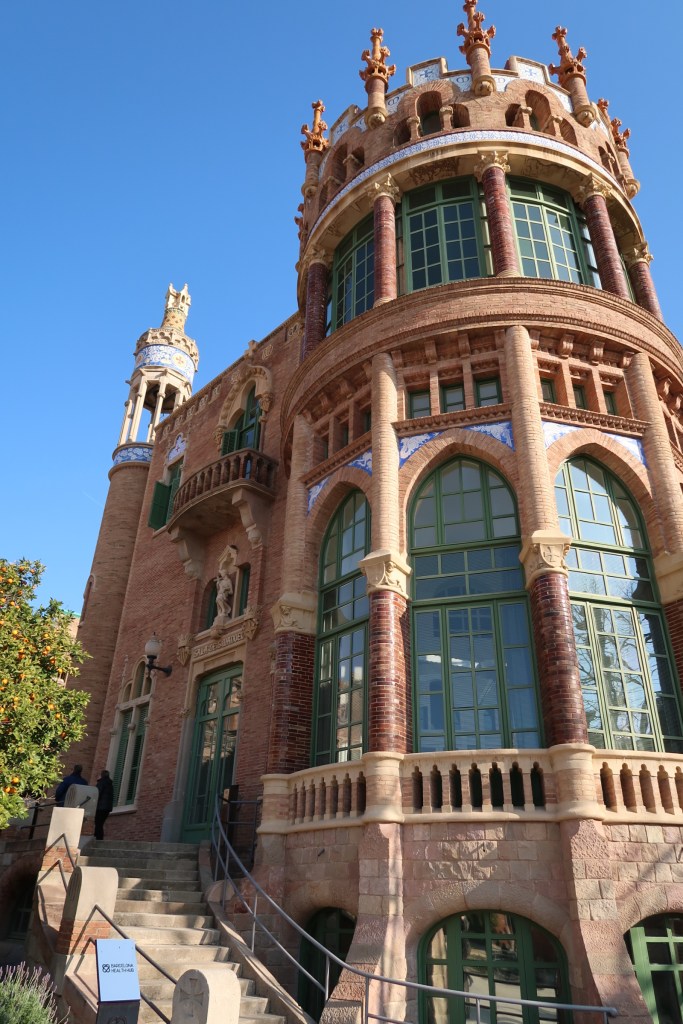
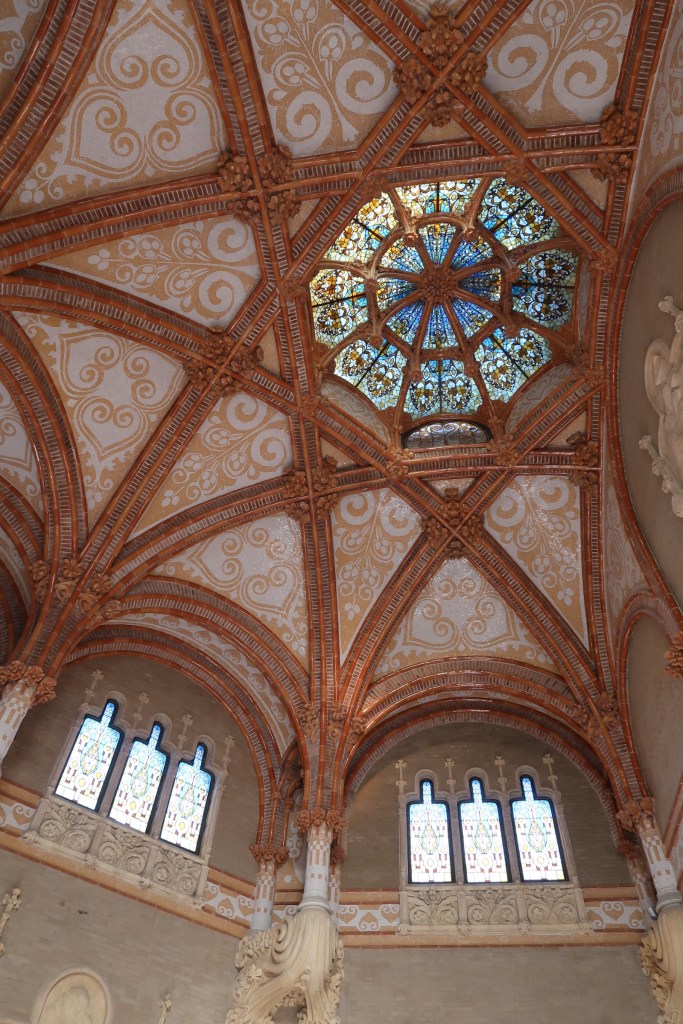
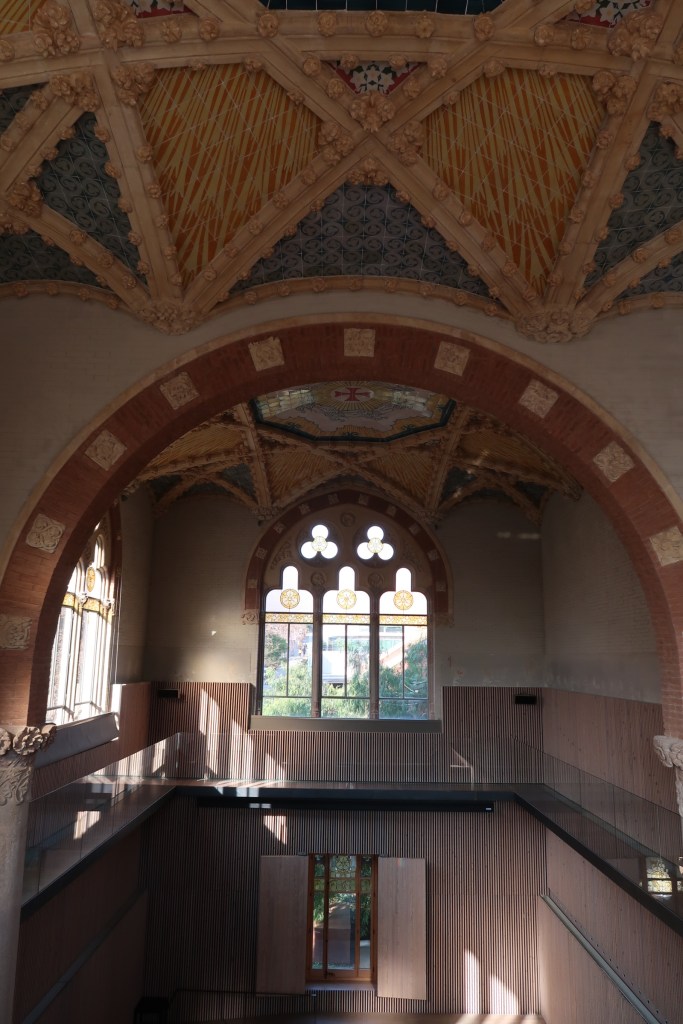
I left this amazing civic building wondering why we don’t build more of these now. It was built for function, the patients enjoyed light and air for their health and underground it was connected by tunnels for efficiency. And it was built for form, it seemed like walking into a cathedral. The main reason is of course price, since even this Hospital could only afford half of the original planned patient wards. But now it is a museum, and not a functioning space. As we heard on the subway, another visitor commented that we needed to make accessible and usable spaces, not museums and tourist centers.
I would agree. How do we balance beautiful public spaces that can still be enjoyed and used by the public? Cathedrals and churches should be open to the public to use as intended and public hospitals should be functional and used for patient well-being. It is an ongoing struggle to balance the immediate costs of creating and operating these spaces for the long-term benefit of all.

 Siri and David Adventures