April 20, 2024 Redmond, WA:
We have learned a lot about the Camino and its history these past few months. Did you know that Pilgrims have been walking to Santiago de Compostela since the 9th century? Did you know this was one of three famous medieval pilgrim routes which you could receive absolution for your sins? It has now expanded into one of the most popular walking routes in the world for people from all backgrounds and faiths.
Below are excerpts from a great source, https://americanpilgrims.org/
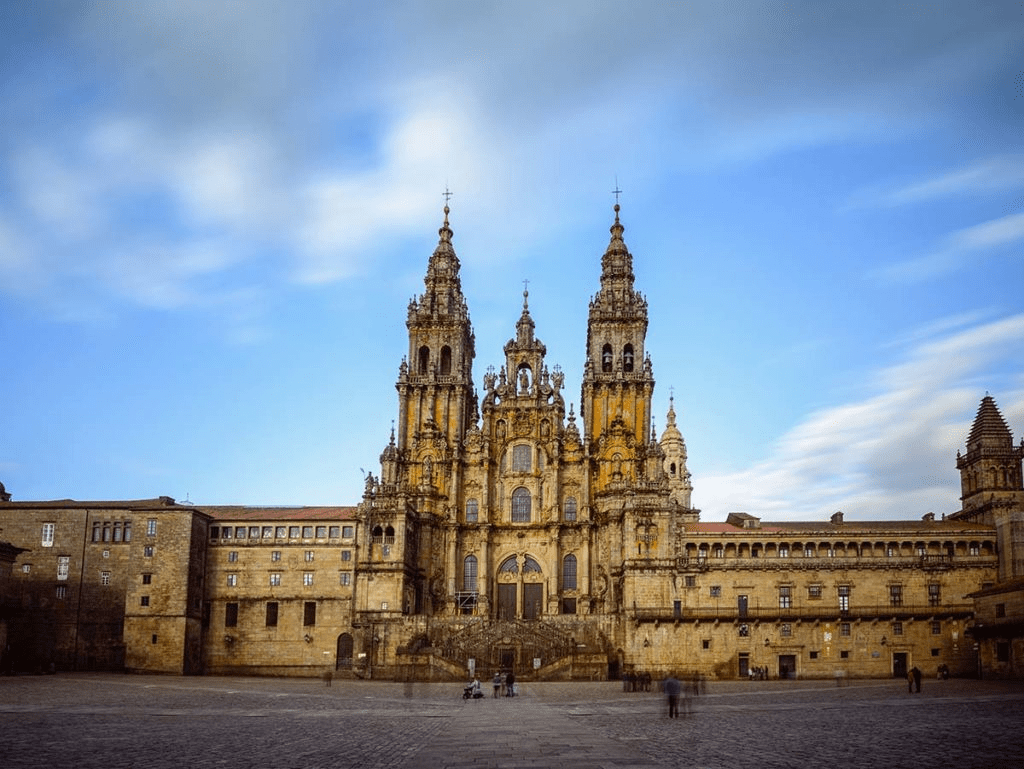
What is the Camino de Santiago?
“In English, “el Camino de Santiago” means “the Way of Saint James” and it represents the pilgrimage to the Cathedral of Santiago de Compostela in northwestern Spain. Legend has it that the remains of Jesus’s apostle Saint James the Greater lie in Santiago. The Camino has existed as a Christian pilgrimage for well over 1,000 years, and there is even evidence of a pre-Christian route as well.
Throughout the medieval period, it was one of the three most important Christian pilgrimages undertaken. Indeed, it was only these pilgrimages—to Jerusalem, to Rome, and to Santiago de Compostela—which could result in a plenary indulgence, which frees a person from the penance due for sins.
The First Century Origins
Christian legend has it that when the Apostles divided the known world into missionary zones, the Iberian peninsula fell to James. Seventh and eighth-century documents suggest that he spent a number of years preaching there before returning to Jerusalem, where in the year 44 CE he was beheaded by Herod Agrippa I.
After his martyrdom, a popular belief arose which says that Saint James’s followers carried his body to the coast and put it into a stone boat. The boat was guided by angels and carried by the wind beyond the Pillars of Hercules (the Strait of Gibraltar) to land in Northern Spain at Padrón, which is near Finisterre.
Queen Lupa, the local queen, provided the team of oxen used to draw the body from Padrón to the site of a marble tomb. which she had also provided. Saint James was believed to have been buried there with two of his disciples. And there, the body lay forgotten until the 9th century.
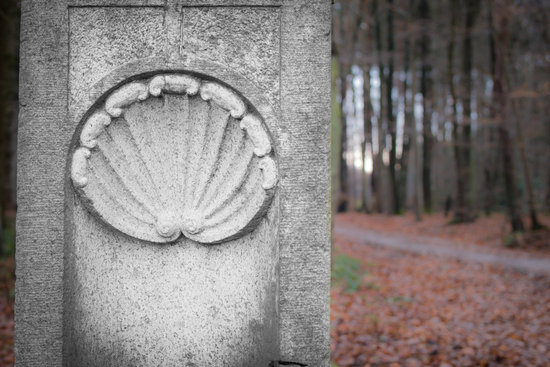
The Discovery of Saint James’s Burial Site
In 814 CE, Pelagius, a hermit living in that part of Galicia, had a vision in which he saw a star or a field of stars. They led him to what proved to be an ancient tomb containing three bodies. He immediately reported this to the local bishop, Theodomir. The bishop declared the remains to be those of Santiago and two of his followers. Theodomir, in turn, reported the finding to Alphonso II, King of Asturias, who then declared James (Santiago) the patron saint of Spain (or of what would eventually become Spain).
A small village named Campus de Ia Stella (Field of Stars or Compostela) and a monastery were established on the site. It’s also possible the “Compostela” phrasing came from the Roman word for cemetery or “to bury”, which is “componere.”
In any event, news of the discovery spread, and a trickle of pilgrims began to arrive. Miracles came to be attributed to the site, and the miracles encouraged pilgrimage and pilgrimage elicited more miracles. This was all greatly encouraged by the powerful Archbishop Gelmirez of Galicia and the cathedral authorities, who were anxious to promote Santiago as a pilgrimage destination, as well as by the monks of the Abbey of Cluny in France who were anxious to support the Spanish Church in its struggle against the Moors on the Peninsula.
And thus began the millennium-long relationship between the holy and the commercial.”
More to the Story
Check out this great website and resource for American pilgrims. You can even learn to be a host at the public hostels (albergues) along the way.
And so, we to, begin our own trek soon on this route of the holy and commercial and hope to find the balance between them both. The meditative, reflective time while on the way of Saint James as well as meeting and learning from fellow pilgrims along the way. And I’m sure we will pick up a few commercial souvenirs along the way…

 Siri and David Adventures