Day 20: Santiago de Compostela to Finisterre and Muxia and back
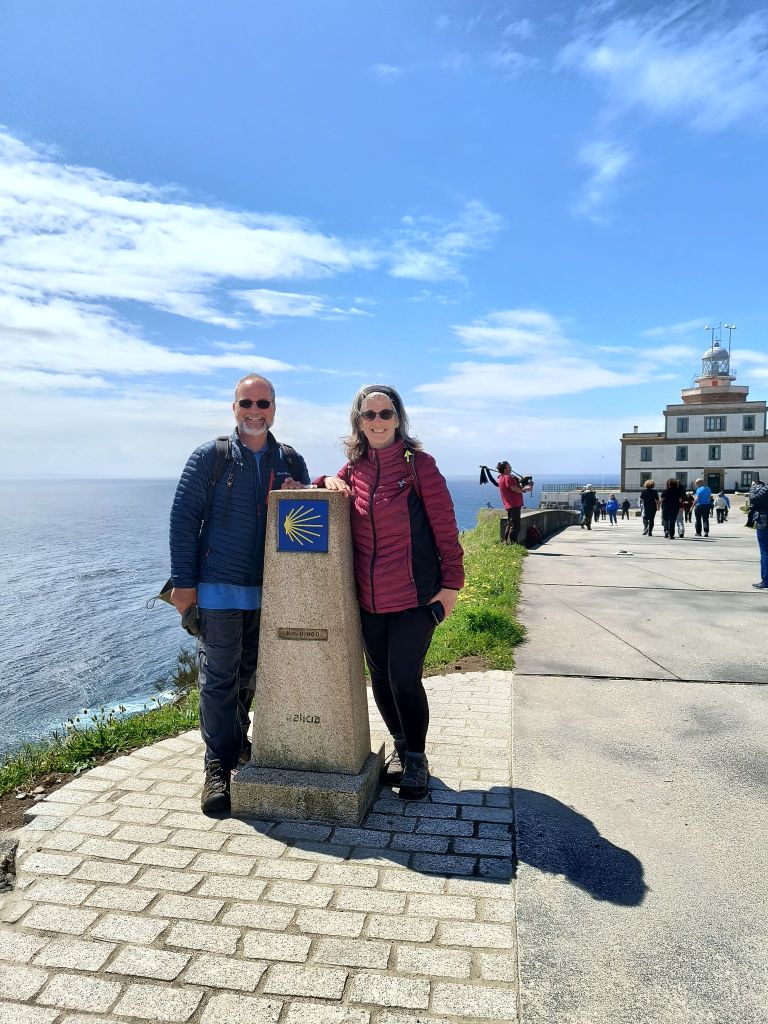

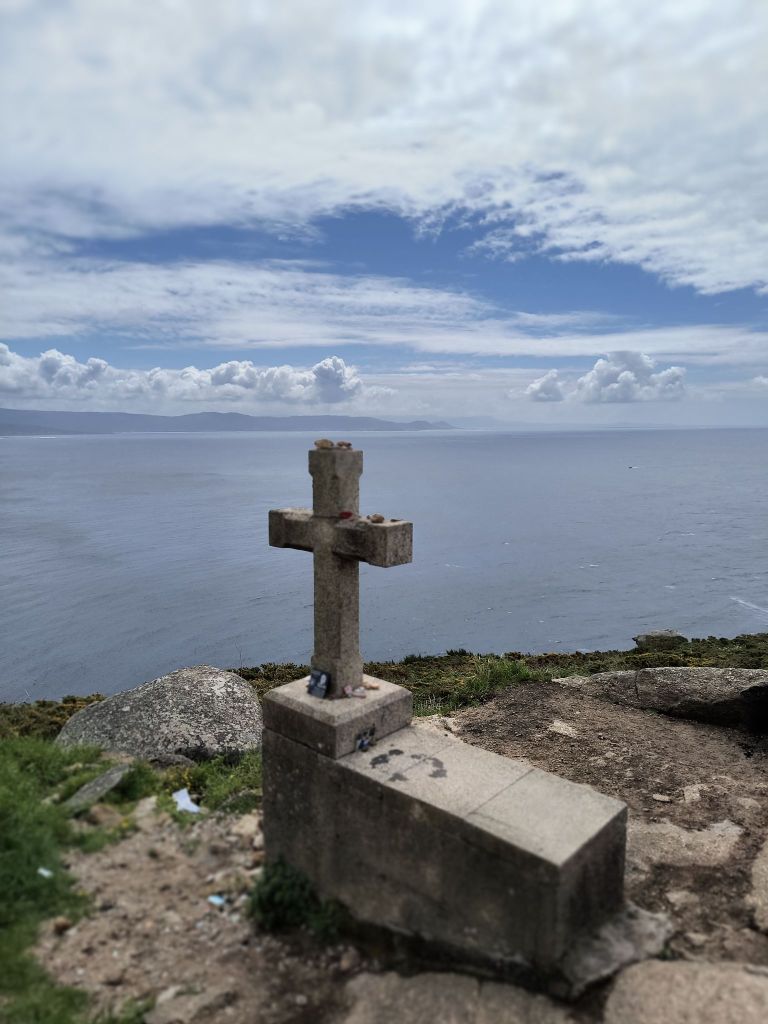

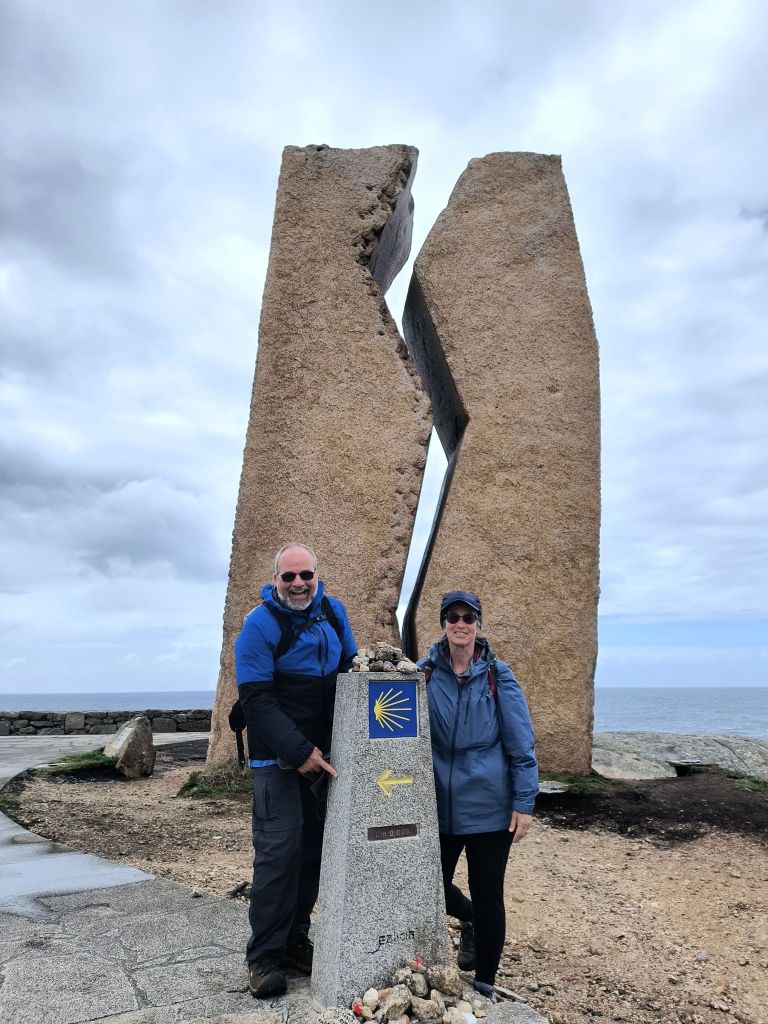
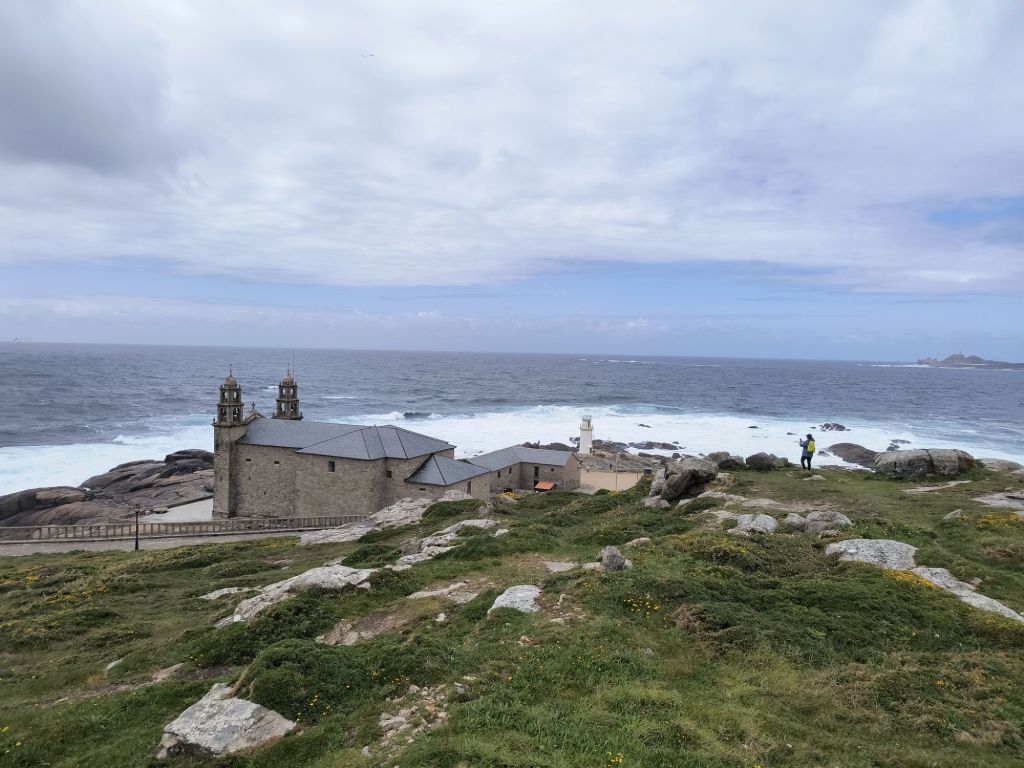

The Celts, who settled here thought this is where the souls of the dead would rise up to the heavens. The Romans who came from the Mediterranean, thought they had arrived to the end of their known world and called it the “end of the earth” or Fin – Terra. It is now known as Finisterre (Spanish) or Fisterre (local Galician).
Whatever the name, it is impressive with waves that continually pound the stone cliffs. It is no wonder this is also known as the “Death Coast” for all the shipwrecks.
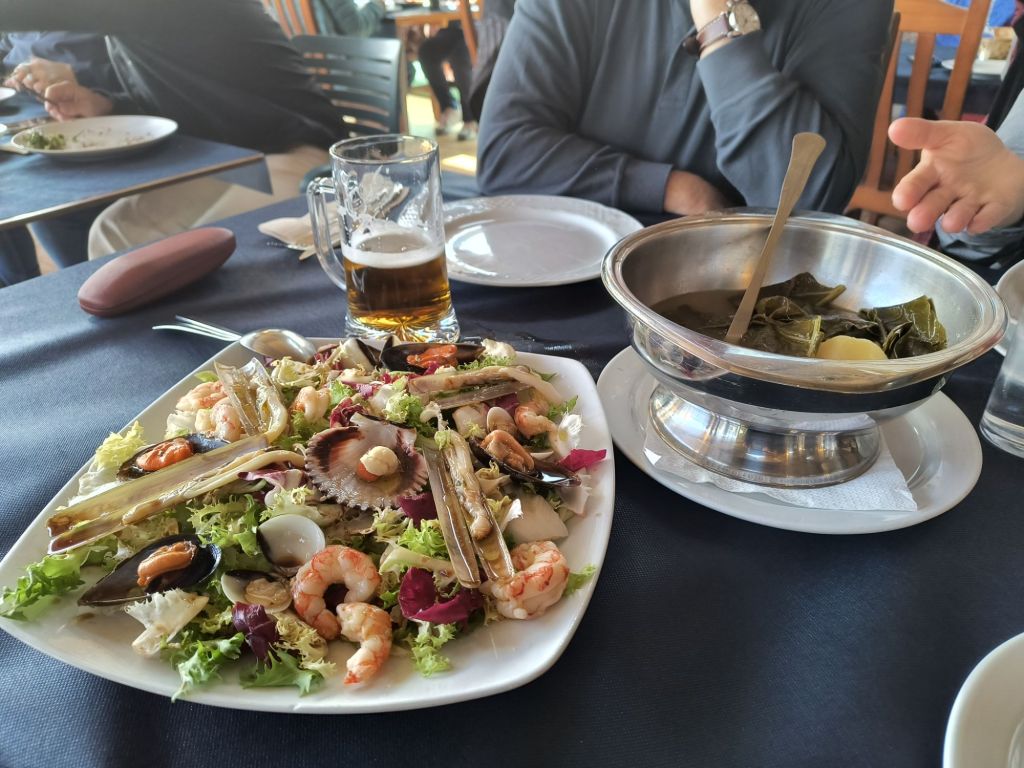
We have arrived on a particularly blustery day with intermittent rain storms. One story is that pilgrims walked to the coast after Santiago de Compostela to pick up the rare scallop shell so that they could prove to people back home, who may have never seen an ocean, that hey had made it. The original souvenir.
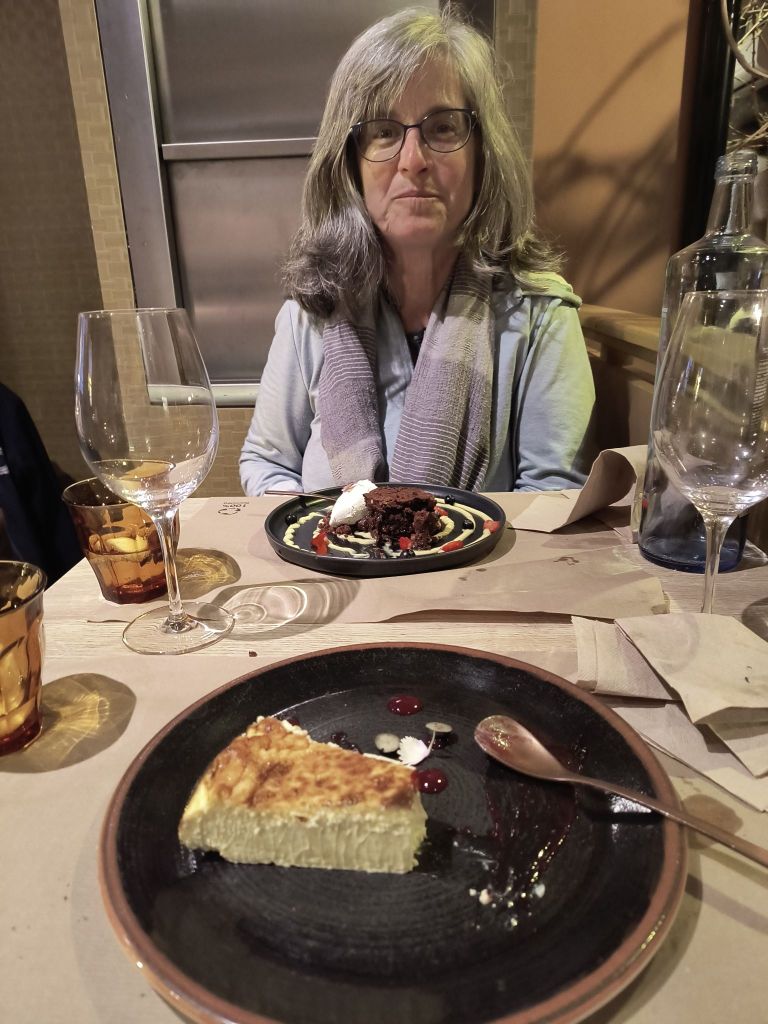
I chose to follow this tradition, but my shell was part of a yummy seafood salad I had for lunch.
We visit a waterfall on the coast and another Roman Bridge. This bridge supposedly fell down, cutting off the route of the Roman soldiers pursuing the followers of St. James. Each place along our route wants to claim a piece of this story, to be relevant in the world.
We enjoy a sun break at Finisterre, looking past the lighthouse across the seemingly limitless Atlantic Ocean. We find a quiet place to briefly sit and reflect on these past few weeks.
For the rest of the evening and probably for much longer, we find ourselves asking “What have we learned?” “What things do I want to bring with me from this journey?” And, probably just as important, “What can I leave behind?”
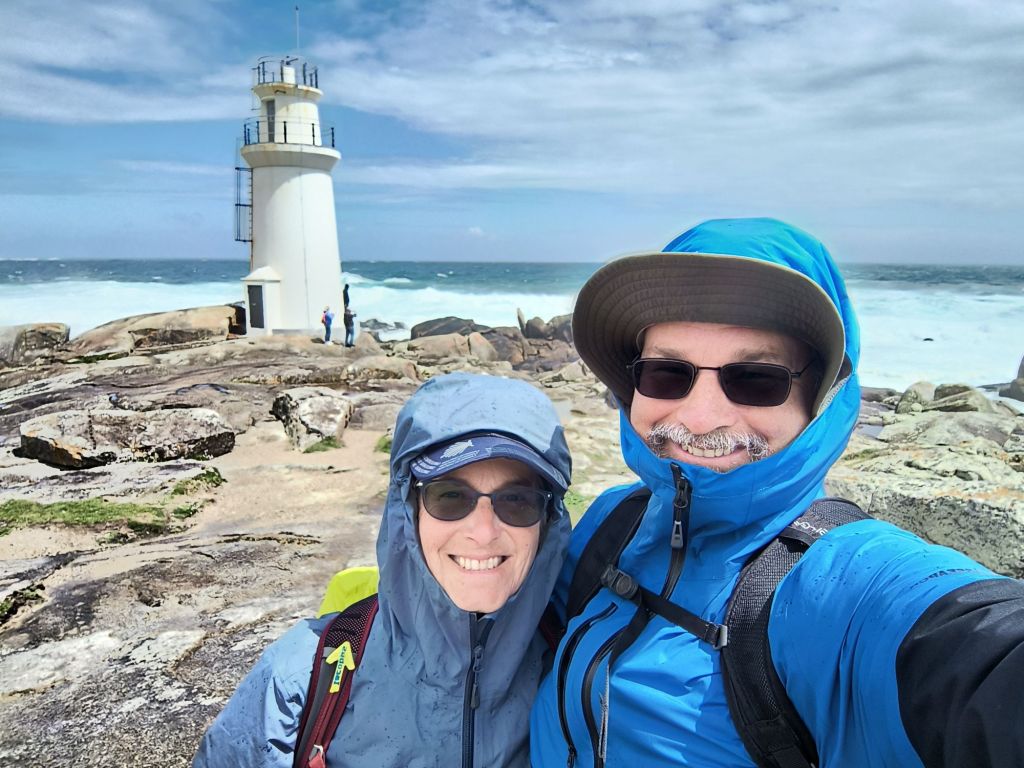
At Muxia, the Atlantic storms are back and from our recent experiences we know that no poncho or umbrella is going to protect you from this onslaught. We decide to brave the elements and we are soon rewarded with a break in the clouds and light illuminates the rocks, the lighthouse, and the “0 KM” marker.
It feels complete to have made it here, as part of our original Camino plan. We are also glad we visited both places since there seems to be quite the competition on various Camino websites as to which is better. We also know what we knew from the beginning – one doesn’t need one certain place to be on or to complete your own Camino. It can be anywhere and everywhere you happen to be. You just need to provide the time and space for it
Time. That is one gift of this journey. Time together. Time to think. Time to let things go from the world. Time to also write and share.
The hard part will be to hold onto these as we do re-enter the “real world” again. It is good to be refreshed and it is also good to be an active part of the community. My hope is that I can keep some of the Spirit of this Camino going forward. Such as “being present with others” that would be enough. “slow down” “share” and of course “Take care of your feet”.
From here we both feel it is time to say goodbye to this Camino and move onto our next adventure.
I may blog a bit more about our week long travels in Lisbon, but they will probably feel a bit different. I can already feel the energy moving to action and getting ready for the day long travel to a whole new part of the world. It is fun and exciting – in a different way.
Thanks for following along on this journey and I look forward to personally reconnecting with you all upon our return.

 Siri and David Adventures