Day 15: Doi Pui and Doi Suthep, Chiang Mai
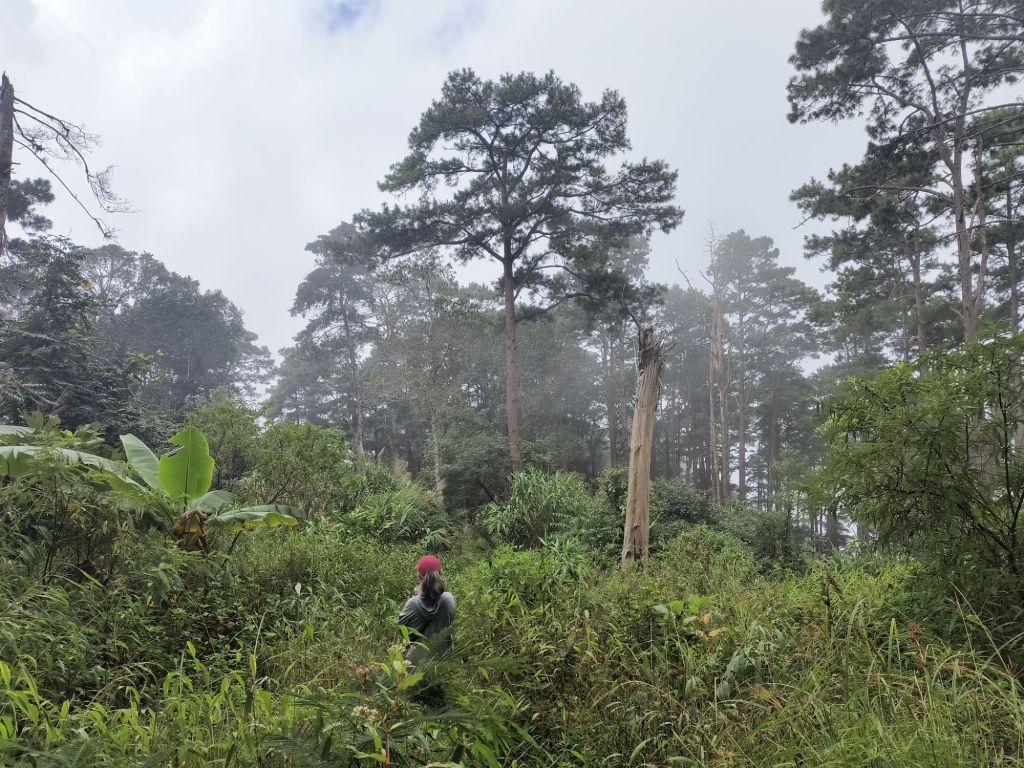
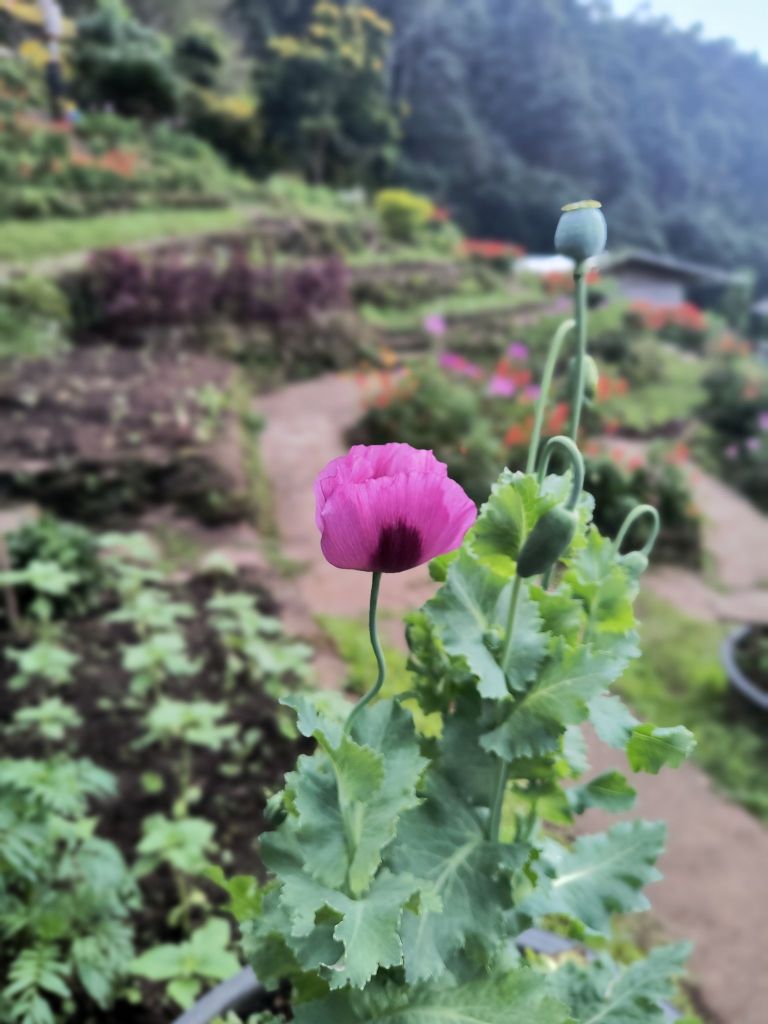
What if the only way to support your family as a poor farmer is to grow poppies for opium? It might mean that you would cut down the jungle around you to cultivate as much of this illegal plant. This is what King Rama IX realized as he hiked up Doi Pui (a 5500 foot Mountain overlooking Chiang Mai) from his nearby winter palace in 1969.
He created the Royal Project to encourage the farmers to move to raising coffee, avocados, berries, fruit and other cash crops to replace the opium trade. When the farmers complained they were not making as much money, he invested more in creating a better market for their goods. It is now seen as a great success. The village is prosperous and the jungle has been mostly restored and is now a protected national park. And opium is no longer cultivated.
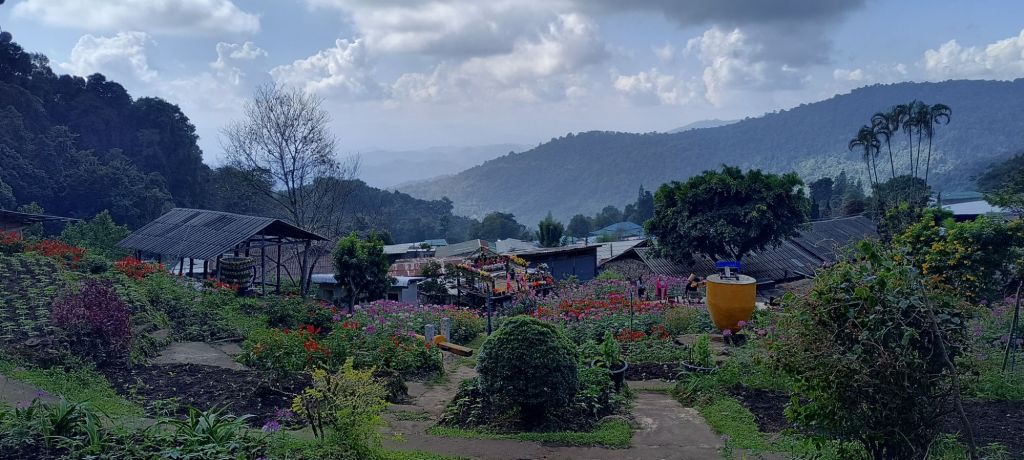
After hiking to the top of Doi Pui, we go down the very steep trail to visit the site of this historic king’s visit – a Hmong ‘village’ of over 1,000 people with the same name as the mountain. We first stopped for a strong cup of coffee from the local roaster. Supposedly, Starbucks had purchased some of their coffee from this region which helped ensure its success. We also try out the regional speciality Khao Soa soup – a blend of Chinese noodles, with Indian curries, with Burmese spices and then some Thai additions. As one local said “it is the best example of what Chiang Mai is about – the blending of all cultures from hill tribes to the surrounding countries.”. All the while we are enjoying spectacular views down the valley.
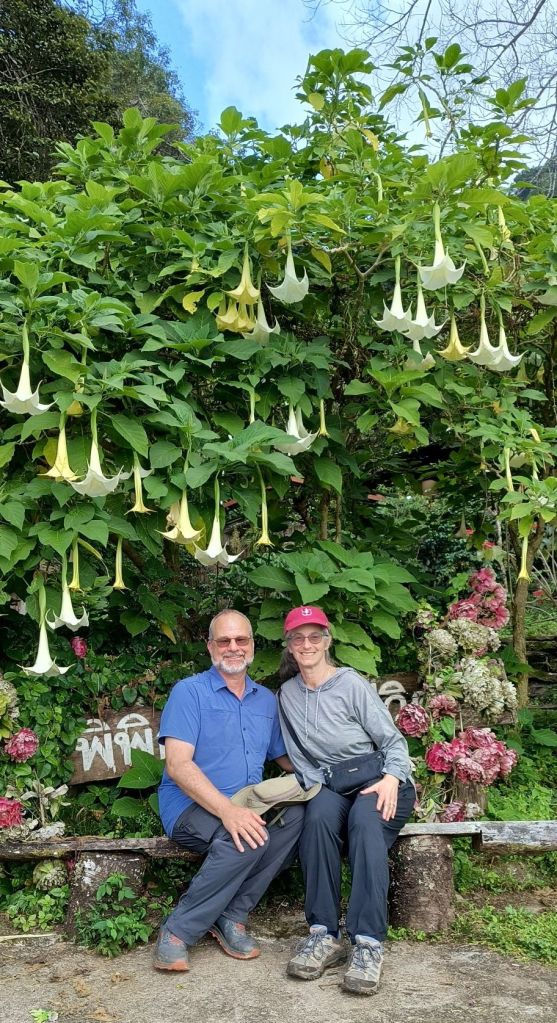
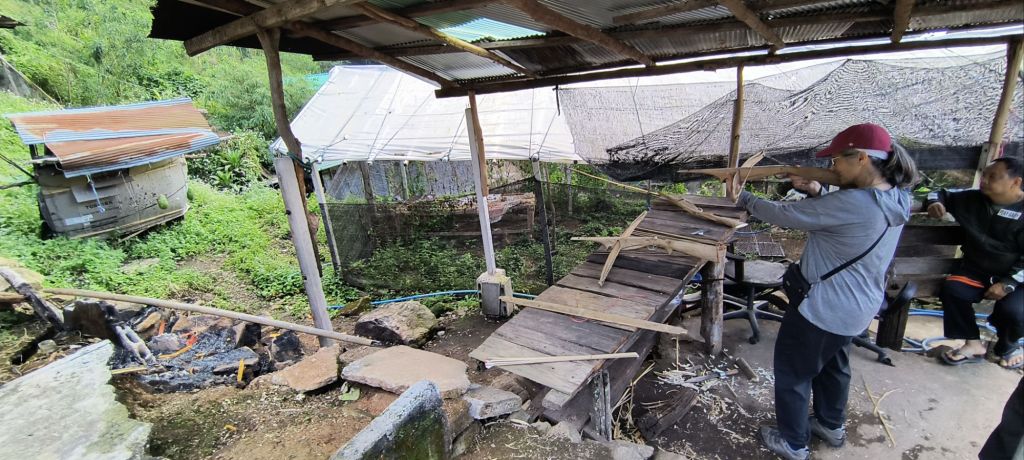
It has also become a tourist area, where you are encouraged to rent a traditional ornate Hmong costume and take pictures in their beautiful gardens. We do try out the hand carved crossbow – which they used for hunting and now just for target practice – we both hit the papaya – fortunately it was only 20 feet away – and then enjoy the rich colors of the garden.
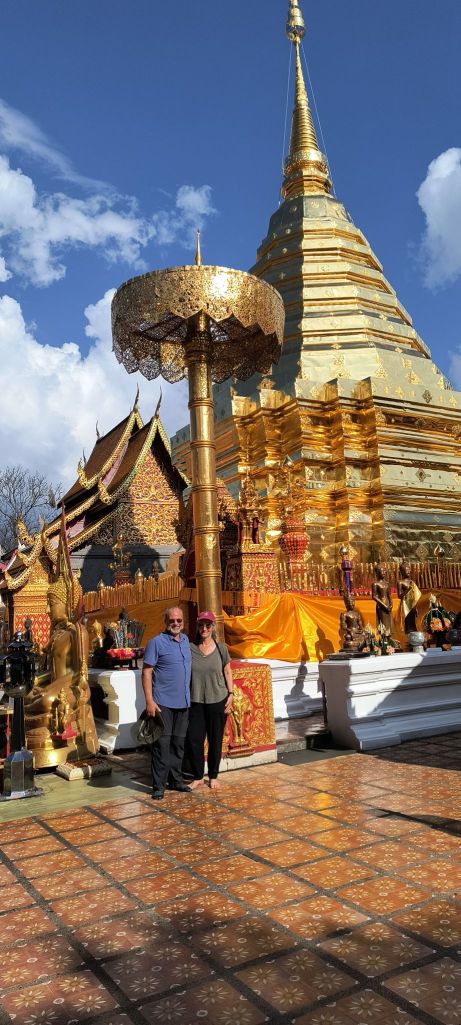
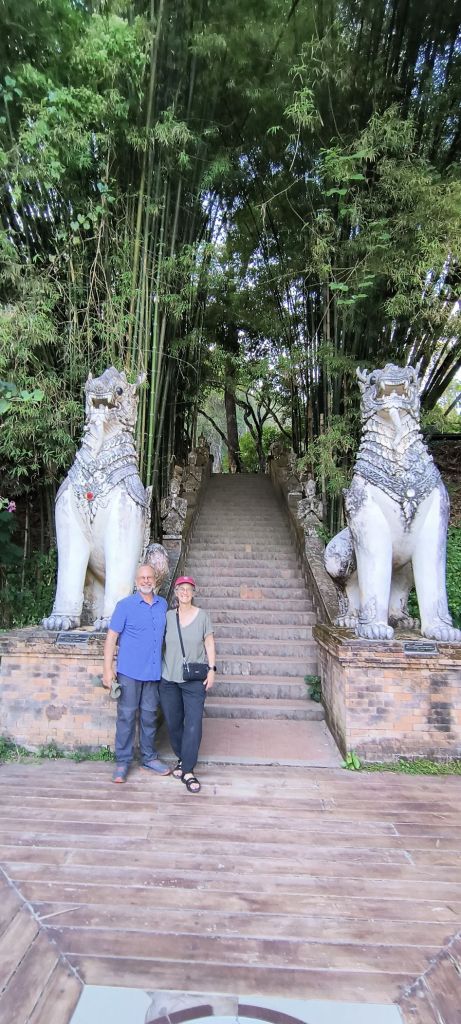
On the way back, we stop at one of the famous temples Wat Phra That Doi Suthep which is known for having a true relic of the Buddha inside its gold plated stupa. This involves climbing over 300 steps to the main entrance – reminded me of a scene from Kung Fu Panda as we climbed and climbed. It is one of the places you are encouraged to make a pilgrimage to at least once before you die. Our guide, Rung, who was a teenage monk for four years, says with a smile that he is especially blessed because he gets to visit this almost every week.
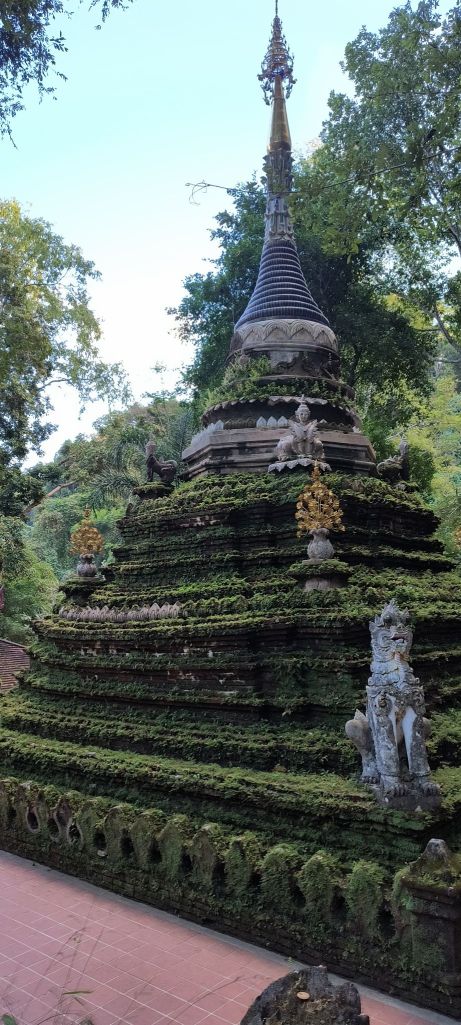
Our most fun temple so far is the so called “jungle temple” Wat Pha Lot. This is Burmese style from when they controlled this area for 215 years. It is nestled in the jungle as a part of nature.
As we head back, our news and text feeds come in and grounds us back into what is happening back at home – many of our family and friends in the Pacific Northwest dealing with a typhoon wind and rain storm. Here is to everyone staying safe during these times.







 Siri and David Adventures