Day 16: Chiang Dao region, hour north of Chaing Mai
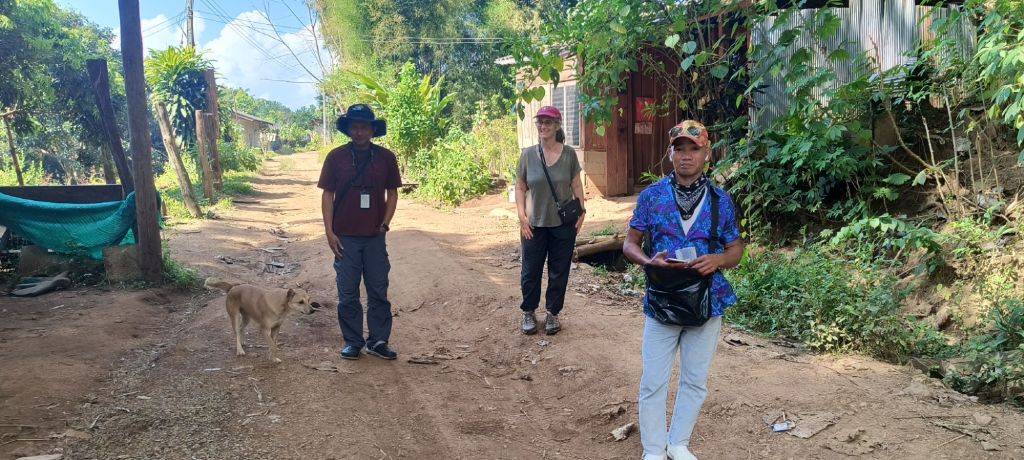
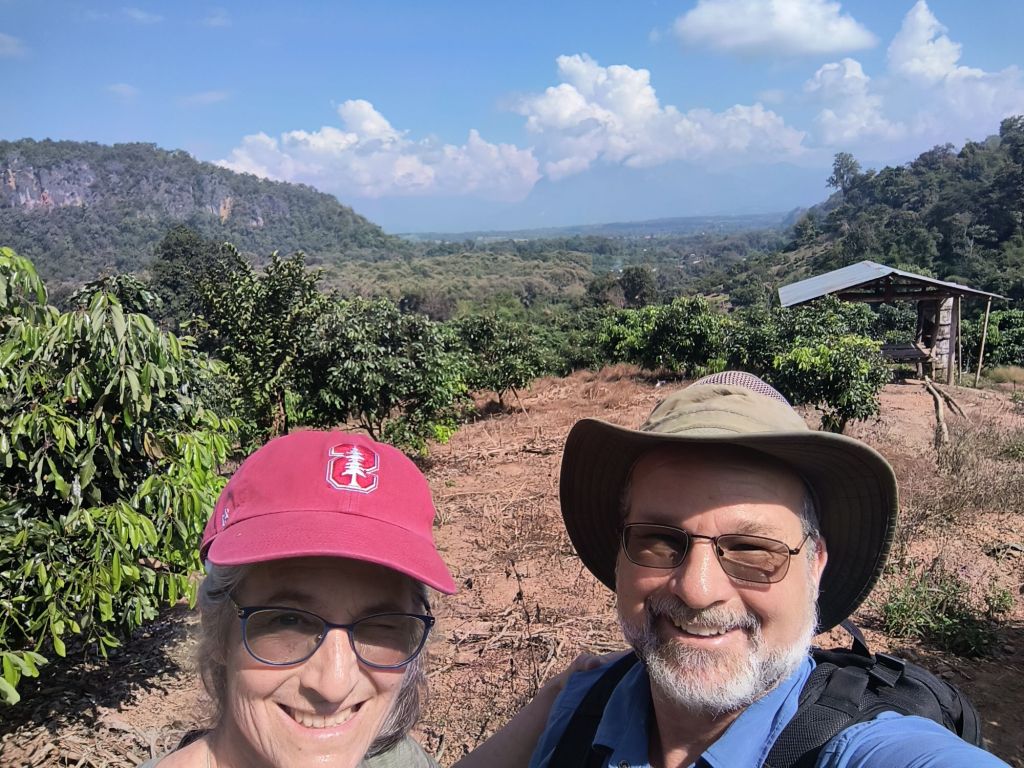
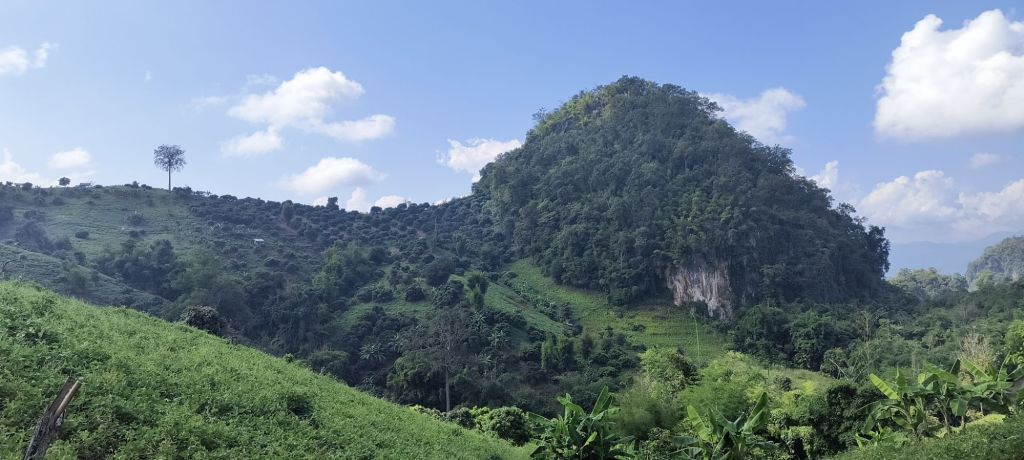
There are at least seven hill tribes in Northern Thailand, so called because they settled over the last 200 years in the hills as substance farmers of rice and other crops. They come from China, Tibet, Myanmar and Laos. We visited the successful Hmong village of Doi Pui yesterday and today we started our walk in a mixed Lisu and Akha minorities live next to each other. We pass an elementary school where half the kids are wearing traditional dress. We picked up our local guide and hiked about an hour and a half through the jungle and crops of banana, leeche, peanuts and other crash crops and arrive at a Palaung (also called Dara-ang) village.
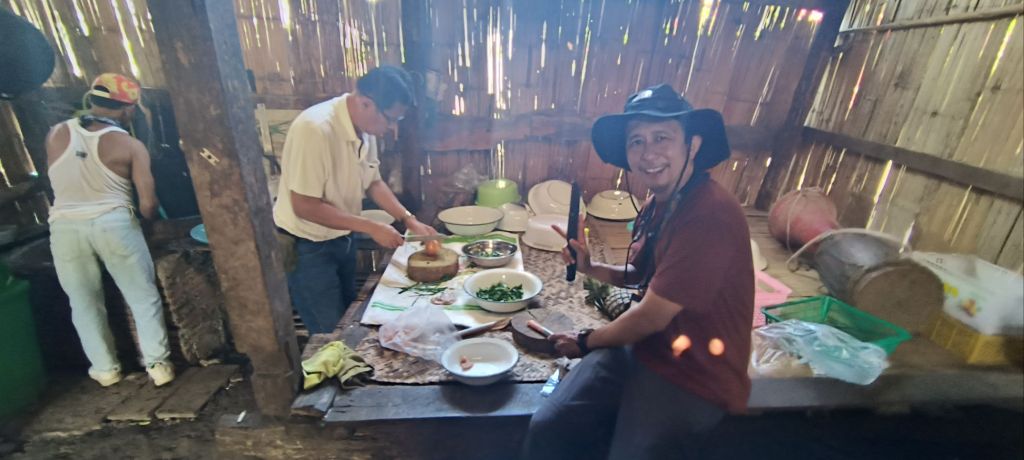
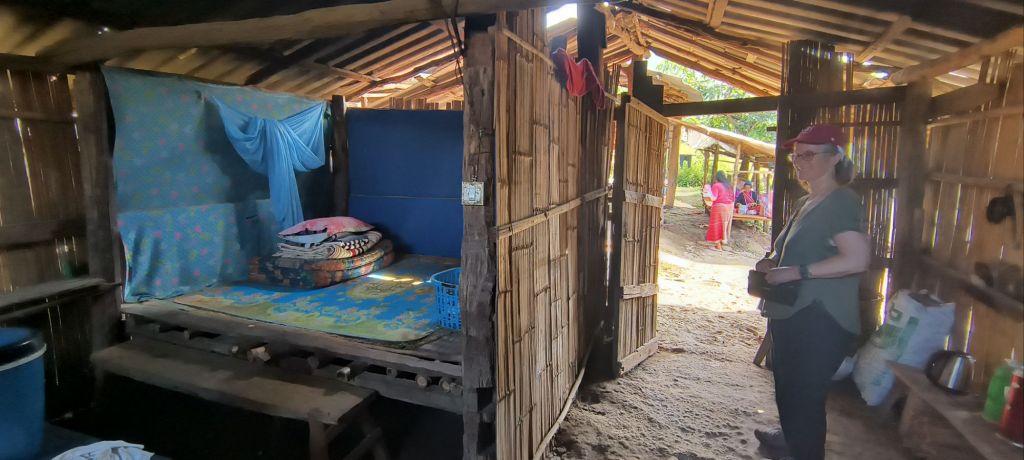
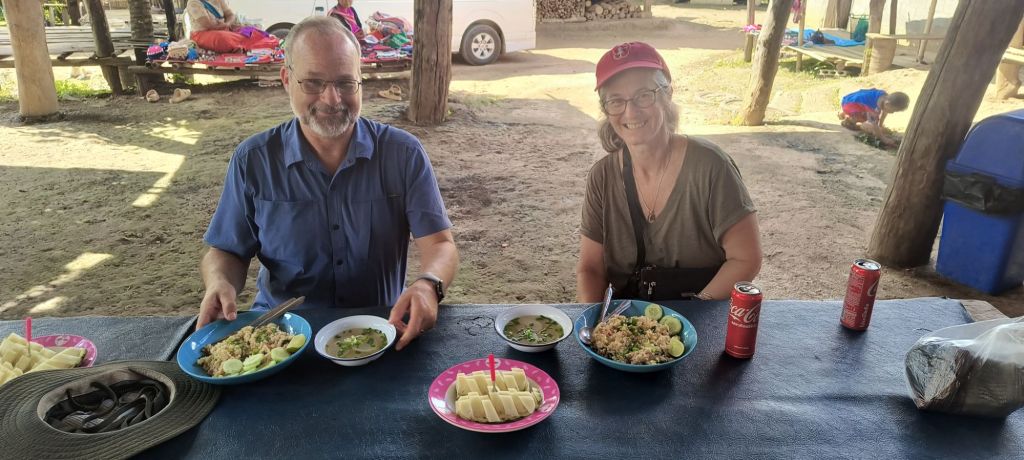
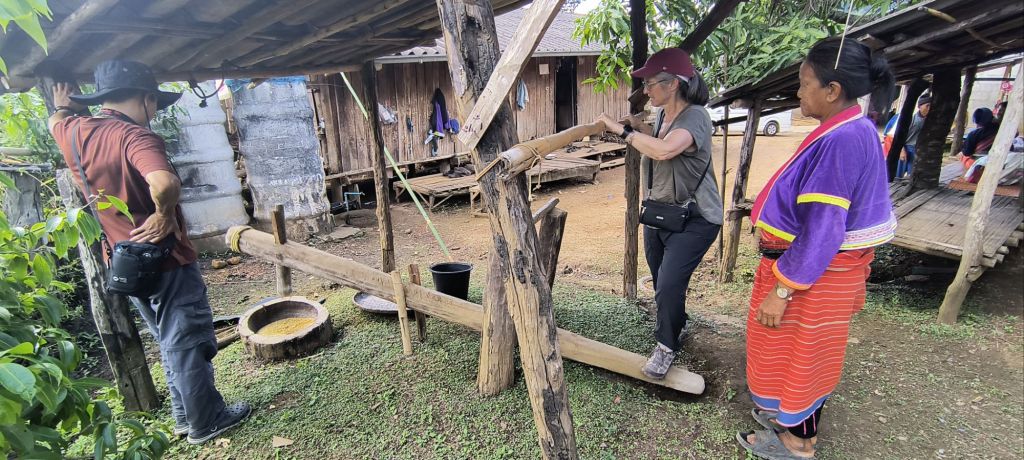
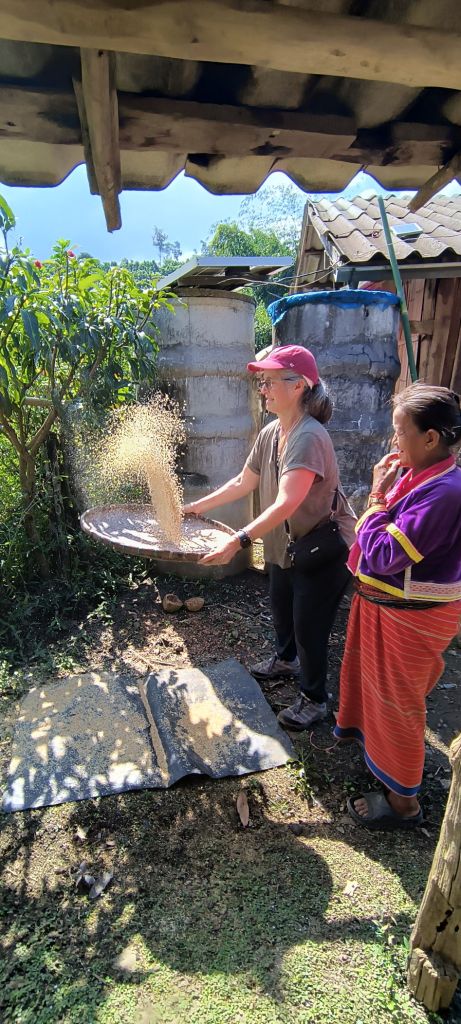
We meet up with the head of the family, Mat, a grandmother figure who is taking care of her two grandkids in their simple family compound of tin roofs over bamboo and wood structures. Our guides make our delicious meal of fried rice, a turnip soup, and fresh pineapple.
Siri and I have a good conversation about economic development, the conflict of ethics, values, and our role as foreign tourists. How should these communities support their families? Should they stay just as subsistence farmers? What is the future of these villages as the next generations grow up and may choose to leave to the city? It is one of those wicked problems that don’t have easy answers.
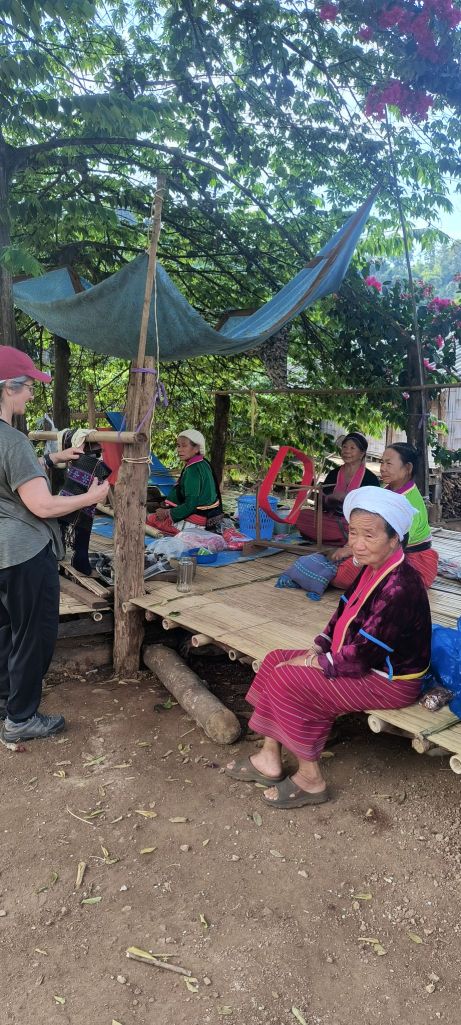
We are confronted with these questions while at lunch we are surrounded by swven women who have put up a little market just for us. Most are grandmother’s taking care of their grandkids (their parents are most likely out in the field) showing us their weavings, purses, shawls, and tablecloths for sale. We get that uncomfortable feeling that many of us have felt in foreign cultures knowing that our few dollars can go a very long way in this community.
I make a few rounds of each seller and purchase a shawl and a tablecloth – not sure how to fit this into our bags. We feel that the other sellers are cross with us since we haven’t purchased from them.
Siri and I contemplate our own solutions on how to make things better – maybe a women’s cooperative of weavers, an English training program to interact with tourists, and on… – we also realize that to really make a difference one must start with the people themselves and they need to have agency over their own future. We have heard of a few programs that are doing just that – providing support to the hill tribes to help chart their own future and economic development.
Tomorrow we will visit a few more villages and continue our conversations.






 Siri and David Adventures