We continue our trek to the northern most part of Thailand and each step we find more diversity of people and foods melding together across borders and background.
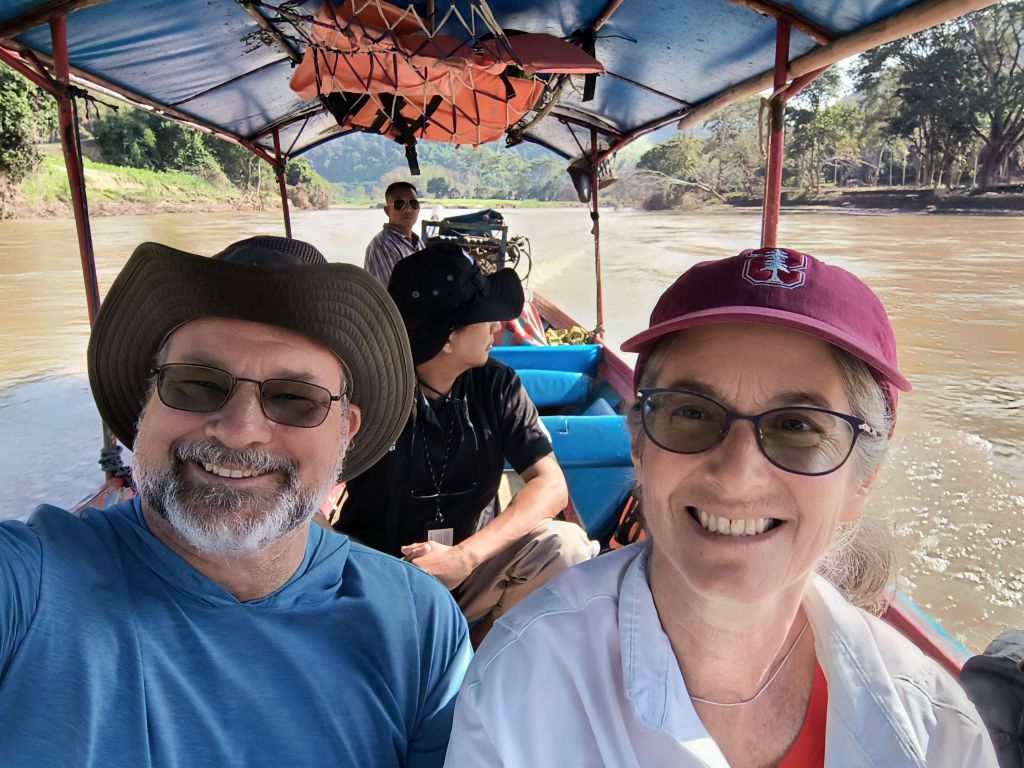
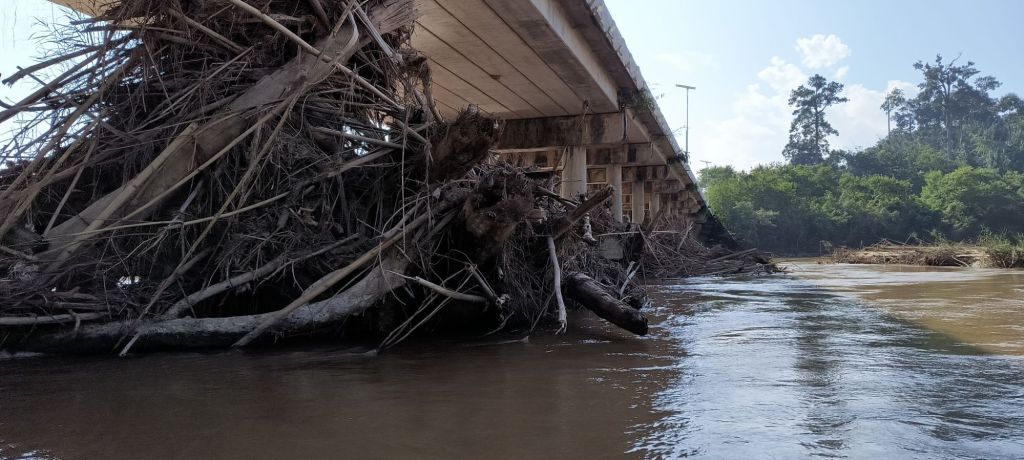
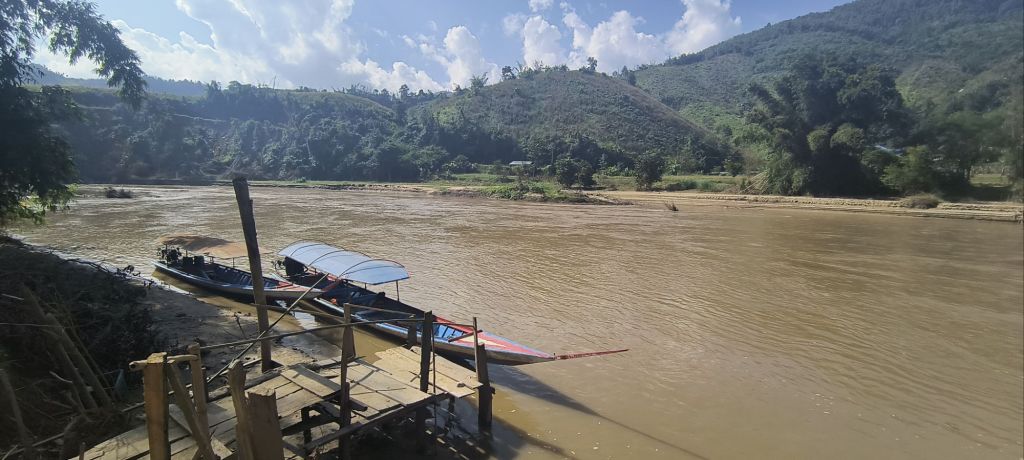
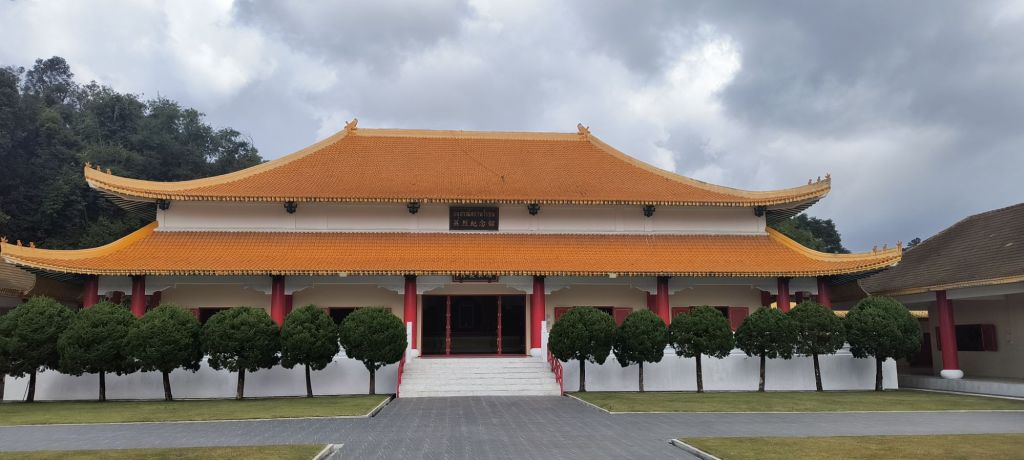
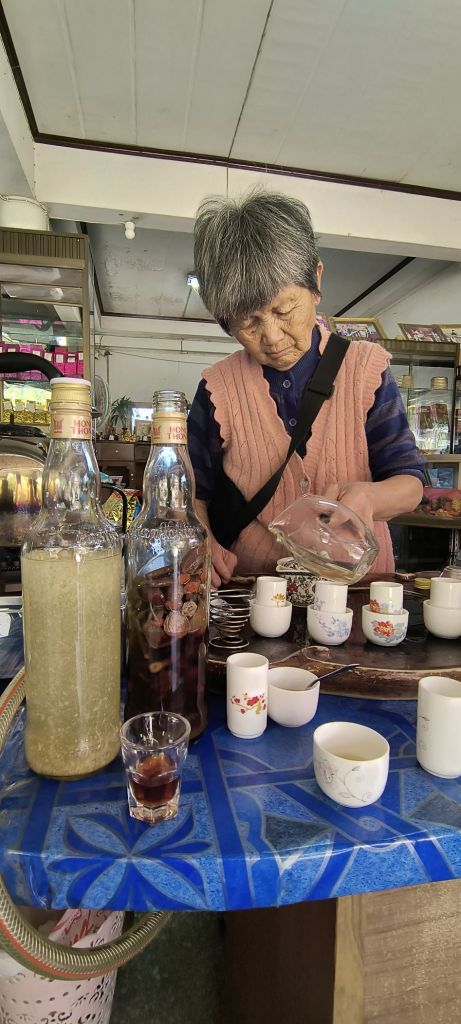
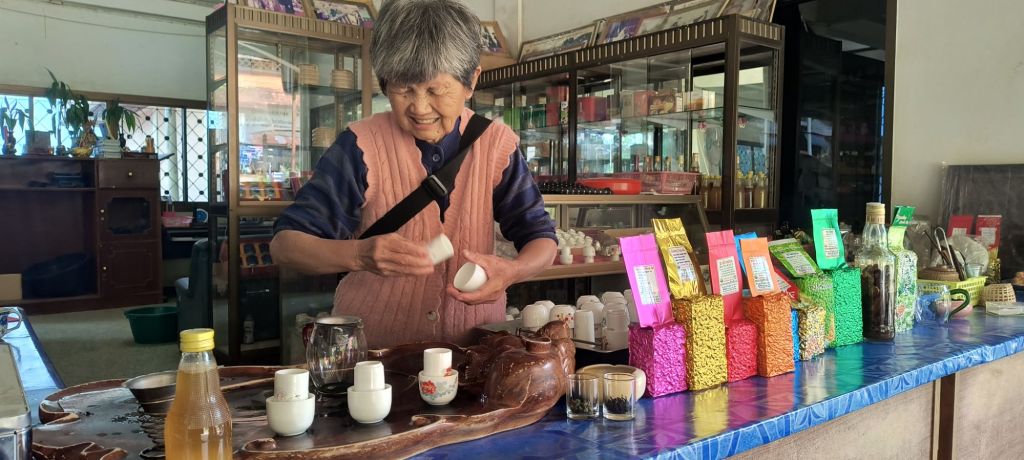
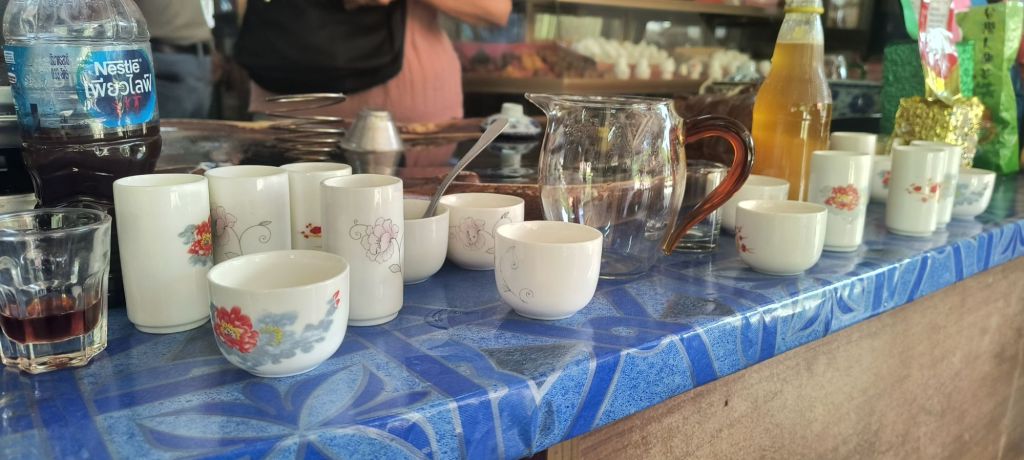
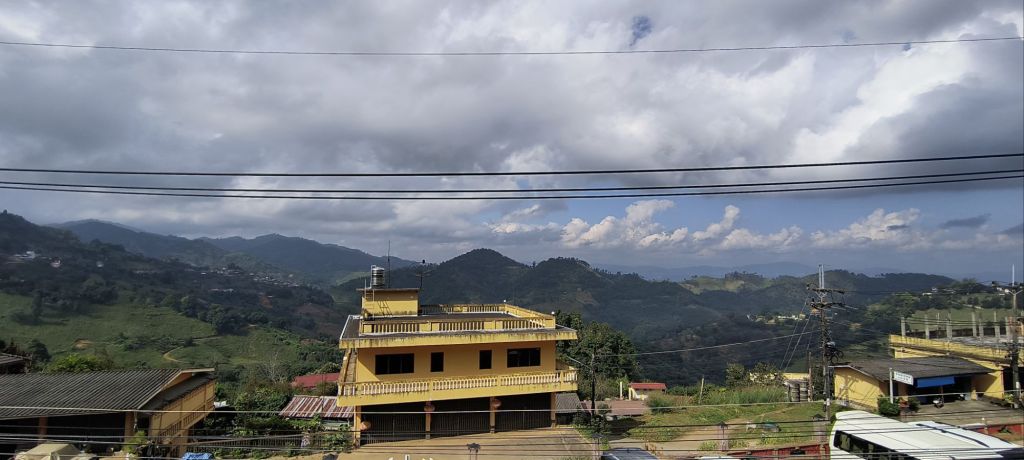
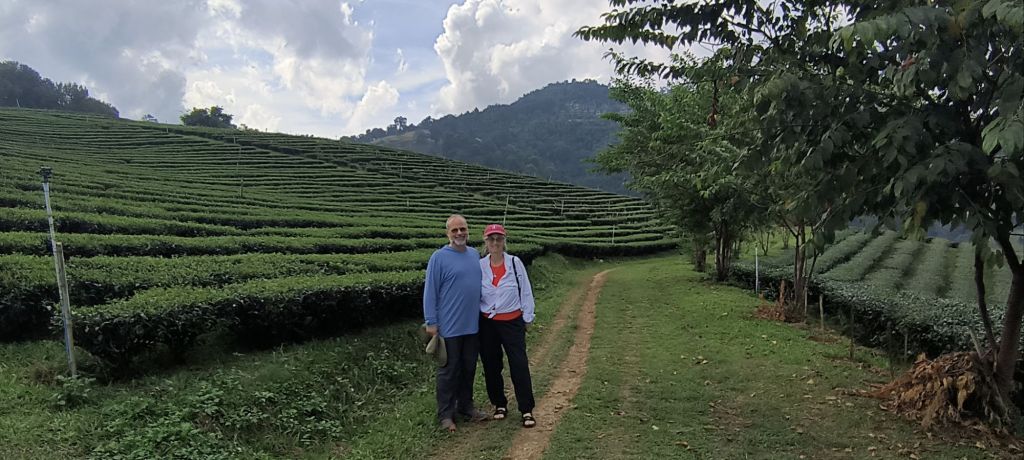
Our driver makes sure we are ready to goJust the four of us on a very narrow long tail boat that are still used for shippingWe can survey the devastation from last months flooding on the Maekok River which flows into the more famous Mekong river at the Laos borderWe tie up at his Lahu village (Not all ‘hill tribes’ actually live on hills) an hour later after boating past beautiful scenery that includes orange and mango groves, a few sand dredging operations, more temples (Burmese style now), and a lot of washed out banks.We drive up into the mountains of Doi Mae Salong, into Santikhiri, a Yunnan Chinese community that left China in 1949 after the revolution. We stop at the “Martyrs Museum” of those who died fighting the Mao insurgents along the borderMeet another amazing female entrepreneur – this one runs a Chinese tea shop, took over from her parents, and we try out 8 different kinds as she shows us the traditional way to warm up the bowls, and our hands, before drinking She is also a good salesperson as she has her vacuum packed bags color coded for export.What is left after our tasting – and she encouraged us to try her homemade honey whisky and another herbal alcohol – whew! She says she has never gone to the hospital or been sick because of her teas and whiskyOur view across the border into Mynamar when we stopped for lunch at a popular Chinese restaurant At 101 Tea plantation – the largest in Thailand. All of these bushes are oolong tea bushes. The new leaves on top are cut every 3 weeksWe arrived in Chiang Rai (the northernmost large city of 200,000) and learn more about the hill tribes and their customs at a local non-profit that supports them.



 Siri and David Adventures