Day 35: Bangkok, Thailand
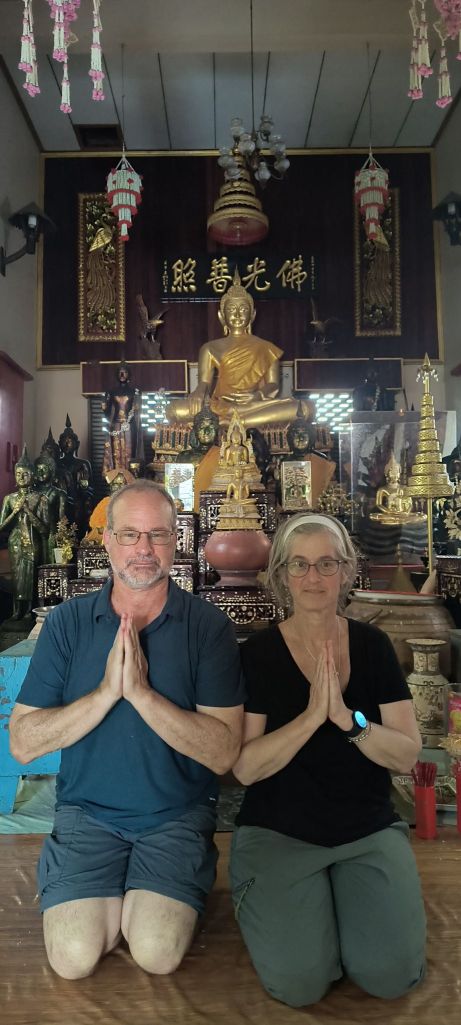
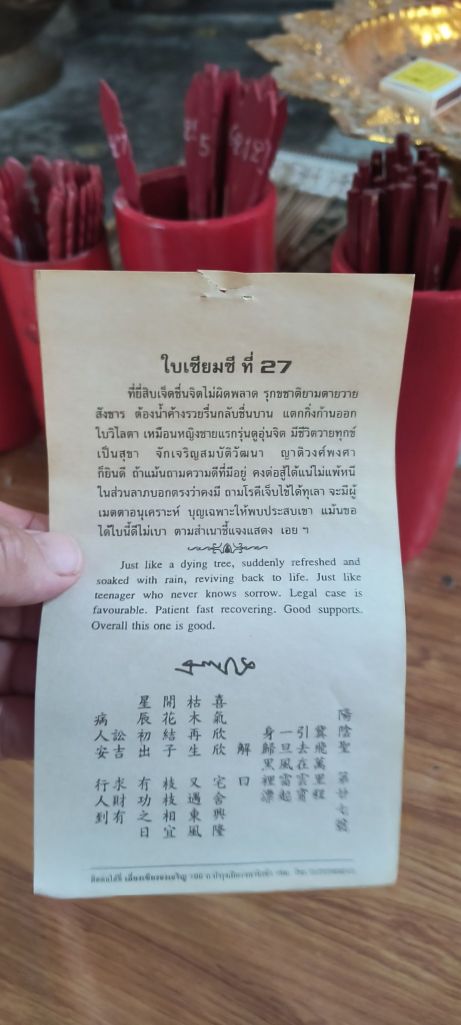
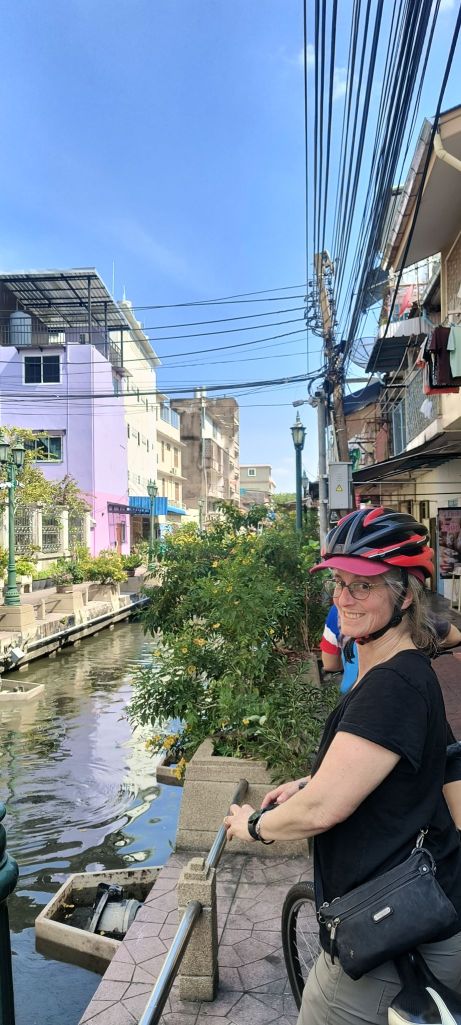
Tammy, our local bike tour guide today, brings us on paths through the back roads and alleyways of Bangkok we never would have gone on our own. We stop at the small Siri temple (no kidding – Siri means ‘happiness’ in Thai and is often added to people’s names) and do a traditional Buddhist blessing, burn incense and even shake red sticks to get our fortune. Auspiciously, Siri and I both have the same number jump out – 27 – also Siri’s birthday. “…good supports. Overall this one is good ” our horoscope reads, we will take it.
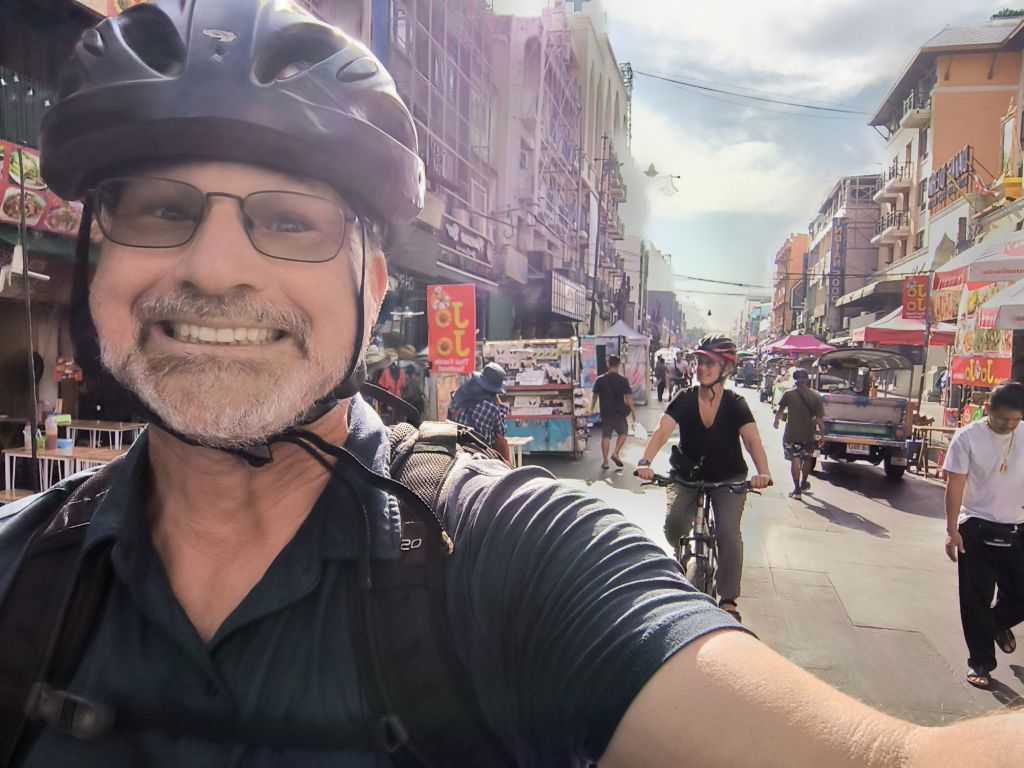
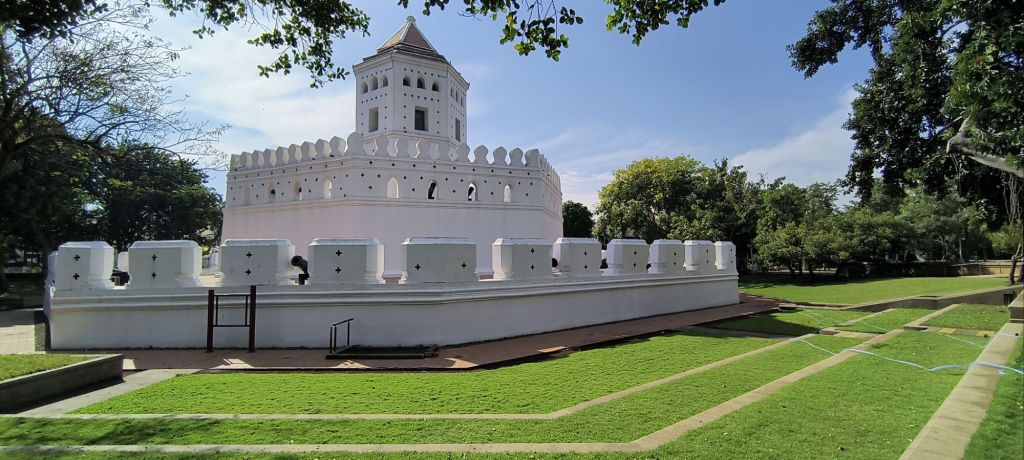
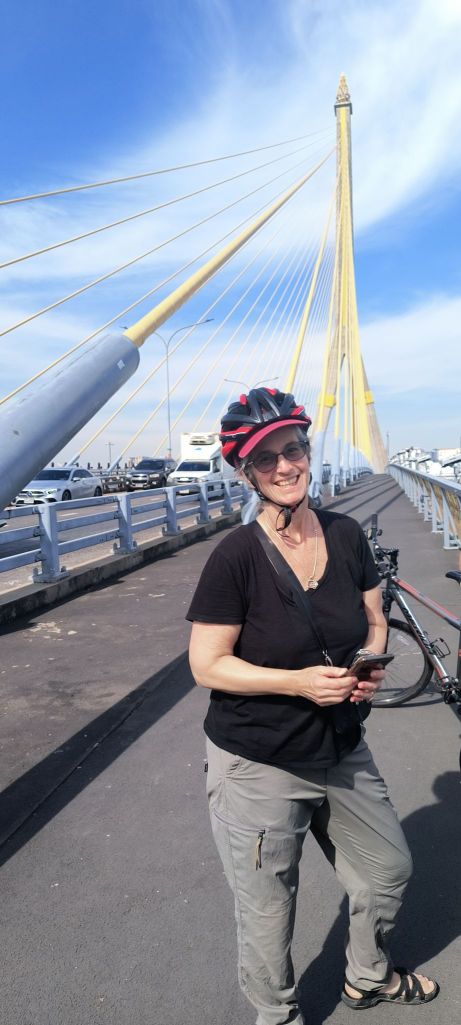
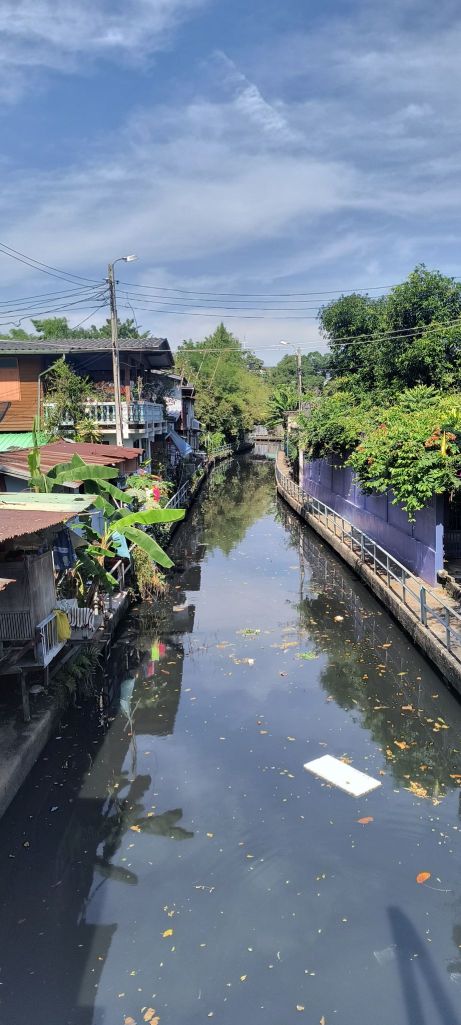
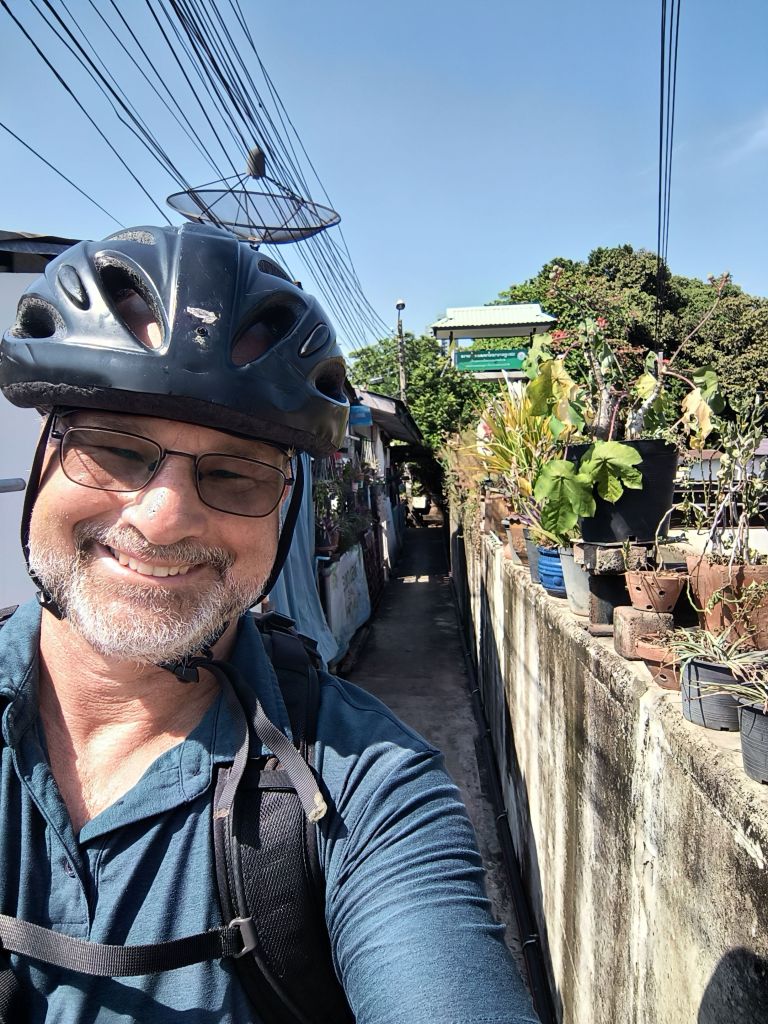
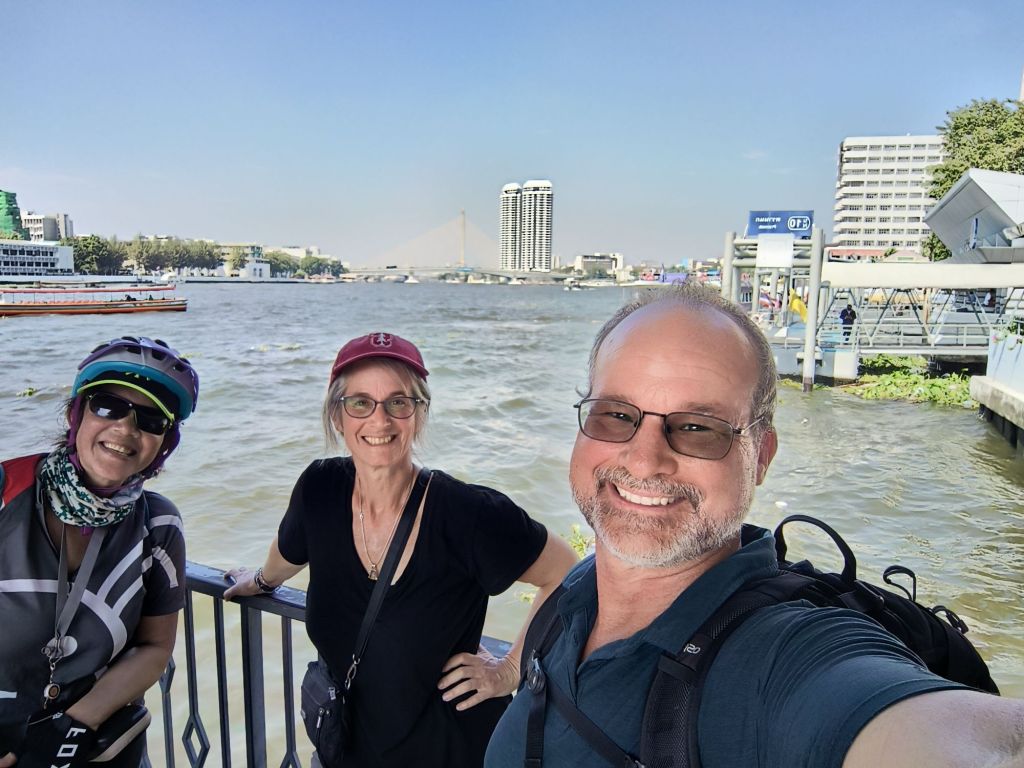
We stop by old forts, royal palaces, ‘slum’ areas (where people have moved from living on boats in the dirty canals to shacks on stilts), the backpackers area, and even a large open field where Tammy tells us that when she was a kid it was the largest flea market. “It had everything for sale – first-hand, second-hand, stolen-hand…” But, it was right in front of the Royal Palace and the last King, Rama IX, who was dearly loved, didn’t like the look of it, so had it removed.
Thailand has thousands of years of history, and we feel like we have been able to personally visit it from the first capital in the 13th century (Sukhotha), from previous kingdoms (Chiang Mai) that joined the country once called Siam, to now Bangkok, which is a more recent capital in the last 200 years. Thailand also has the unique distinction of never being colonized by a western power. The “King and I” musical is actually based on a governess’s memoir of working with King Rama IV in the 1860’s who worked to modernize Siam. His son, Rama V, one of her pupils, is one of the most famous Kings since he was able to have the country prosper, while also keeping the British and French from taking over like they did nearby (India, Burma, Vietnam).
Our guide enjoys showing us the old restored white forts which she says “are from the last war”. “Which war?” I ask. Without skipping a beat she replies, “It is always the Burmese.”
I laugh a bit, since it seems like one of those lines one uses when we are trying to find blame for the ills of the world we choose some bogeyman, the ‘other’, and not look at the underlying causes. Like, why is there so much traffic? – must be the Burmese. Now it is true that Burma did destroy their previous capital, nearby Ayutthaya…in 1767.
On bikes, we get to see how people actually live in this big city. We go past lots of clothes hung out to dry, through small doorways we can see people drinking coffee, taking a nap, enjoying their morning conversation with their friends. Everywhere there is a small shop, a food vendor selling soup, noodles, and trinkets. We wonder how this all works and how these seemingly infinite number of entrepreneurs can make enough to live.
We stop at the train station where there are still two Japanese locomotives left over from when they were occupied in WW2. We could take a modern train from here out to the real “Bridge over the River Kwai” (one of my favorite movies growing up) where tragically tens of thousands perished from the forced labor to build the Burma railroad (I don’t think I fully realized that as a kid).

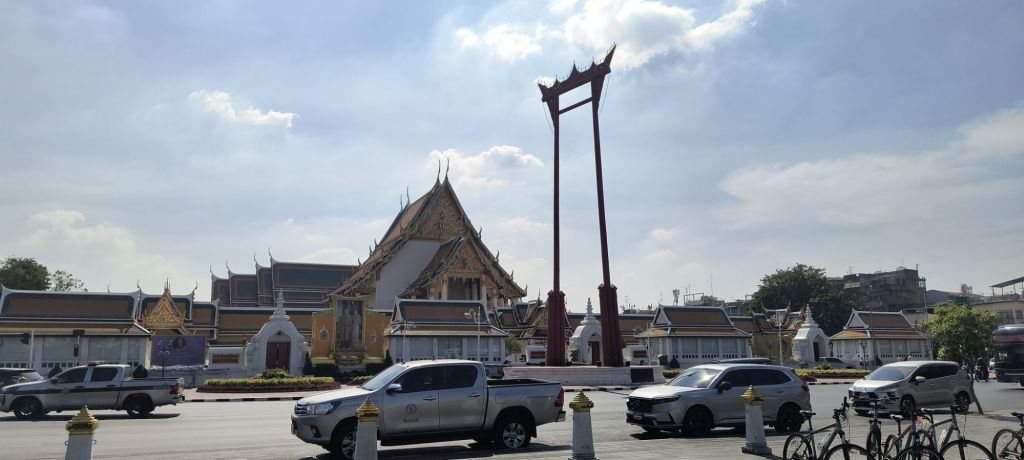
We finish up our bike ride and we have to agree with our niece, Anna, who has said that it was a great way to the city.
We get back to our hotel and continue our daily ritual of taking a shower and staying in air conditioning. The 90-100 degree temperature and high humidity really takes it out of you. Hopefully our longer bike ride next week will be a bit cooler or more in the morning.
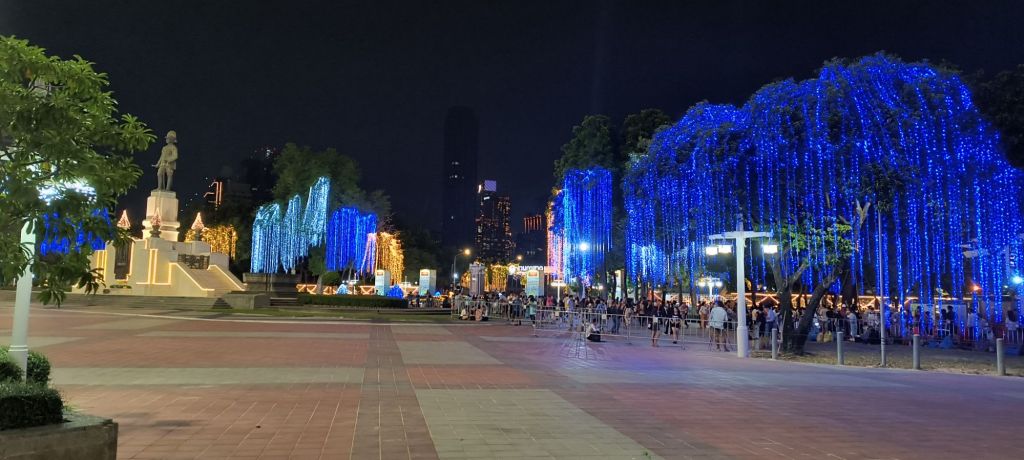
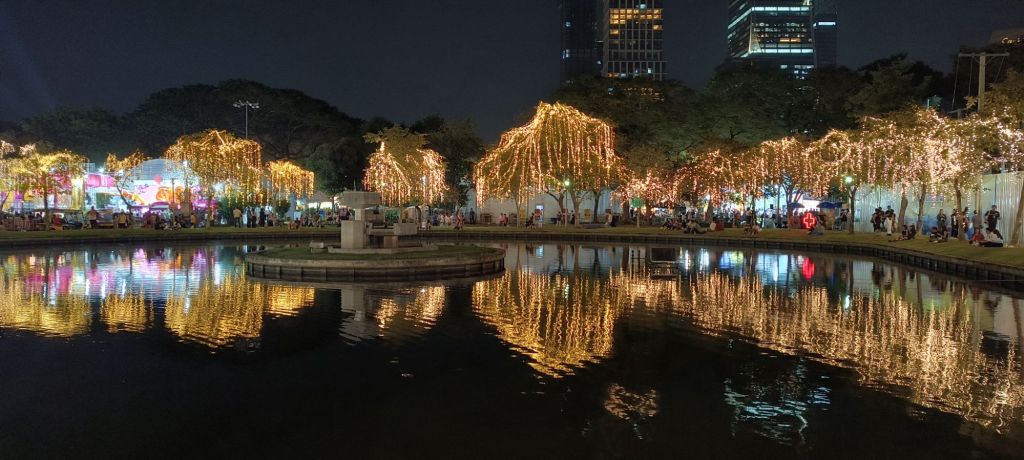
We finish the night and go back out to next door Lumpini Park to see what the Red Cross festival is all about. We find out that it is major fundraiser hosted by all the government agencies. Each one has an enormous pavilion where they are encouraging you to buy a raffle ticket for $1 and get a chance to win something. Think of the state patrol competing with the department of finance to get more money to give to the red cross. I go to the military department and get to shoot BB guns (made to look like a Glock or M-16) at a target. I don’t think this would be allowed in the States. They take pitty on the American and I win a baseball cap.
It is packed and we try to leave, but get held up by a dignatary who is leaving with her motorcade. We don’t think it is the King, since no one was bowing. We have to backtrack through the crowds and finally make it onto our street.
Bonus Material – Story of Bangkok ‘s name (from Rough Guide Thailand)
City of Angels
When Rama I was crowned in 1782, he gave his new capital a grand ceremonial name to match his ambitious aspirations for the city.
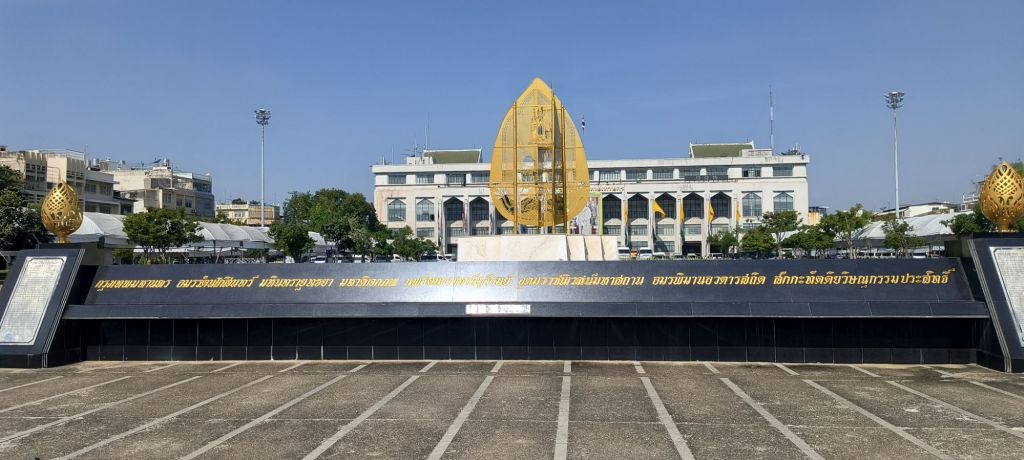
“Krung thep mahanakhon amon rattanakosin mahinthara ayuthaya mahadilok phop noppharat ratchathani burirom udomratchaniwet mahasathan amon piman awatan sathit sakkathattiya witsanukam prasit
(written without a single break in Thai script) is certified by Guinness World Records as the longest place name in the world, roughly translating as:
‘Great city of angels, the supreme repository of divine jewels, the great land unconquerable, the grand and prominent realm, the royal and delightful capital city full of nine noble gems, the highest royal dwelling and grand palace, the divine shelter and living place of the reincarnated spirits’
Fortunately, all Thais refer to the city simply as Krung Thep, ‘City of Angels’, though plenty can recite the full name at the drop of a hat – like our first guide did back in Chiang Mai.
Bangkok (likely from the words – bang ‘village by the stream’ and makok ‘Java plum’) was the name of the original village on the Thonburi side (the other side of the main river) even our bike guide Tammy agreed. As is often the case, with remarkable persistence, it has remained in use by foreigners since the time of the French garrison – so it stays as Bangkok.

 Siri and David Adventures