Day 43: Bang Saphon Noi Beach, Southern Thailand
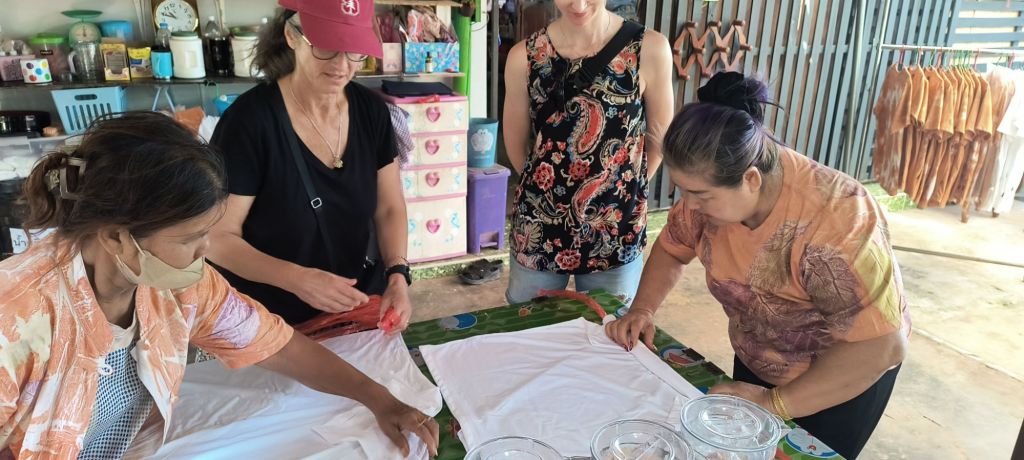
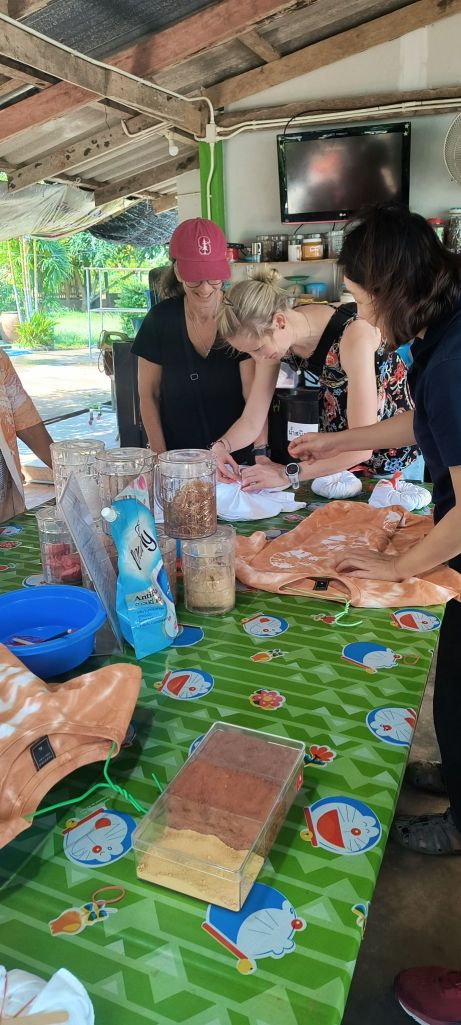
It supposedly started when the kids would came back from playing in the deep red river and the stains wouldn’t come out. One entrepreneurial mom decided to see if she could tye-dye with this deep red clay and sure enough a cottage industry was born.
We get to meet two of the Mom’s running this business from the front of their house as we try our hand at copying their tight folding and even tighter rubber banding techniques. We hope to see how our creations turn out tomorrow once they soak in the boiled vat of dirt.
This field trip is the idea from our main local guide Top, who grew up in Bangkok. We learned a bit more about him last night, that he has been a guide for almost 10 years. When Covid wiped out tourism, he started selling those sweet potatoes, that we just passed yesterday, door-to-door via social media and a WhatsApp group. He tells us that his best customers were weight conscious women.
Top tells us, “Tourism finally came back, just two years ago, but still not at the peak.” Being a guide is something he seems to truly enjoy. Top also speaks German, but the Germans don’t seem to be coming anymore (we wonder where they go now) and they believe it is more seasonal now even with the English speakers. He speaks highly of Grasshopper Adventure Tours that he is part of and their commitment to hire locally – which makes us feel good about our choice – out of so many out there.
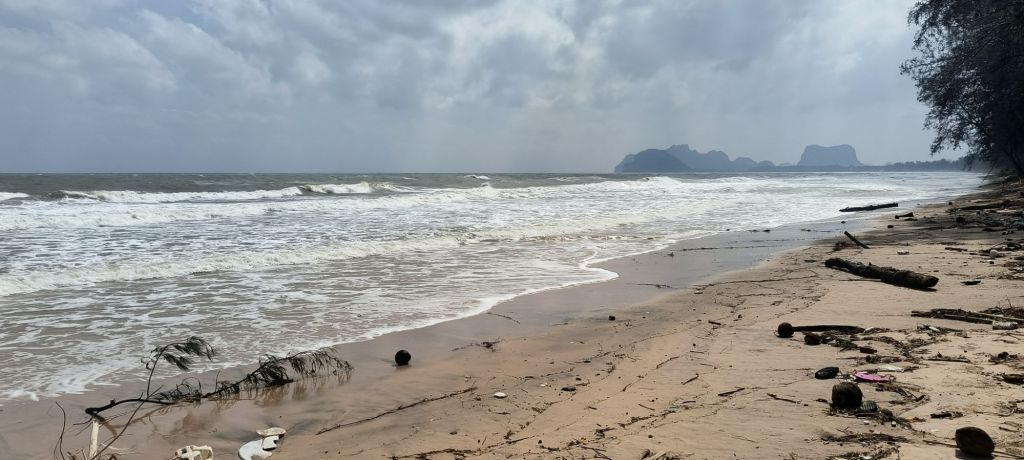
Top is stuck with us for the day and he has to find ways to keep us entertained. The winds continue to be gale force, so the planned easy boat ride and snorkeling at the nearby island are not happening. We are all game for this day’s adventure.
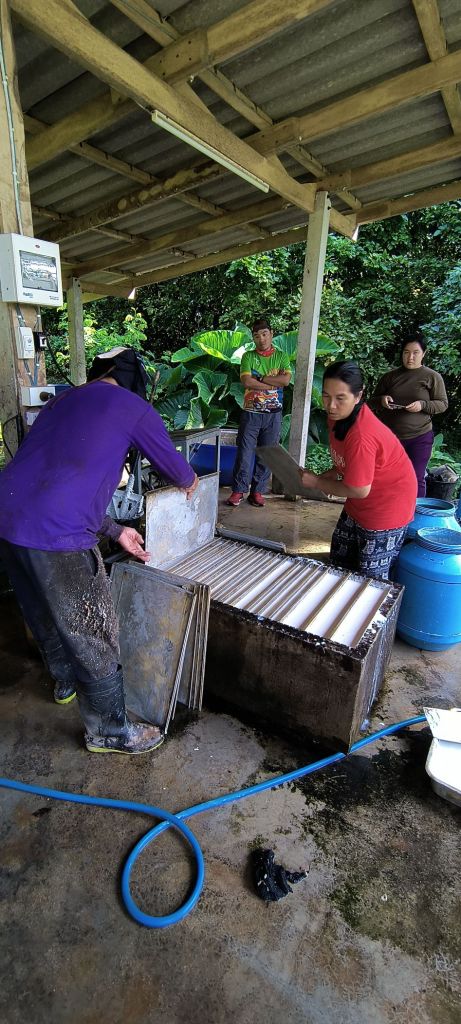
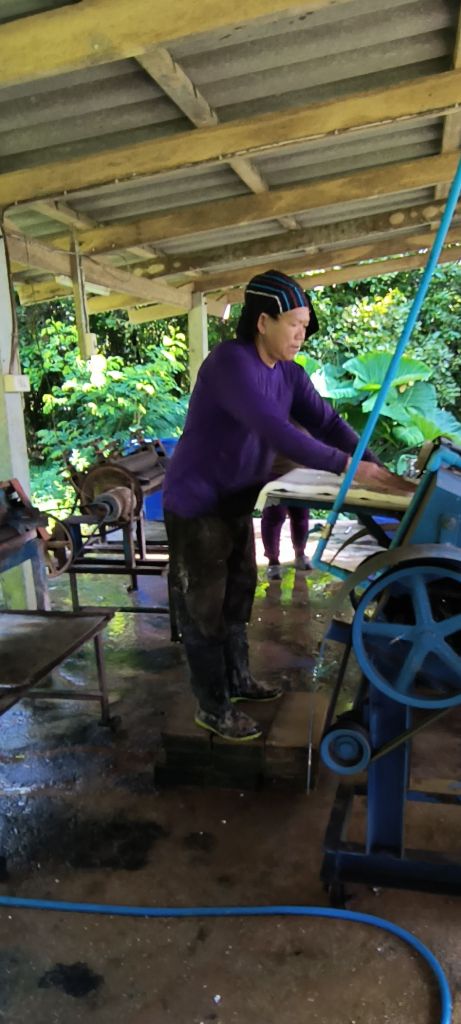
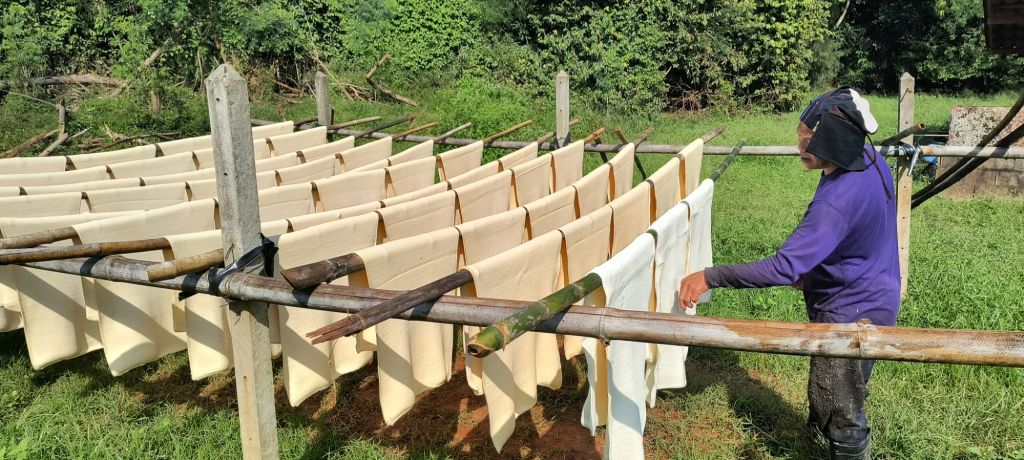
Our first stop is a university supported working rubber plantation. We see the different color trunks that show which of the four groups they are in: Green – no fertilizer up to White – fertilizer twice a year. Current results are in – fertilizing just once a year produces the same yield. I get to try out the slight cutting technique that starts the sap running and later Siri gets to put the congealed white concoction 2 inch slab into a flattener which creates an almost yard long 1/4 thick rubber mat which fetches about $2 each. All of this will be tires, shoes, and, after a bit of chuckle, we find out that only the best grade is used for condoms
Watch out – we nearly have a whole documentary done now. We all leave fascinated with this very hands-on labor intensive process. We are glad to hear that the workers actually make two to four times the minimum wage for this intensive process that starts just before midnight and ends in the afternoon every day.
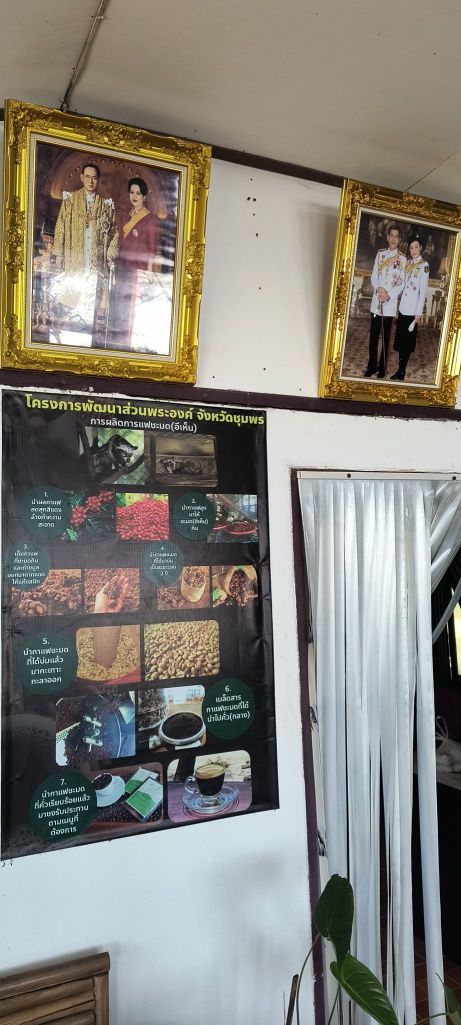
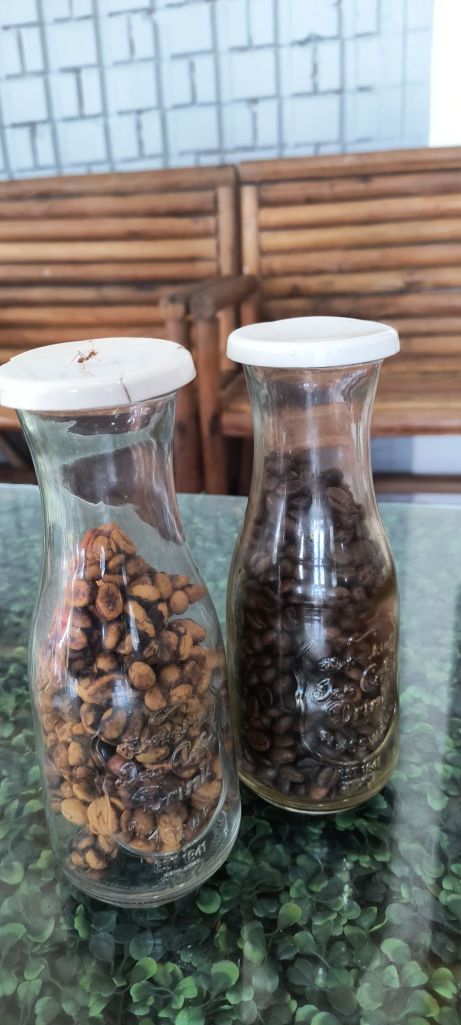
We finish up before lunch going to another King’s royal development project. This one was to provide jobs to rural areas along the coast, so the King introduced a new flower for production, tourism for the only sand dunes in the country and our unique stop – civet coffee. This is where a specific cat-like animal digests coffee beans and their stomach acids help refine it. Then when it comes out (yes, someone has to go collect their poo afterward) they clean it and soon it is dehusked and ready for roasting. It actually is seen as a delicacy and seems to cost about 3 or 4 times more than your regular coffee beans.
Of course I have to try it and so Top and I sip our little espressos made from only the finest civet coffee beans and both feel very sophisticated.
Afterward I read up on the ethical treatment concerns of force feeding these wild animals coffee beans (some do it naturally) and I am OK with this being the first and last time. I guess I just don’t have that refined coffee taste.
We head back to get some rest by the pool before we start up again tomorrow with our longest bike ride. Fortunately, along the flat coast and hopefully with the strong winds at our back.







 Siri and David Adventures