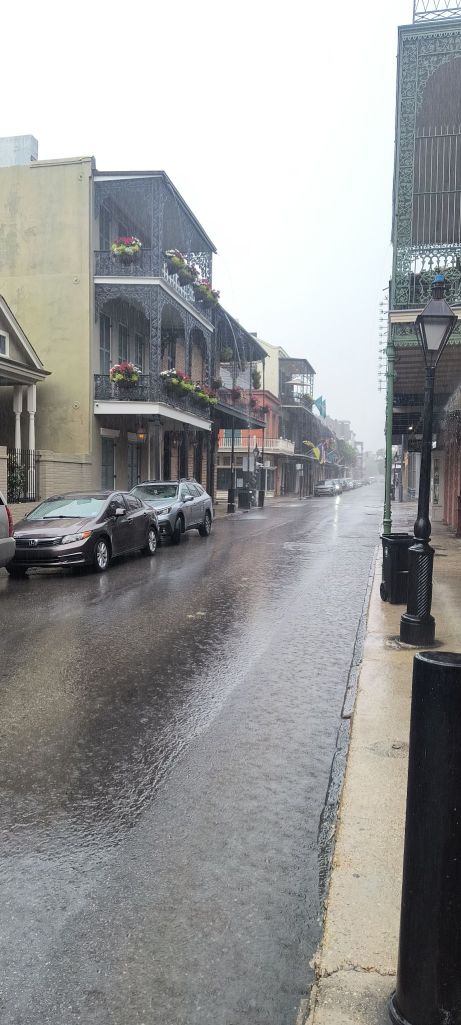
We had heard there was a thunder and lightning storm expected in the afternoon, so we planned our typical walking tour for the morning. As four (!) inches of rain fell upon us as we walked through the French Quarter, we recognized we had not planned that well. We should have done the indoor WW II museum instead.
Our guide told us that this was just a “normal” rain. She told us that if it was torrential, we wouldn’t be able to see past the next block and the streets would be overflowing. We went a few more blocks learning about the long history of this French, then Spanish, then Spanish back to French to be sold to the US as part of the Louisiana Purchase.
We begin stepping over the overflowing drains on the streets as the roof gutters were pouring on the street, then our guide decided THIS met the criteria for “torrential” rain. My waterproof sneakers were put to the test as Siri had just decided to wear sandals and wade through the now ankle deep, and more, puddles. Fortunately, we did bring out the umbrellas and GoreTex and both were needed to try and get back to our hotel. Our cell phones buzz with flash flood warnings. One of the worst parts was the last section through the parking lot where we almost waded back to our room. We are glad to be on the fourth floor.
The next morning there are still signs of the flooding as the sun peaks up through fog on the mighty Mississippi.
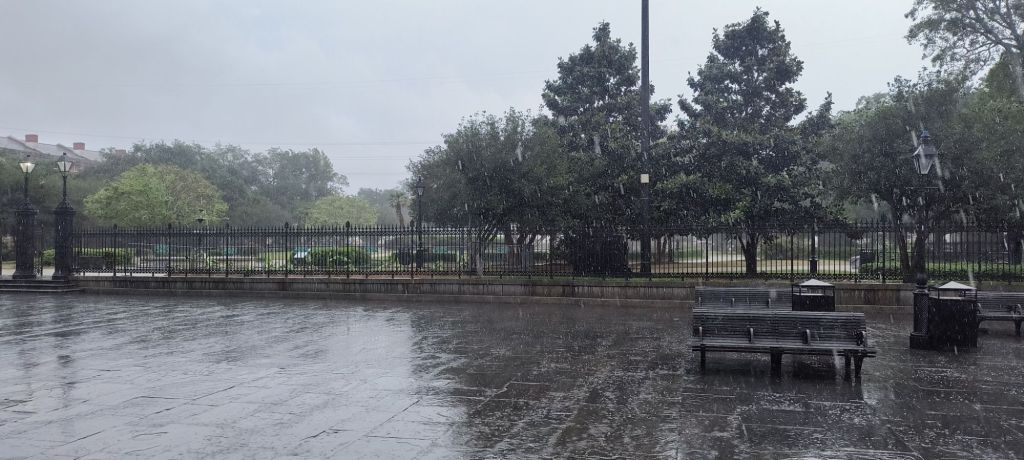
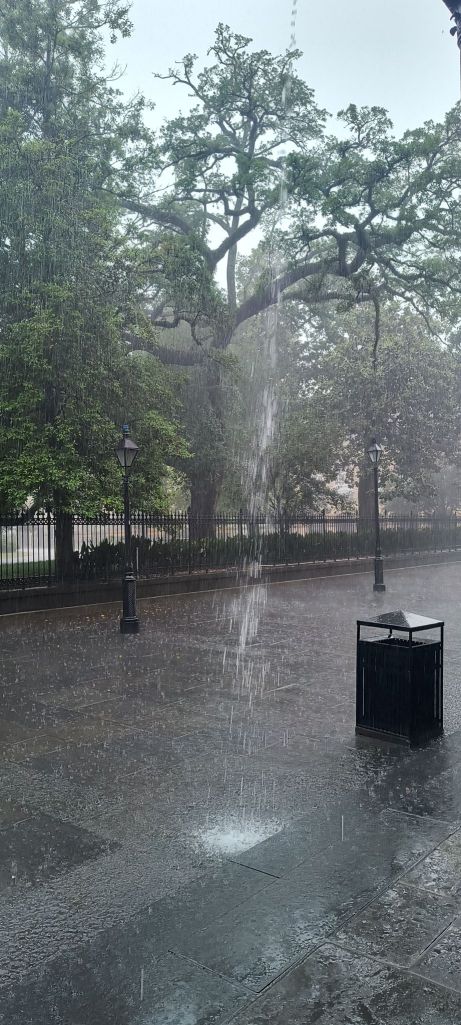
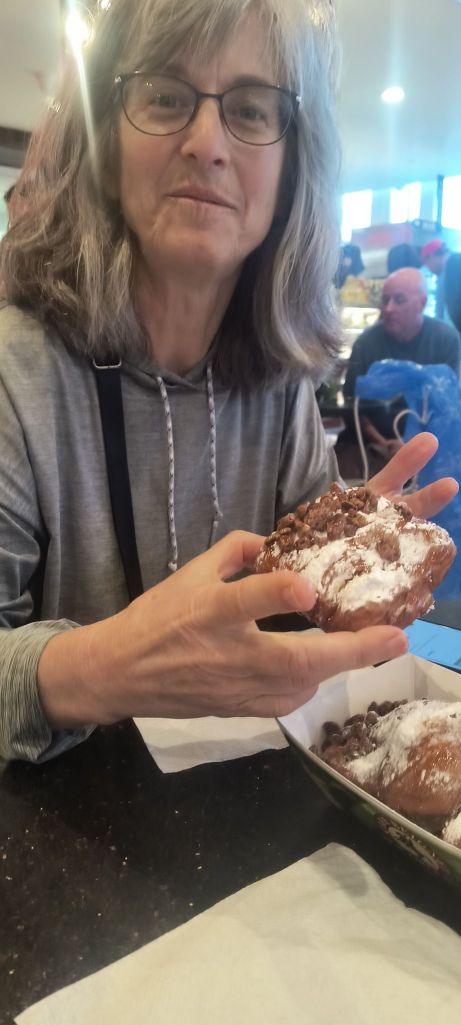
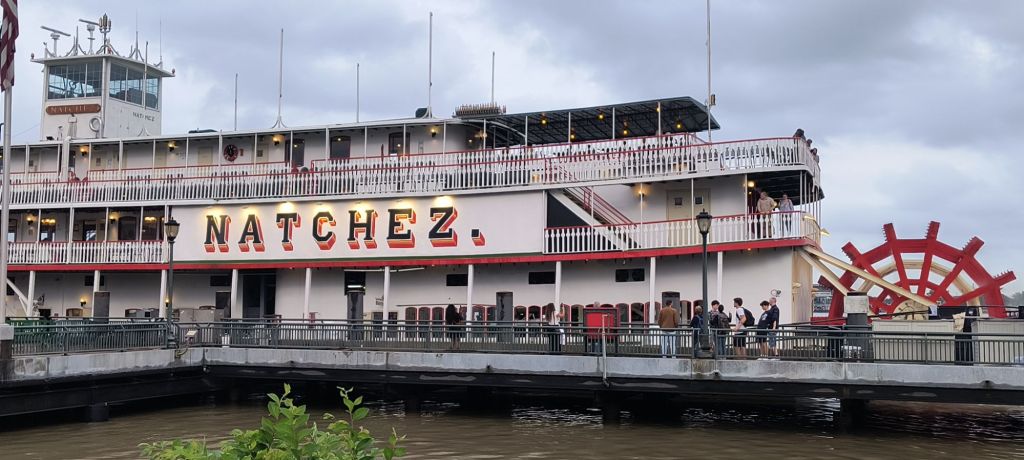
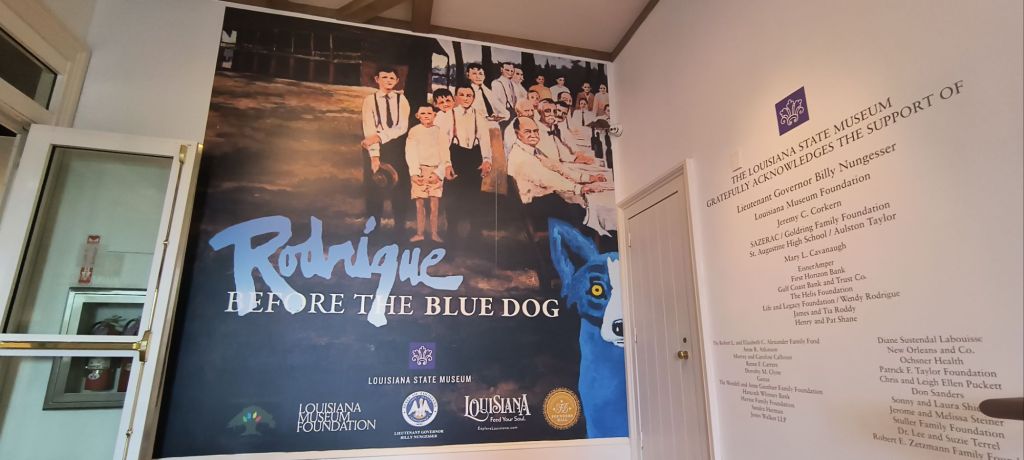
Jackson Square is unusually vacant at noonThe built in street gutters next to the cathedral were getting their full use todayDon’t step off the sidewalk – maybe a jump might get you to a little less wet groundThe gutters were making nice waterfalls into the streetsWe stopped for beignets – the official state doughnut – a French Inspired Creole pastry meant to be eaten for breakfast, but really good at any time of day.Of course there are stern wheelers on the Mississippi A monument to immigrants, on the waterfront, celebrating their contribution to the city and the countryGeneral Andrew Jackson figures prominently in New Orleans, mainly for his victory in the Battle Of New Orleans where he successfully defended the city by creating a coalition of free blacks, Cajun, creole and native Americans to defeat the larger British forces. This later president is also known for defying the courts and forcibly removing indians in the ‘trail of tears’, and according to this historic plaque, for defying courts earlier by refusing to lift martial law after his 1815 victory.Trying to drink like the locals with the ‘signature’ New Orleans rye whiskey drink The SazeracCajun artist Rodrigue is now most famous for his “Blue Dog* series – a brightly colored Cajun folklore inspired dog that became part of his paintings.The next morning, the nearby fountain now includes the sitting areaMorning on the Mississippi





 Siri and David Adventures