Lafayette, Louisiana to Atlanta, Georgia
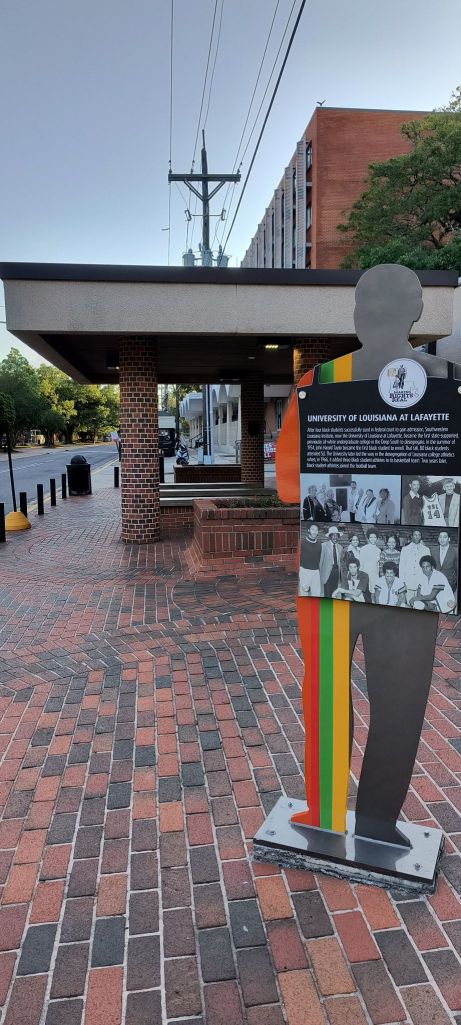
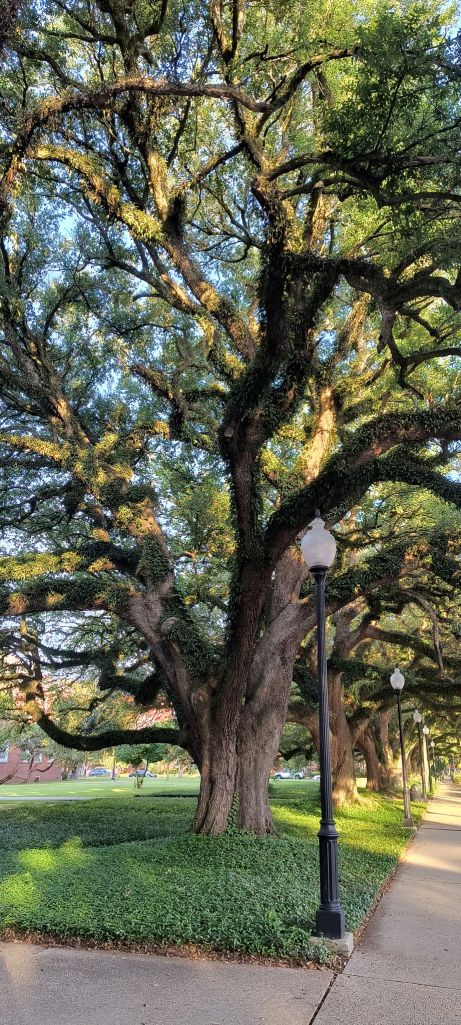
On the last day of Cycle Zydeco we finish by going through the University of Louisiana at Fayetteville with amazing century old live oaks and beautiful red brick stately buildings. What I didn’t know is that this was the place of one the first desegregation campaigns in the deep South.
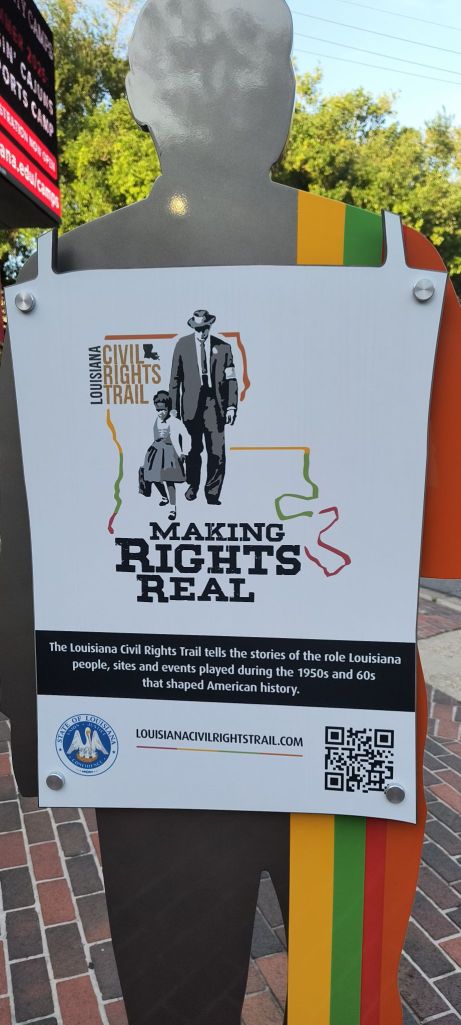
As stated on the memorial honoring the “four who would”
“Prior to the Brown v. Board of Education decision, the movement to integrate Southwestern Louisiana Institute (SLI), now the University of Louisiana at Lafayette, began in 1953 when four Black students – Clara Dell Constantine, Martha Conway, Shirley Taylor and Charles Vincent Singleton – were prohibited from registering at the university. A suit was filed and the case of Constantine v. SLI was part of the NAACP’s lengthy campaign to desegregate Southern colleges and universities. In the summer of 1954, John Harold Taylor became the first Black student to enroll.” Ten years later, they would be the first in Louisiana to desegregate athletics as well.
All done non-violently in Louisiana (if these stories are true) as compared to other states.
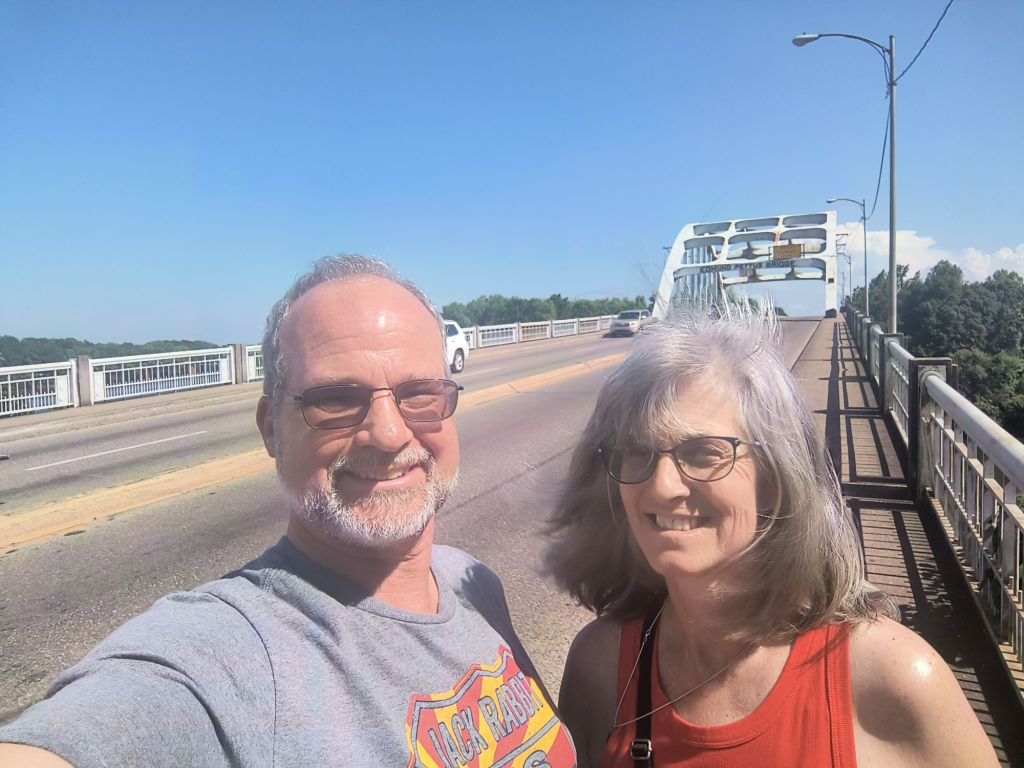
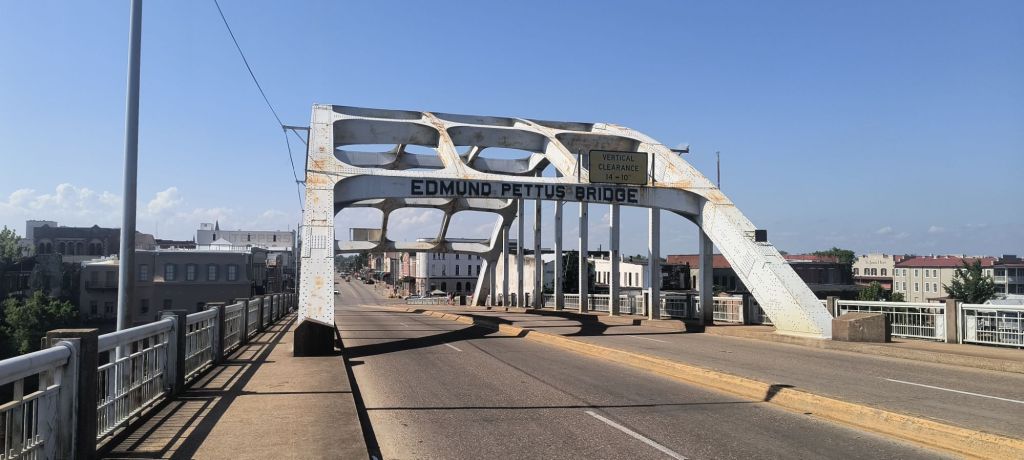
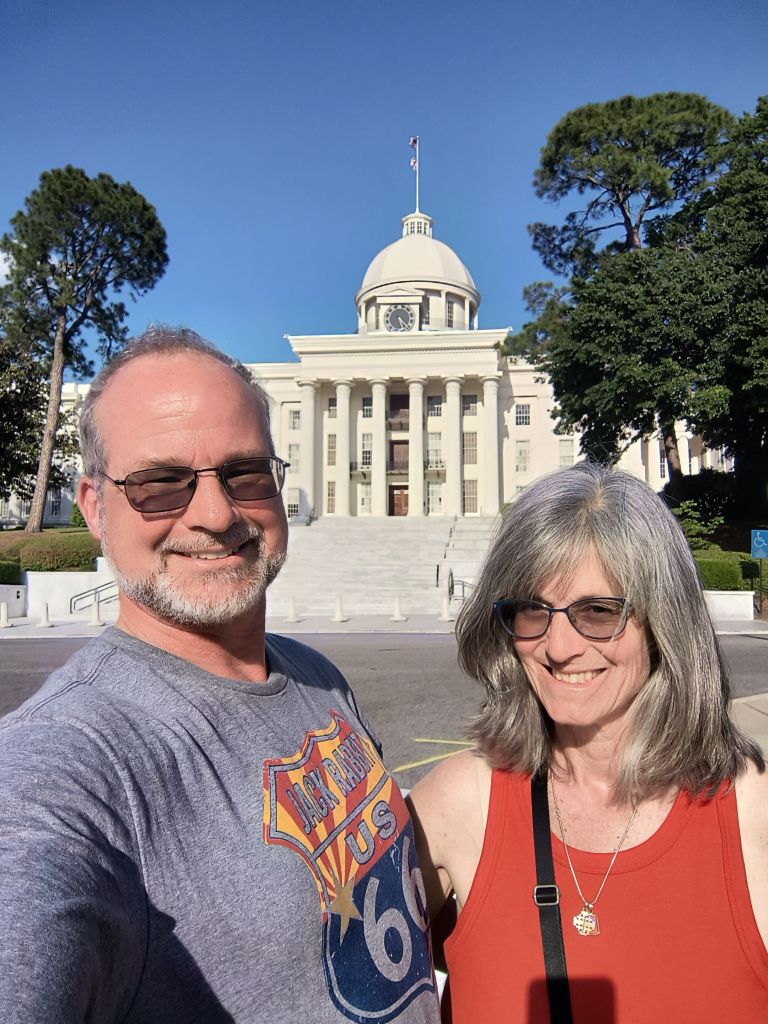
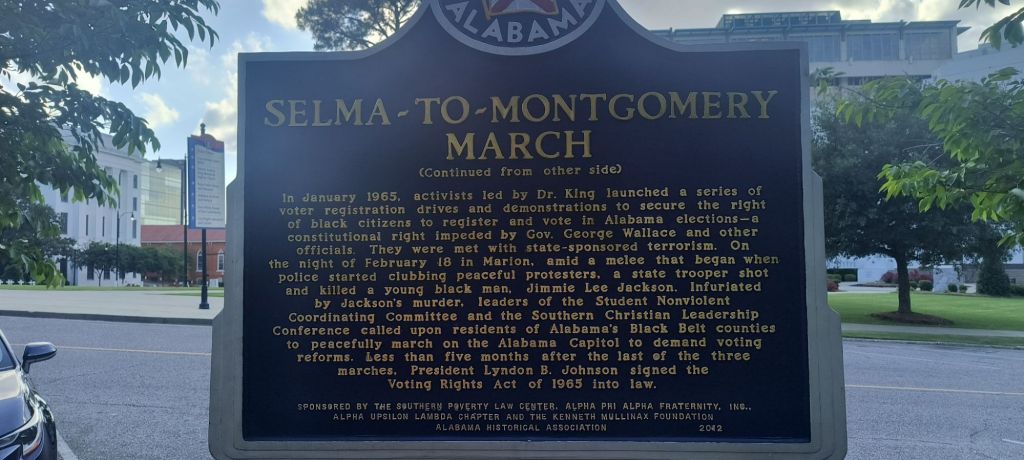
As we leave Lafayette, we embark on a mini-civil rights tour of two capitols (Jackson, Mississippi and Montgomery, Alabama) with a stop at the infamous Edmund Pettus bridge in Selma – the site of “Bloody Sunday” when on March 7, 1965, peaceful protestors marching for voting rights, led by John Lewis (later Congressman) were brutally beaten by police officers.
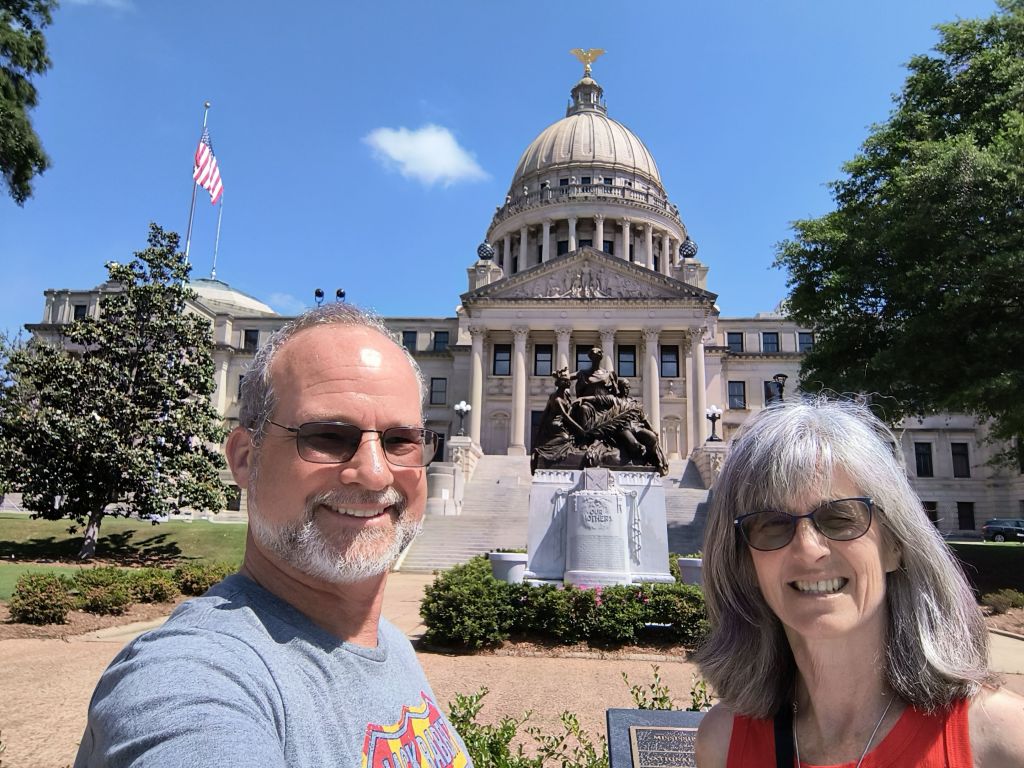
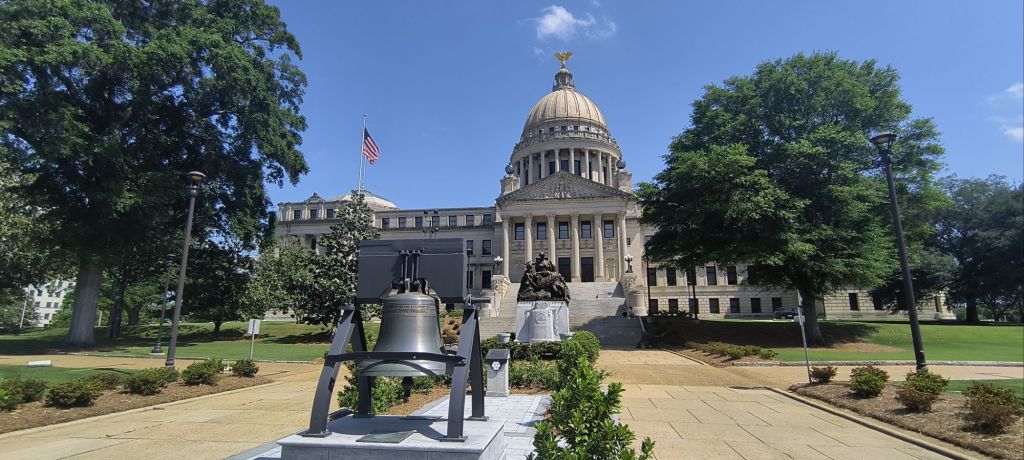
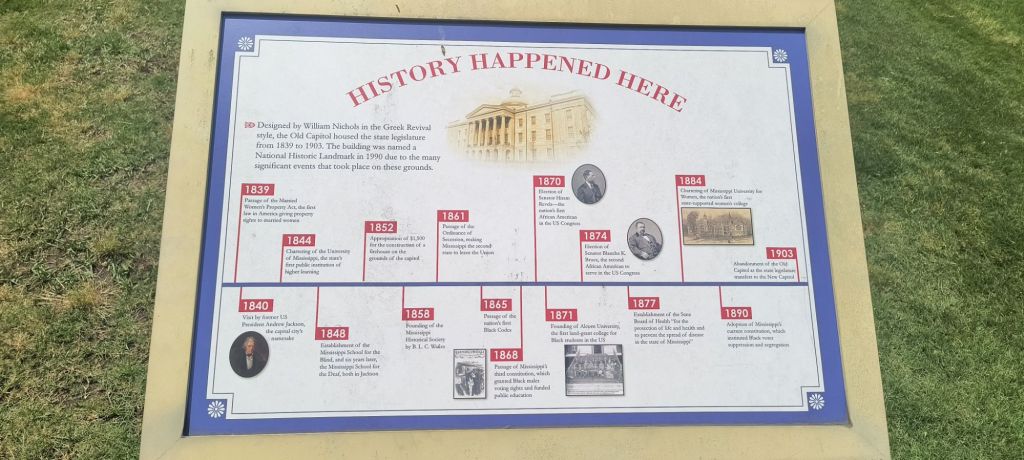
At our first stop in Jackson, the dichotomies are all around us. Whereas there is a clear and truthful history of Mississippi stated on official information boards that they were the second state to secede in order to preserve slavery, there is also a Confederate statue on the steps of their capitol built in 1901. Next to the newer civil rights museum is another Confederate statue placed in 1890, right after they introduced the black codes – the Jim Crow laws. And everything is closed today in Jackson because it is a state holiday – Confederate Memorial Day.
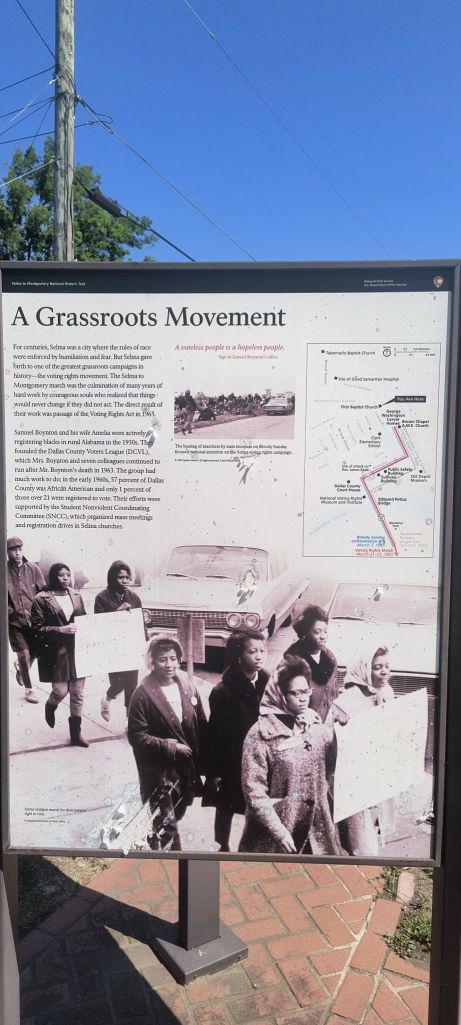
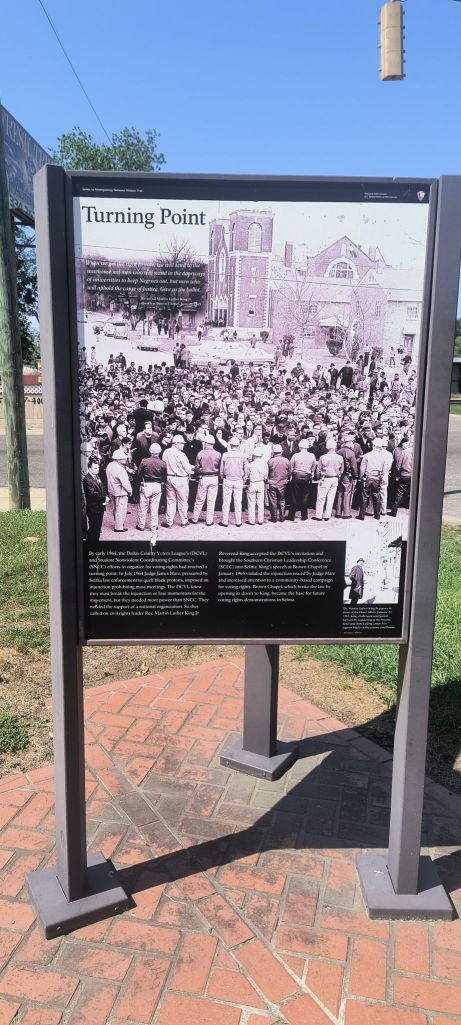
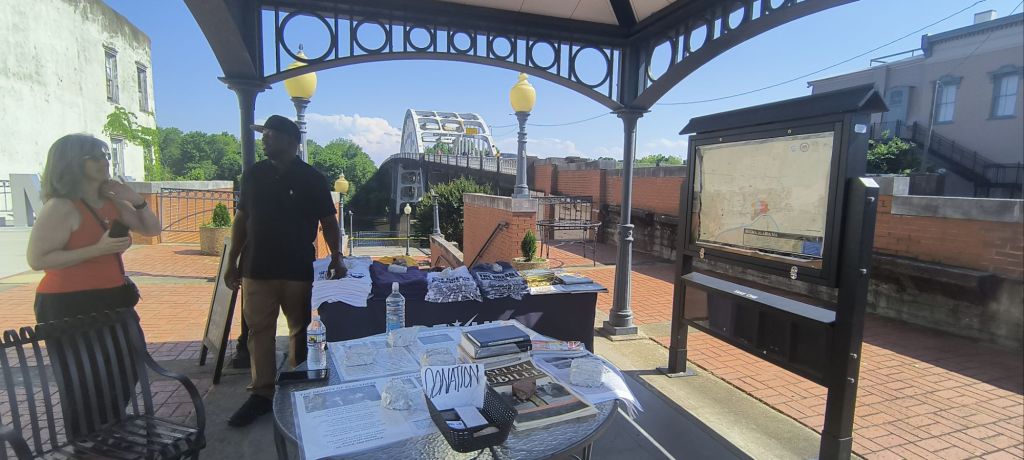
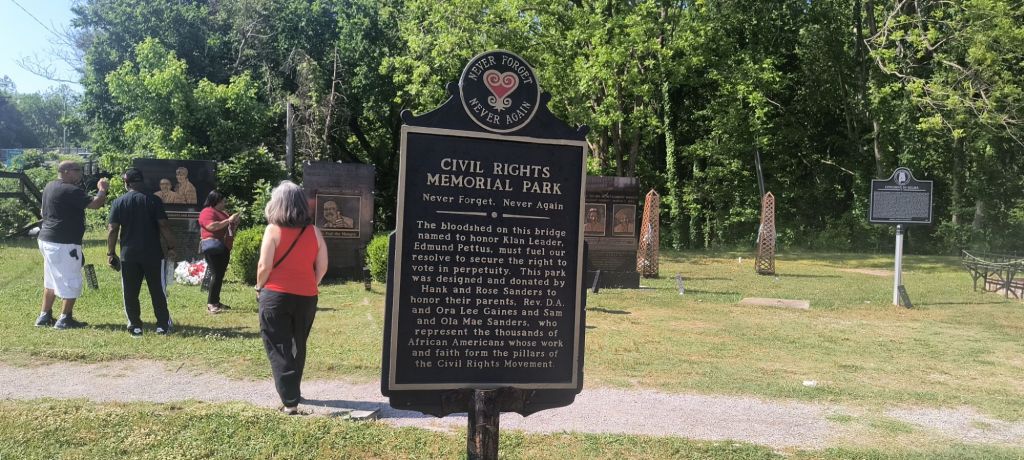
In Selma, we stopped and followed in the footsteps of the brave non-violent protestors who walked across this same bridge in March 1965 into the waiting police officers – and they continued on. Due to their bravery and sacrifice, the voting rights act of 1965 was passed which allowed blacks (and poor whites) to finally register to vote after being denied for decades.
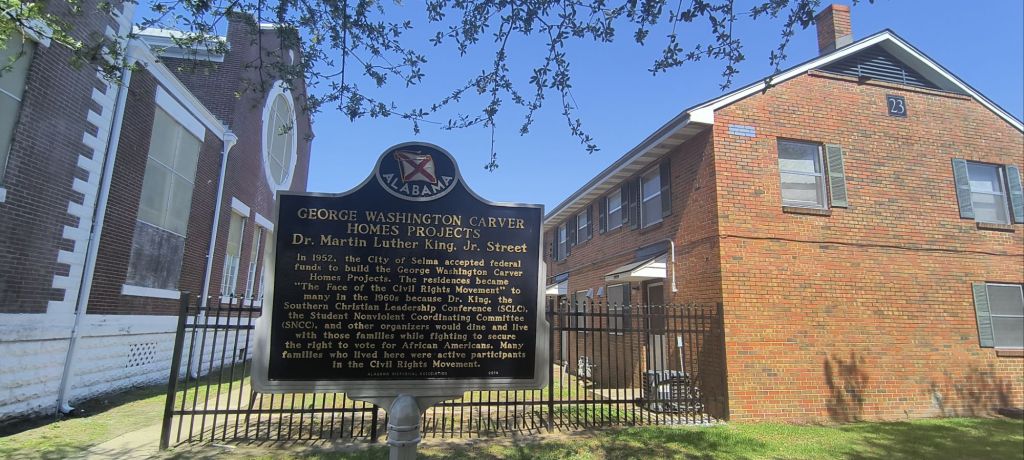
We stopped along the national Park trail and I learned that the struggle for voting rights didn’t end in 1965. After registering to vote, many blacks lost their jobs due to being fired by the wealthy landowners. They ended up homeless and had to live in tents for years. it showed me that these struggles are ongoing.
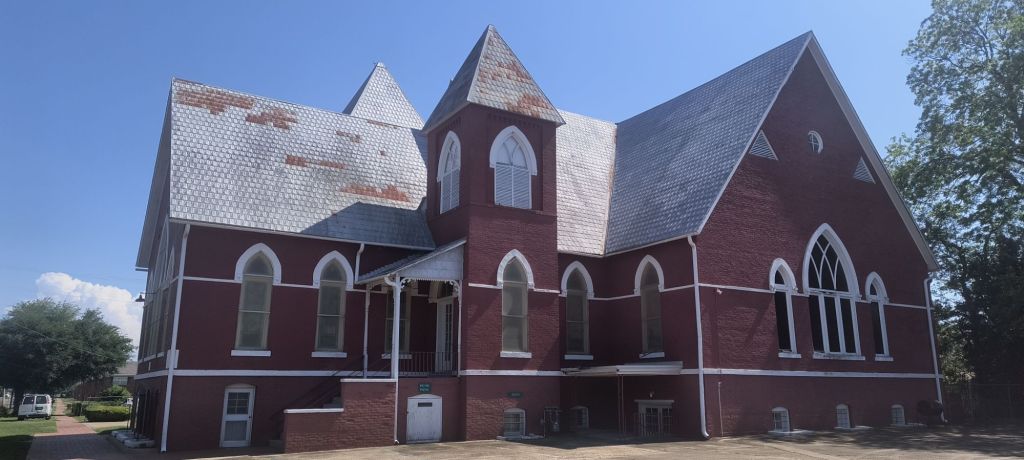
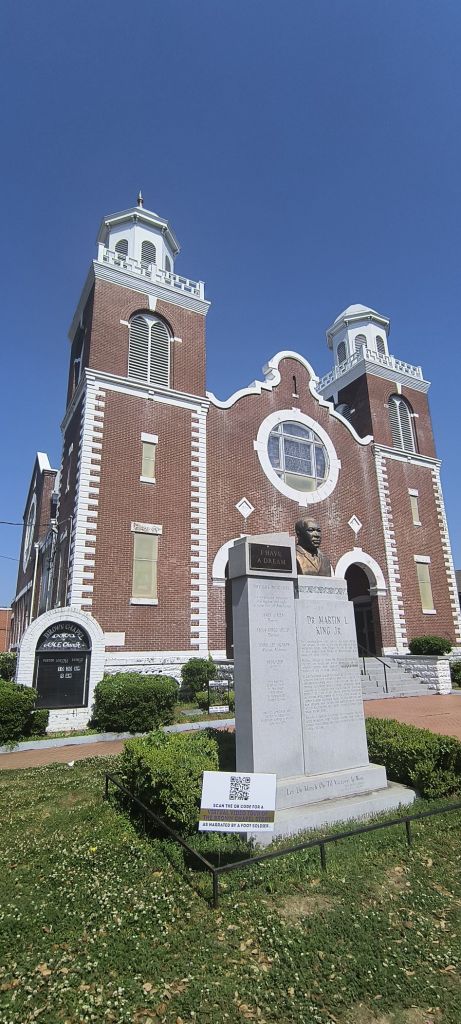
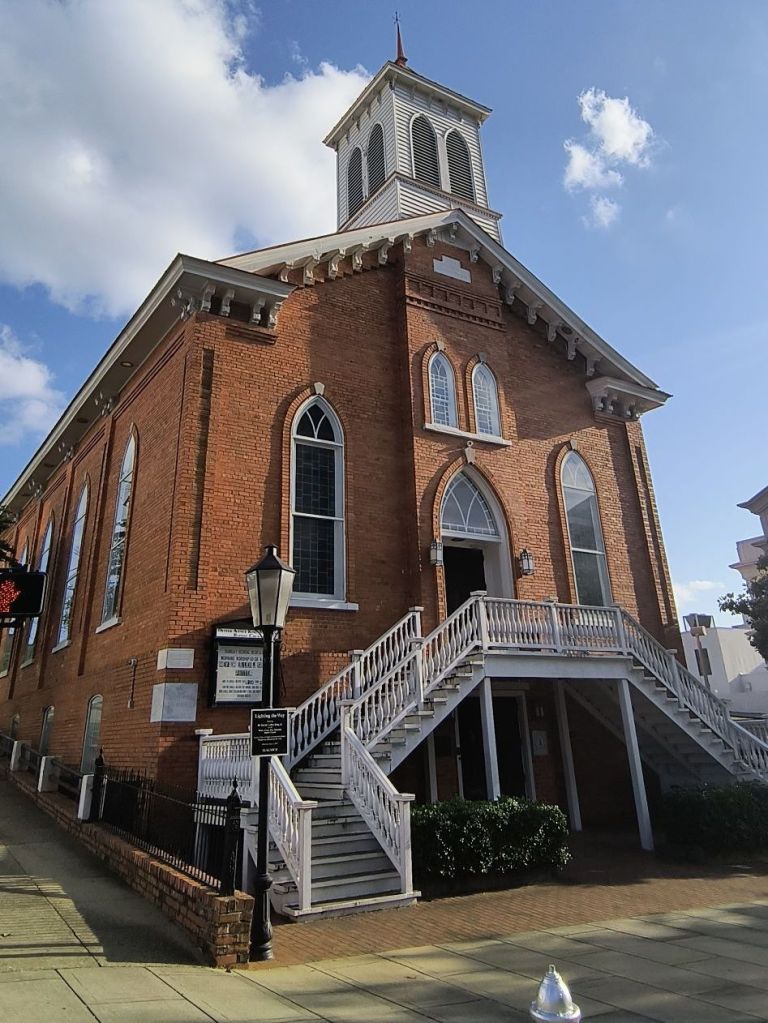
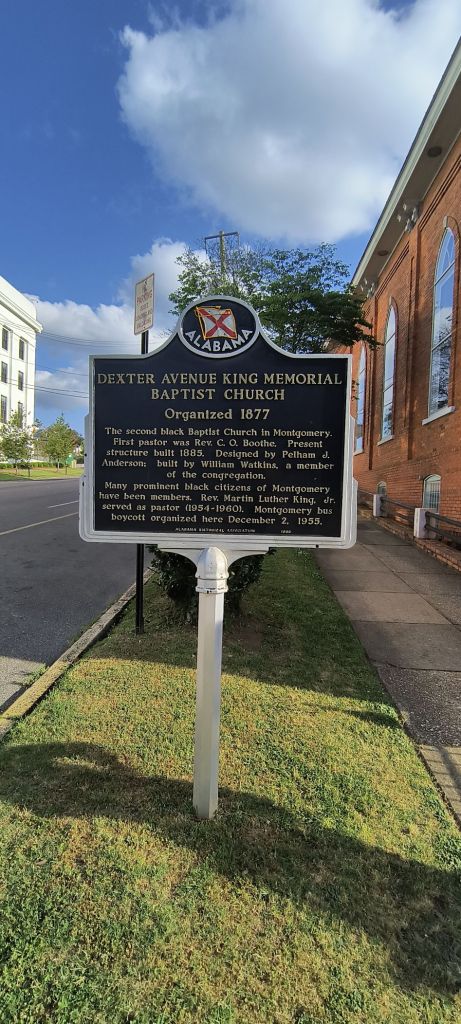
In Montgomery, we stopped at the church where Martin Luther King Jr. was a young pastor. After Rosa Parks refused to give up her seat, MLK Jr was chosen to help lead the successful year-long Montgomery Bus Boycott in 1955. What I didn’t know was that many unsung women played an instrumental role in leading and supporting the boycott in churches and in their homes.
So much richer stories to tell about and learn more about these places and events. There is clear relevance today as civil rights and voting rights are under attack.
One day was enough to tell us that we need to make this trip again.
We are glad we saw the physical places of these historic events and hopefully we will return to do a much longer and deeper dive.

 Siri and David Adventures