West Newton, PA to Connellsville, PA
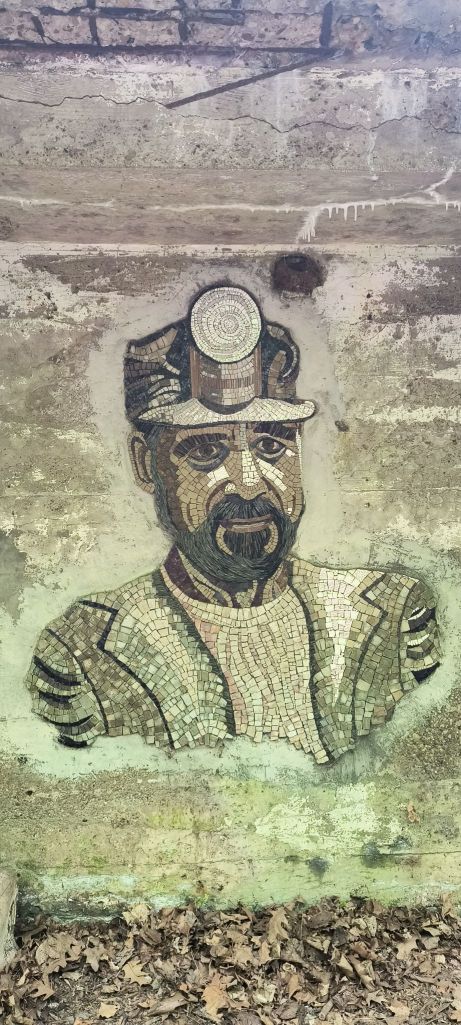
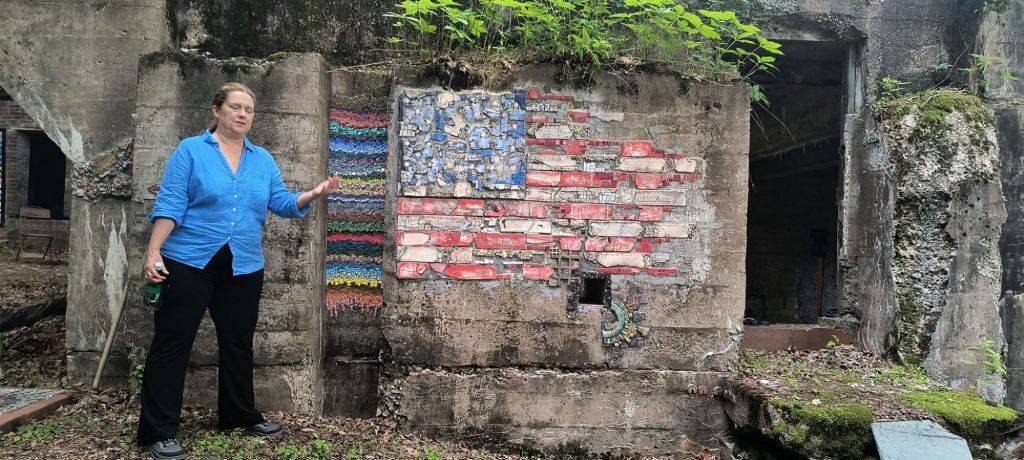
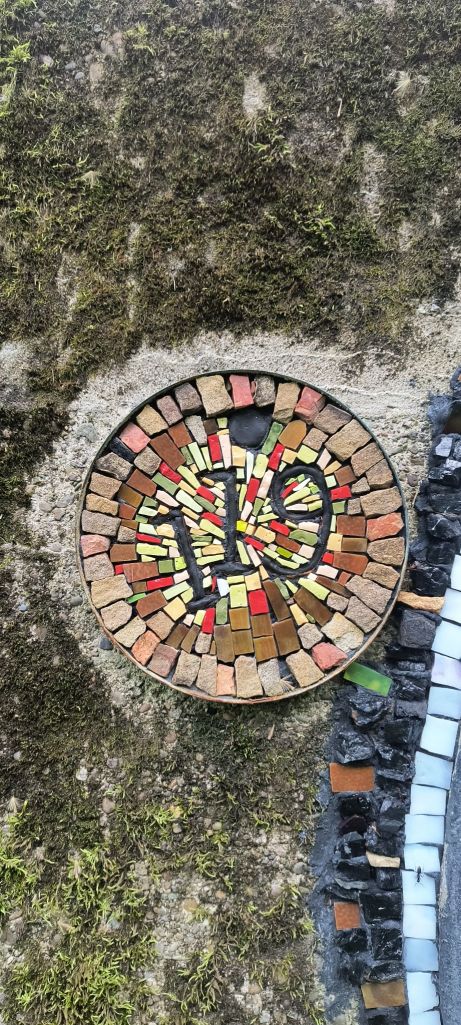
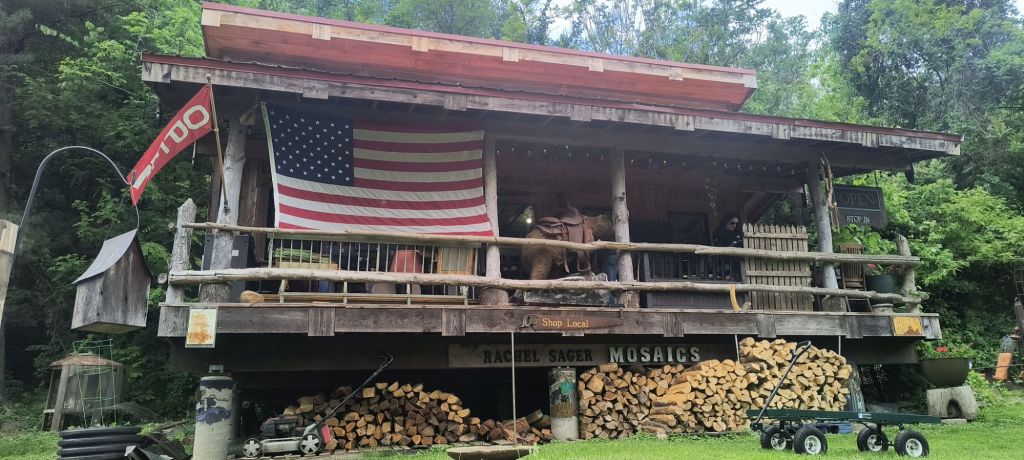
“Ten years ago, I bought a coal mine by accident,” says Rachel Sager, owner of Sager Mosaics on the GAP trail and curator/designer of the Ruins Project.
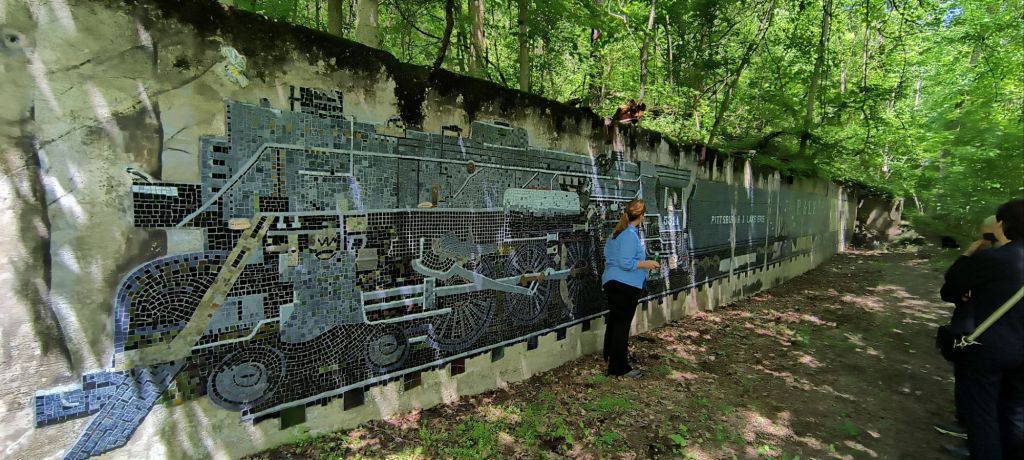
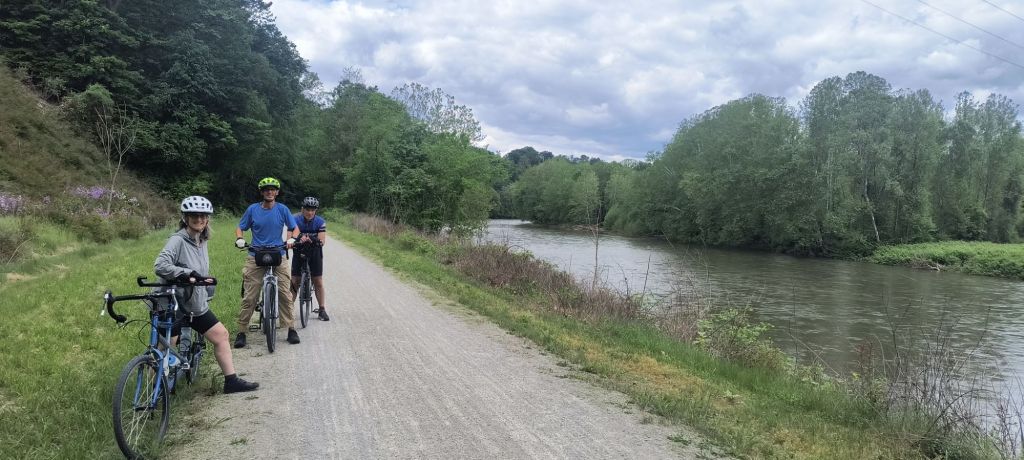
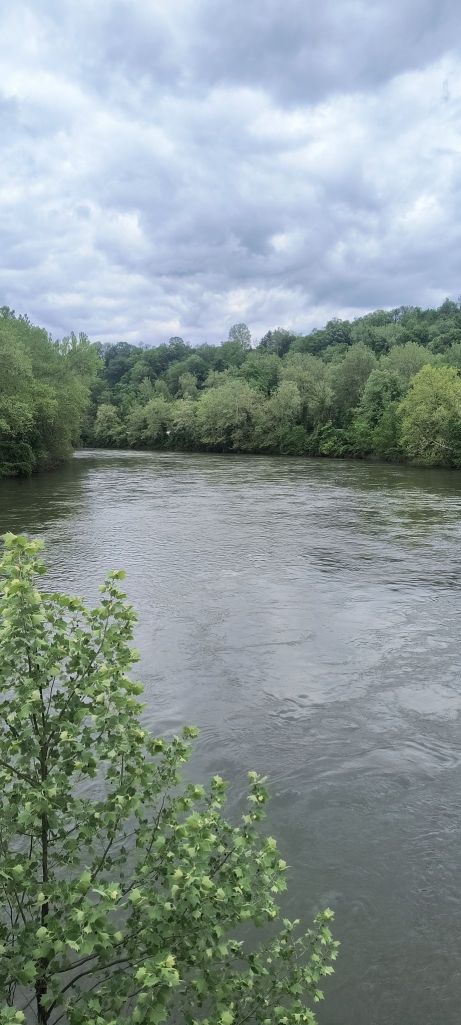
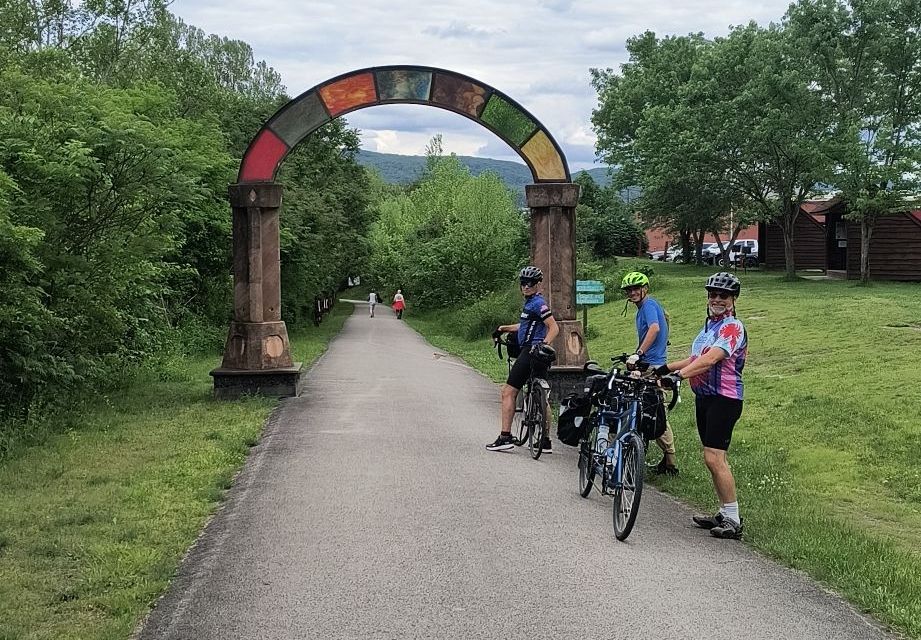
Our second day on GAP is a more relaxing day as we move into the rhythm of biking, stopping, and enjoying the natural beauty around us. It is also a recognition of the industrial legacy of this area. The reason there is this 150 mile trail is because there was the Pittsburgh – Lake Erie train that transported coal in the 1880’s up and down the Youghiogheny river (called the Yough – ‘Yawk’ – by the locals) and then up to Pittsburgh to the Monongahela river – ‘Mon’ by the locals. Once the coal was mined out in the 1940’s, the industry started to move away and was mostly all gone by the 1980’s. The GAP trail was first thought of in 1975 to repurpose this line and now over a million people a year benefit from this legacy.
Since it is a shorter distance today, we all look for points of interest along the way. Siri finds out that the Ruins Project, created by artist Rachel Sager, is actually doing tours of her mosaic art installation on an abandoned cement coal building. David finds a Unitarian Universalist church service only a few miles away. We both head out together and then take our separate paths making plans to meet up later down the trail.
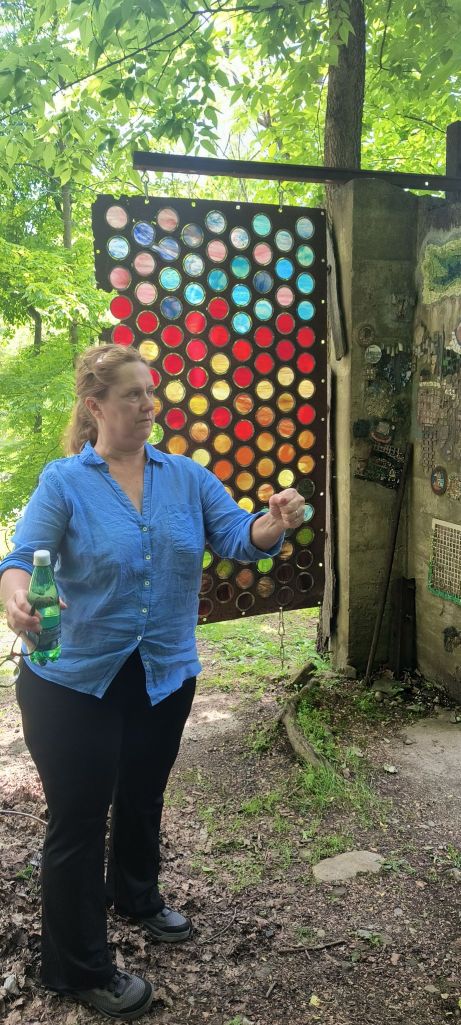
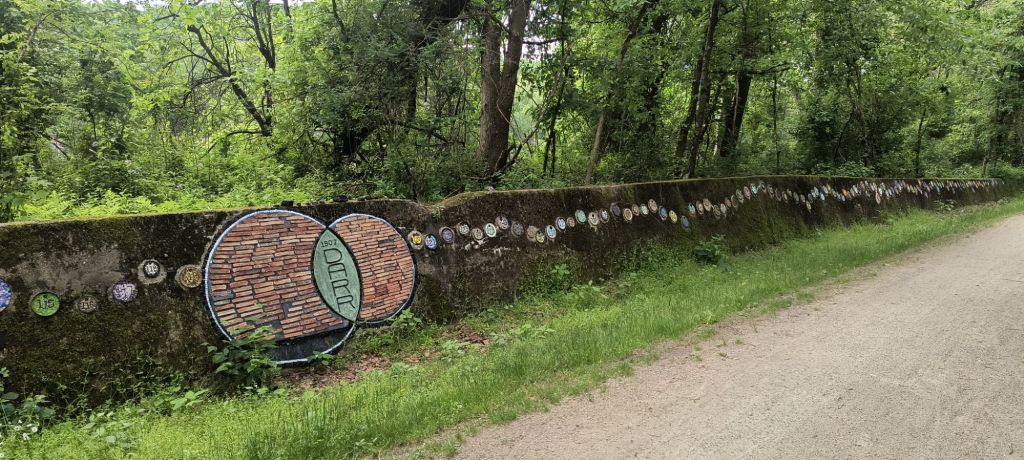
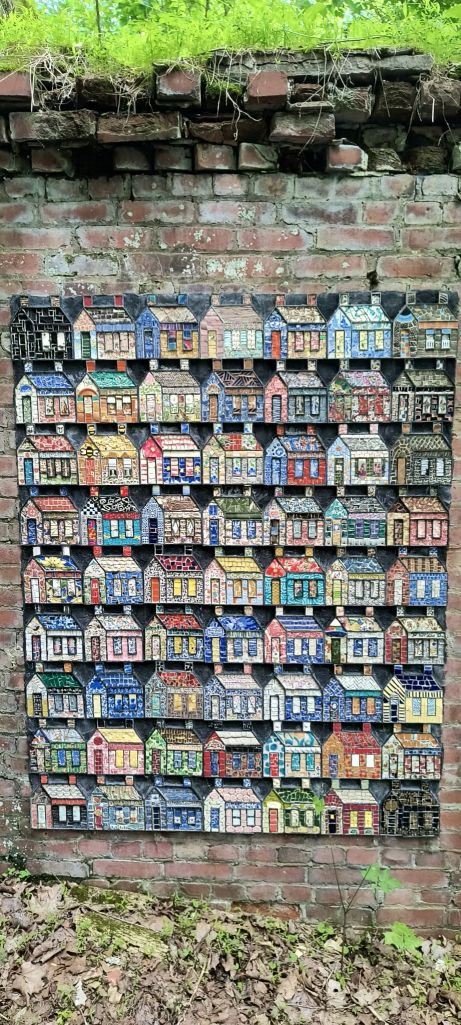
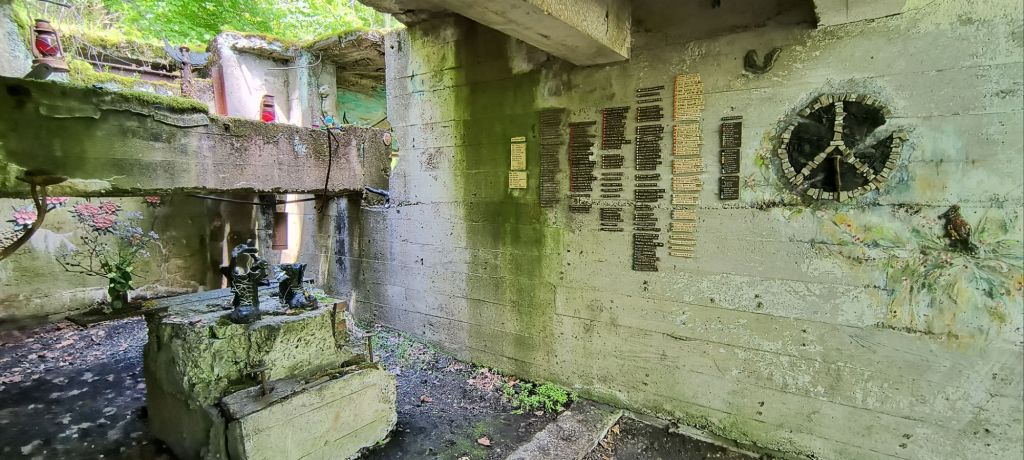
We pass a sign that mentions the Darr Mining Accident of 1907 where 239 miners died, the worst mining disaster in Pennsylvania and led to the National Mine Safety Commission. There are 239 mosaic circles to honor their legacy in the shape of the miner tags they used when entering the mine.
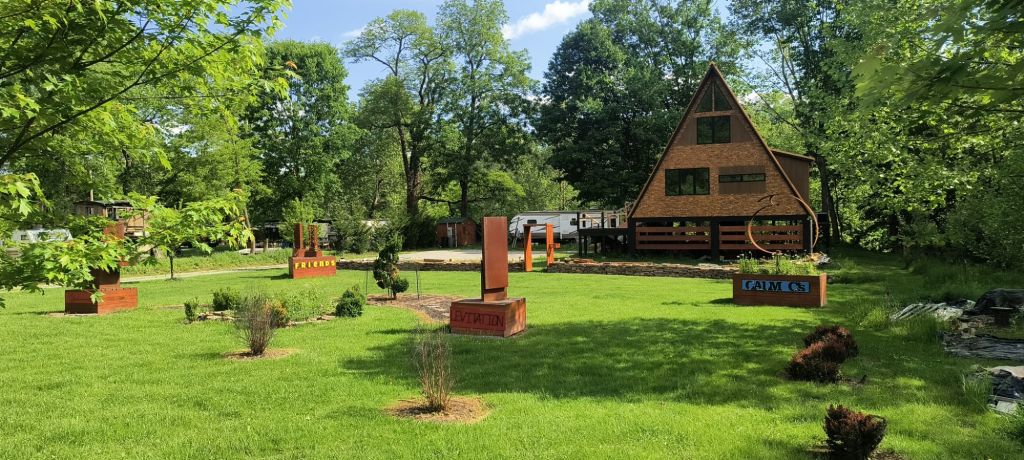
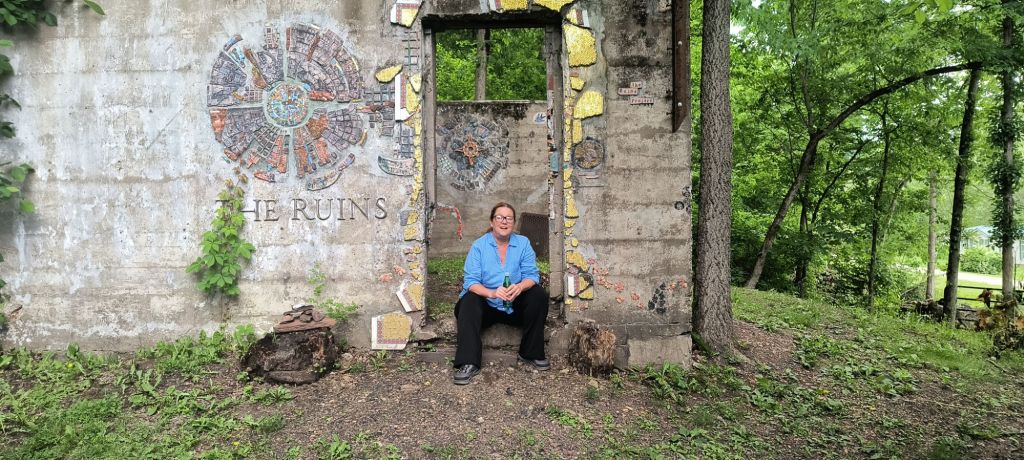
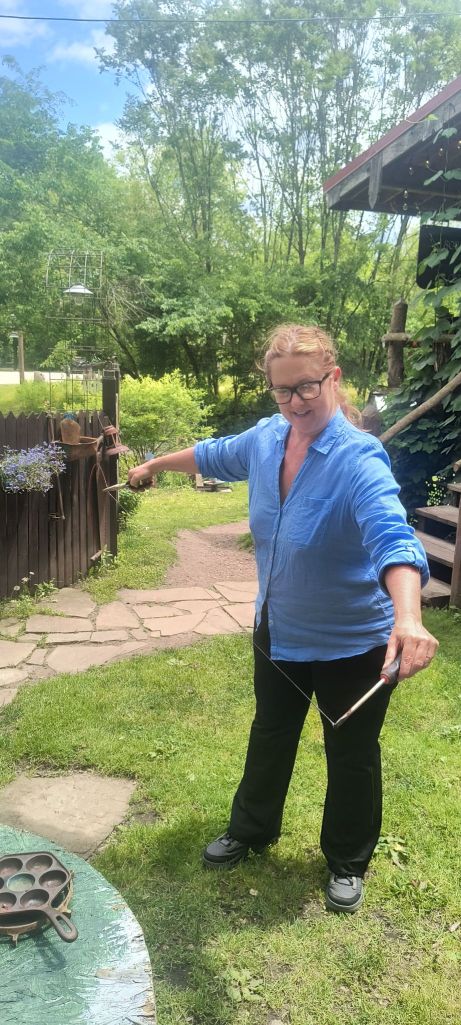
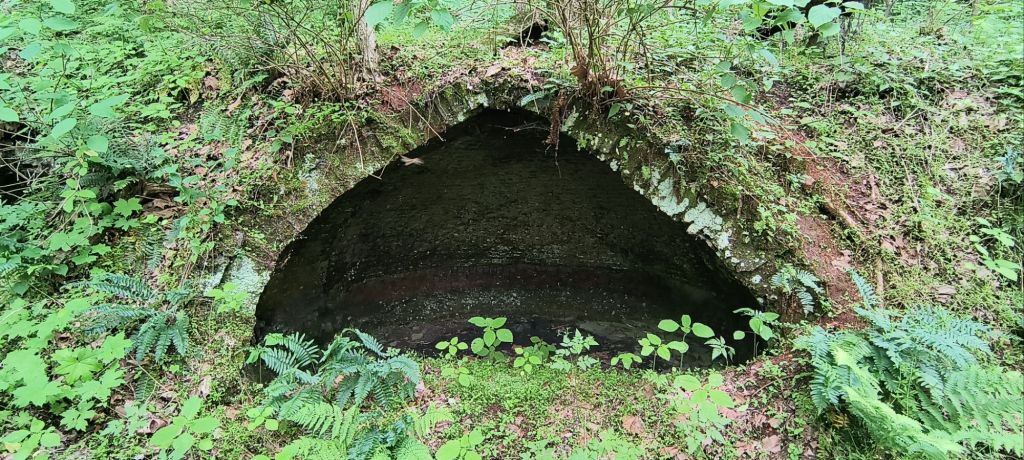
We arrive at the Ruins Project and meet Rachel Sager, a middle aged artist whose family grew up in coal. Her father, grandfather, and great grandfather, all worked at these local mines. When she purchased the run down coal building ten years ago to build her mosaic studio, she didn’t fully understand that on her 10-acre property was the concrete structure of the coal sorting house. Concrete also happens to be the ideal medium for attaching outdoor mosaics.
She came up with this idea of wanting to bridge the divide between her progressive artist life and the more masculine, hard labor miner family legacy. She decided to use the abandoned sorting house as the canvas for artists, now over 450, to contribute to this ongoing story. “This is all about telling stories.” She says
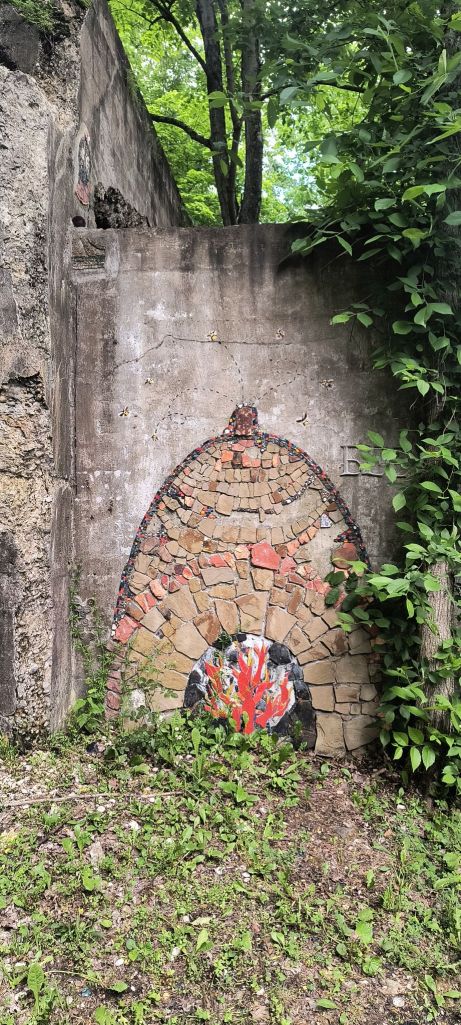
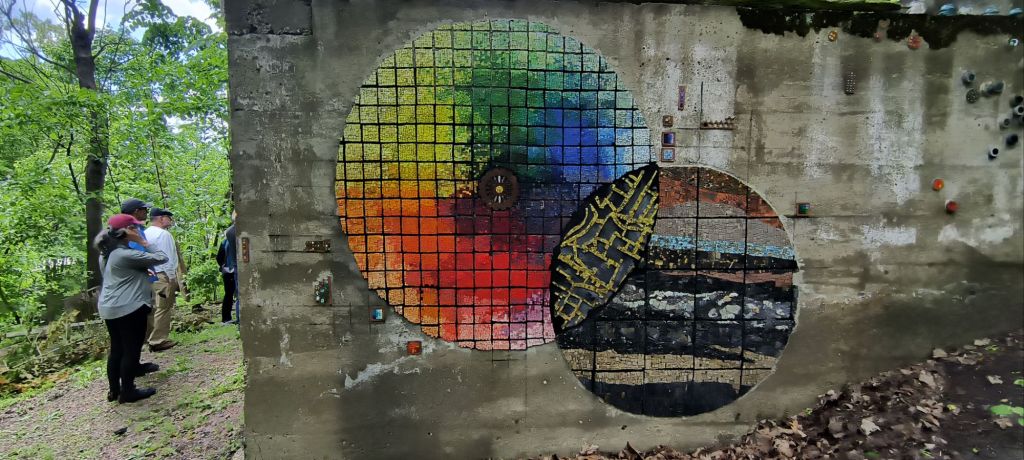
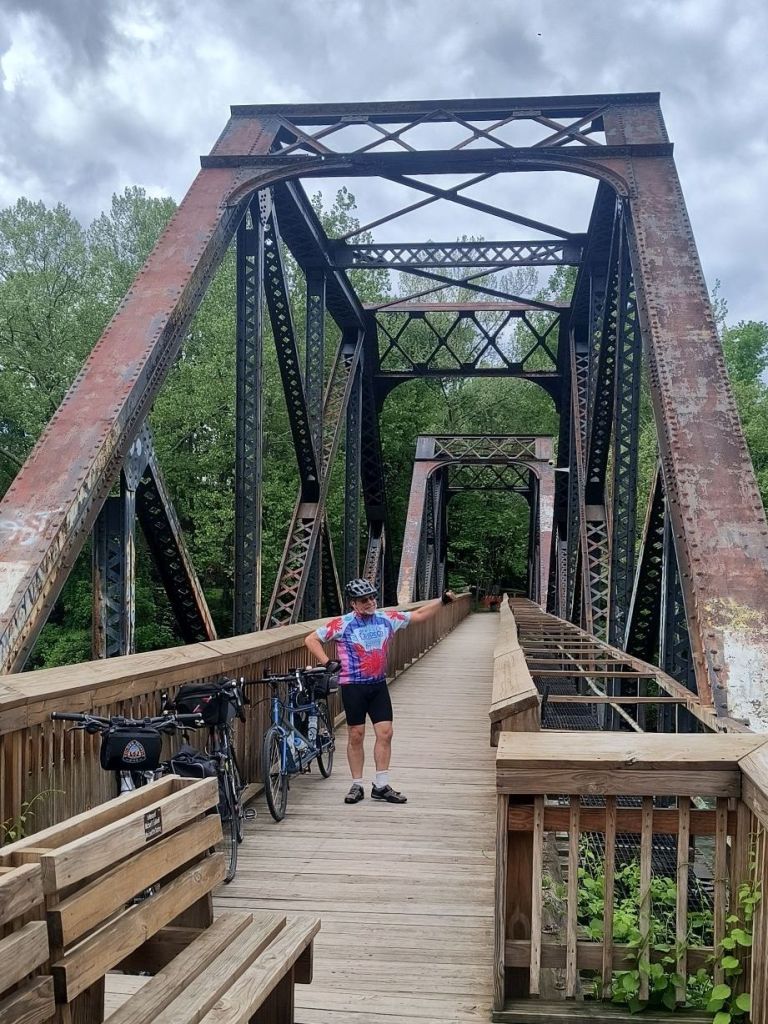
When we cross the small wooden bridge onto the site, it feels like we have passed over the threshold into a cathedral, a sacred place that many others have been before – which is all true. Our voices quiet down as we see the bright art that adorns the gray decaying walls. It is purposely built to tell the stories, all the stories, to overwhelm the observer that there are too many stories that overlap, conflict, merge and that all can’t be told.
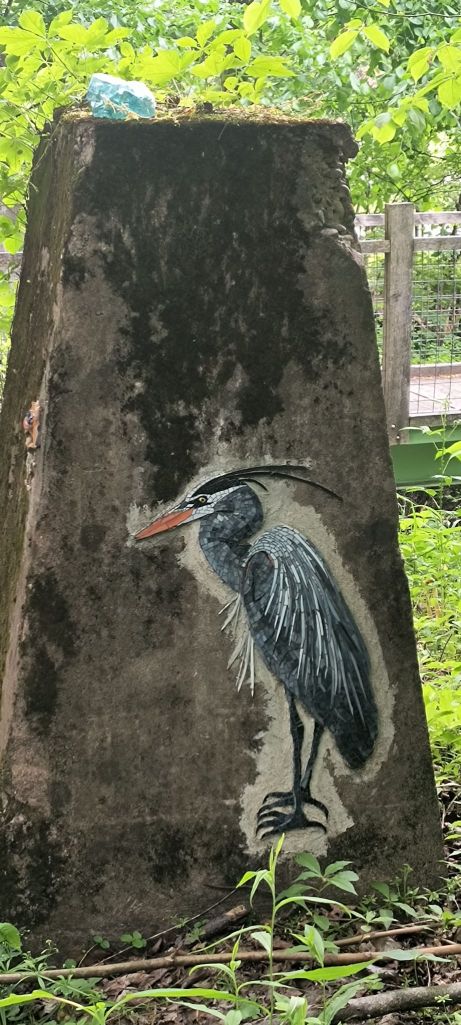
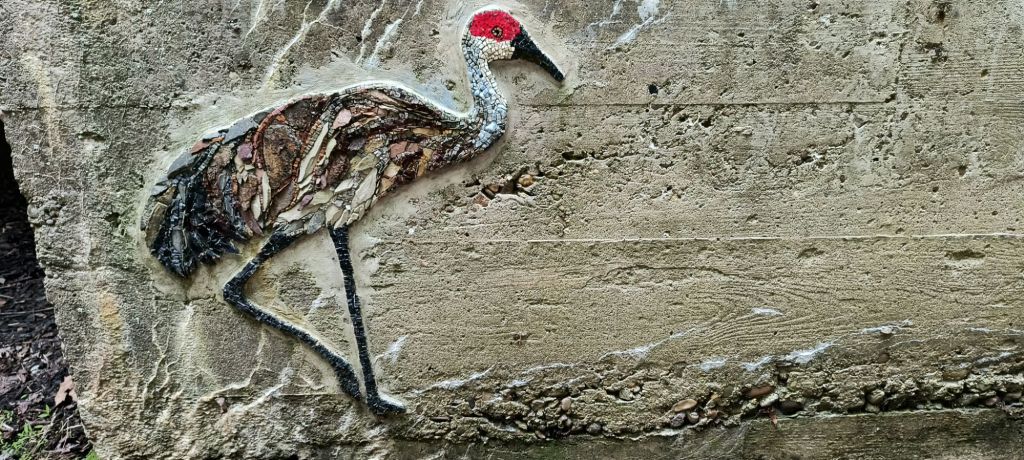
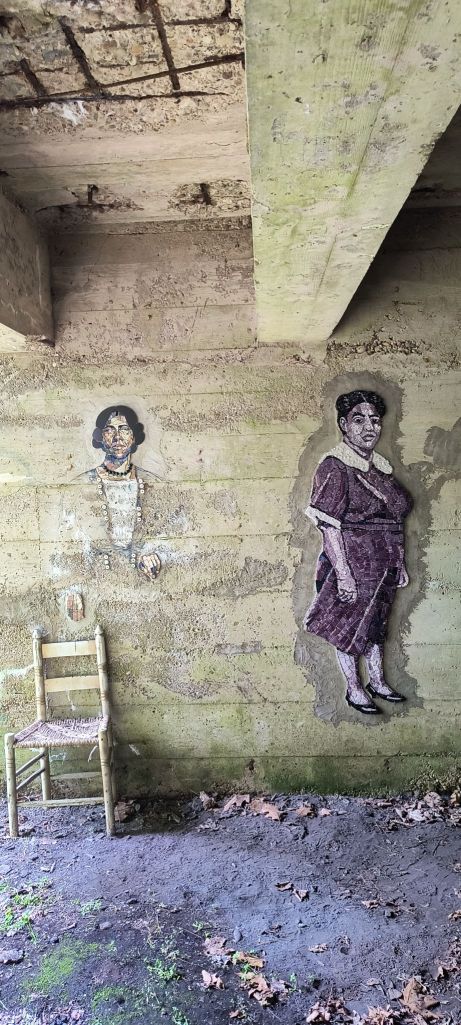
We have the mosaics of the miners and their families who worked here, maps and stories of the East European and African Americans who moved here, the animals and nature that have reclaimed this place, a map of the GAP trail that we are currently using, and the train that passed by for 70+ years. One of our final rooms is “the chapel” which honors those who died and were injured.
It is overwhelming – it is beautiful – it is one way to honor legacy – and it challenges us to tell the stories and keep them alive.
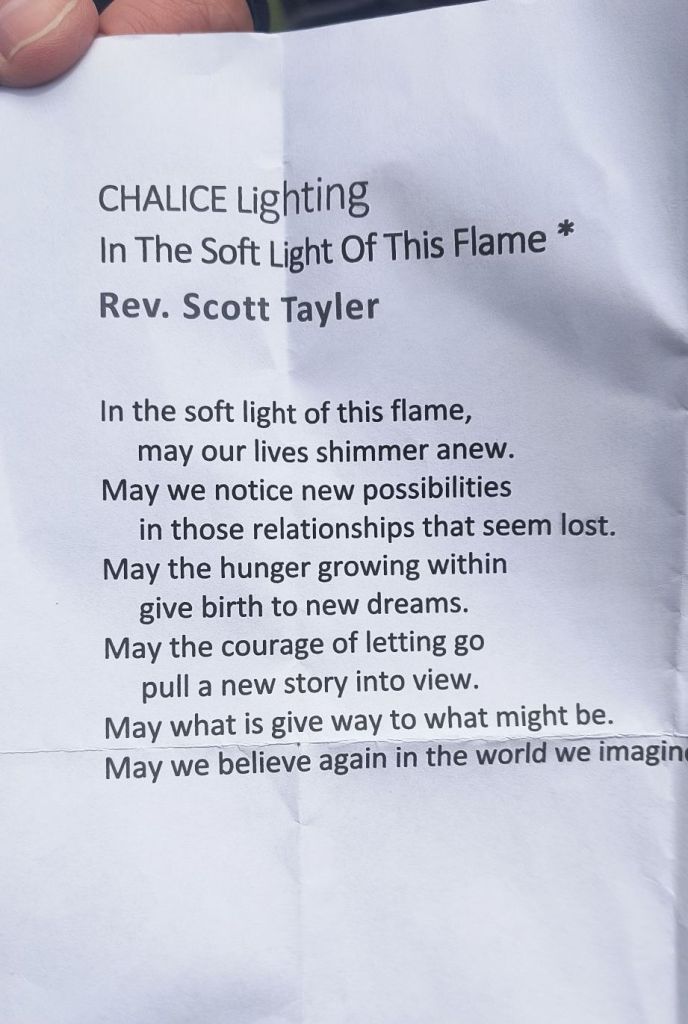
As we leave David joins us and tells us of his lovely service with a small congregation. He has a flower he was given at ‘communion’ and then shares the poem that was read at the service – which seems to match the spirit of our current adventure. He then reminds us that it is also his wedding anniversary.
My oldest sister Therese, his wife, passed away in September after a twelve year fight with a terrible disease that looked like early onset alzheimers – was actually Primary Progressive Aphasia.
We all pause with the weight of this story.
We feel like we are in a sacred place, be it a coal mine with decades of stories to tell or on a dirt trail as my sister’s beautiful layered legacy comes to life surrounded by this natural outdoor setting.
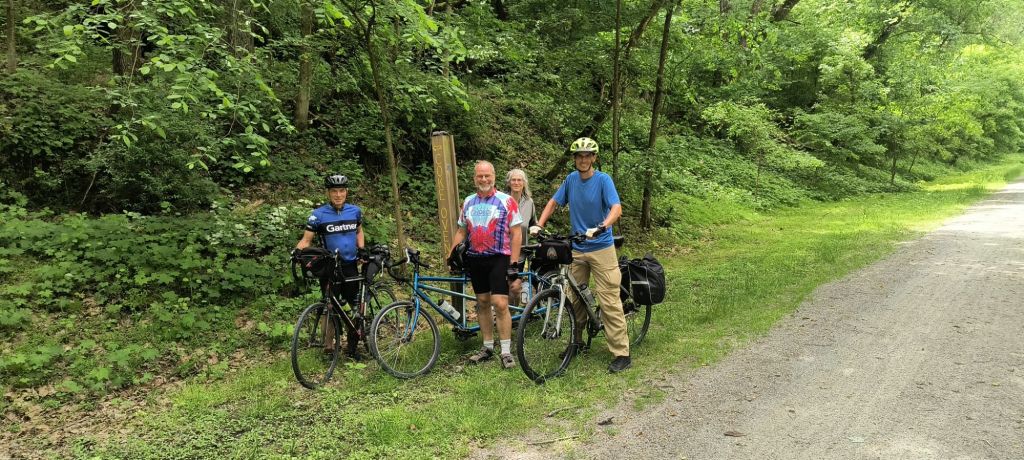
We take a few more moments, share more stories and keep the memories alive as we head back on our bikes to continue our own journey.


 Siri and David Adventures