Newport, Rhode Island
(note: this post is out of chronological order)
When Mark Twain called the time of incredible wealth from 1880 to the 1920’s ” The Gilded Age” it was not a compliment. It was commentary on the extreme poverty and hardship beneath the surface, especially borne by the laborers from all nationalities who created the wealth of the Rockefellers and the Vanderbilt’s. It was also a play on “The Golden Age” which, not surprisingly, has resurfaced recently as a description of our current times, where there is also incredible wealth disparities.
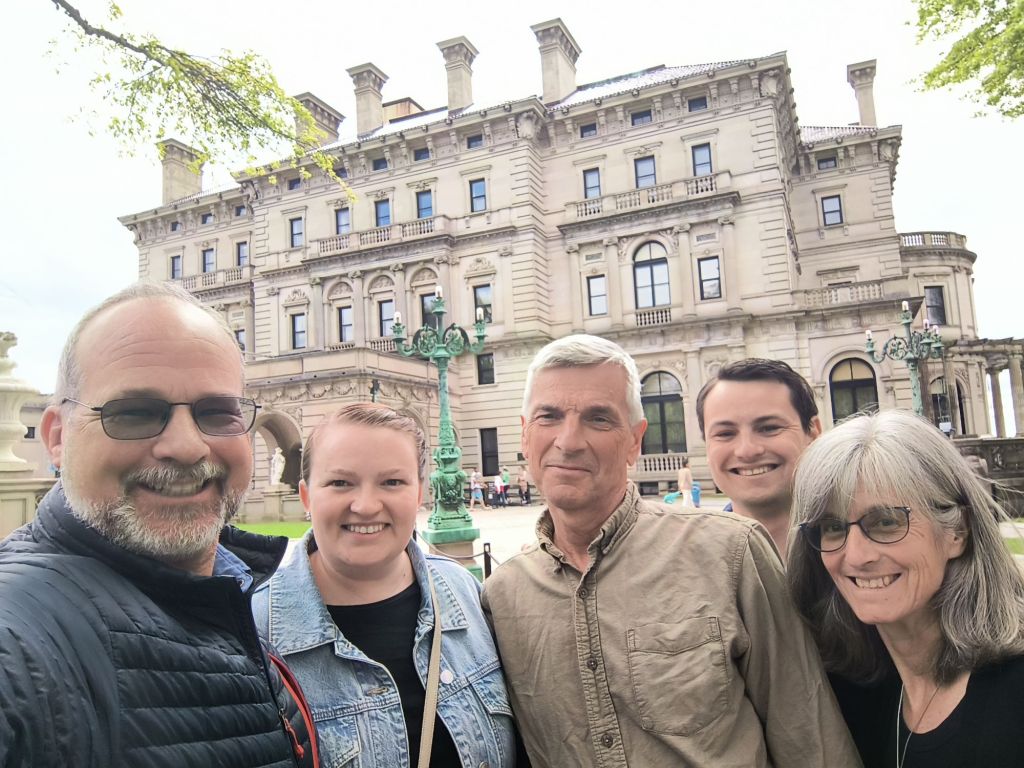
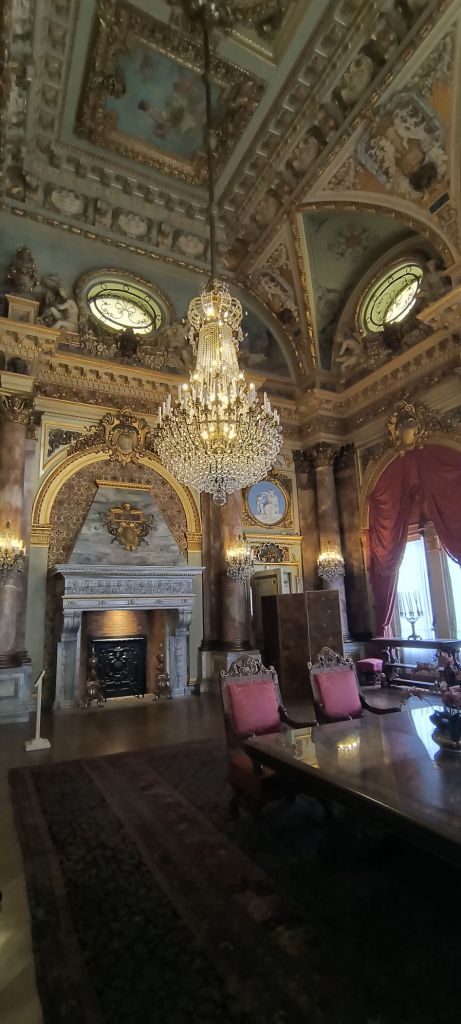
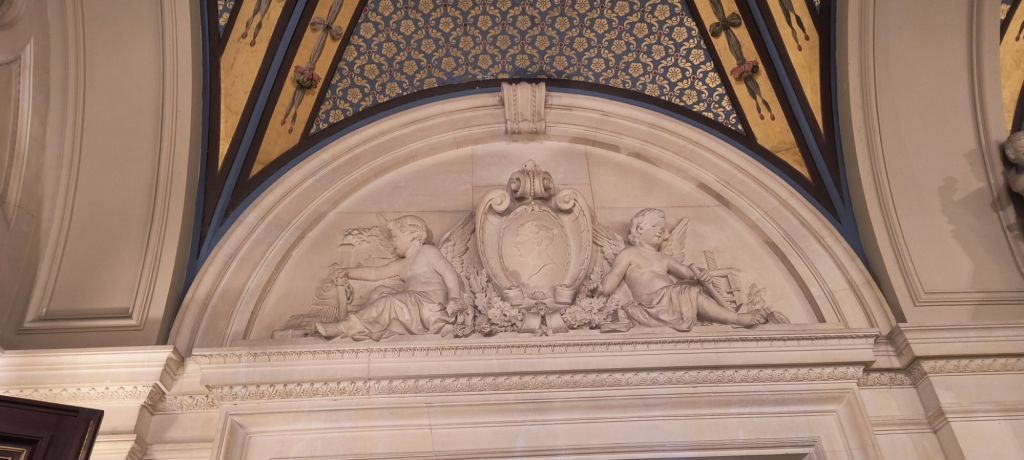
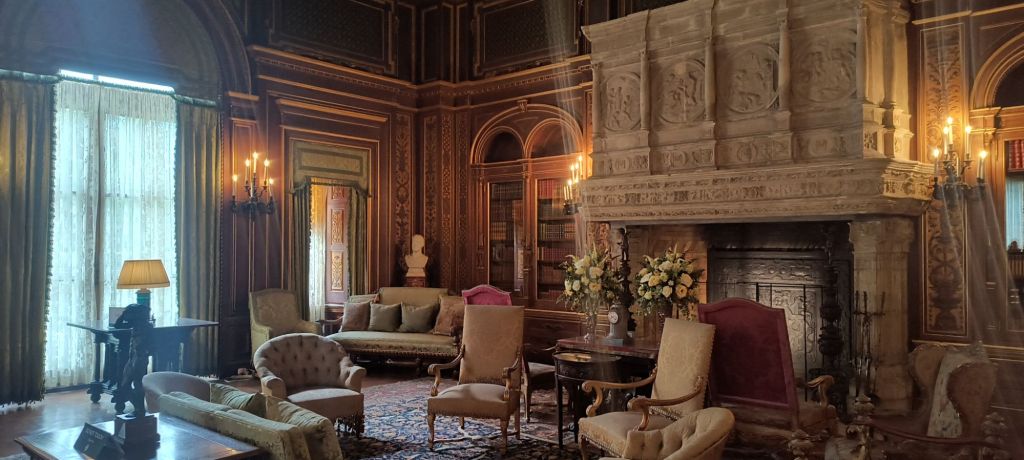
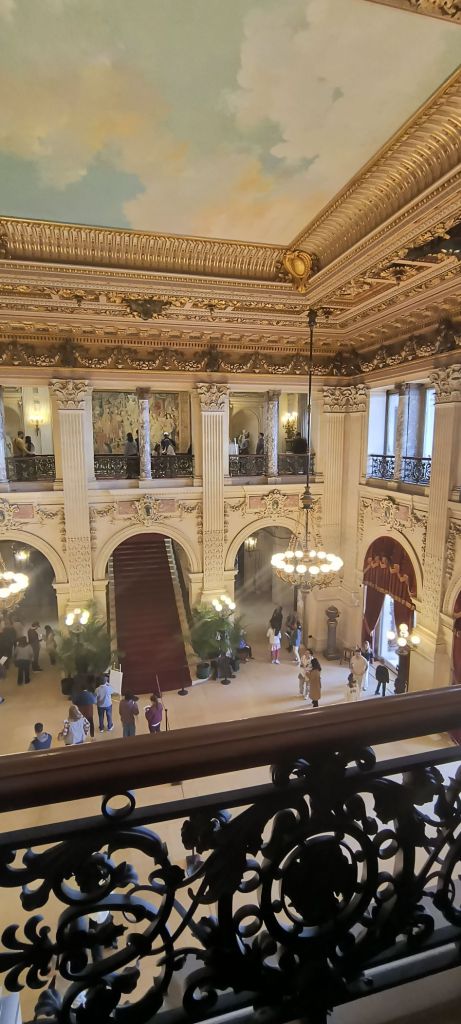
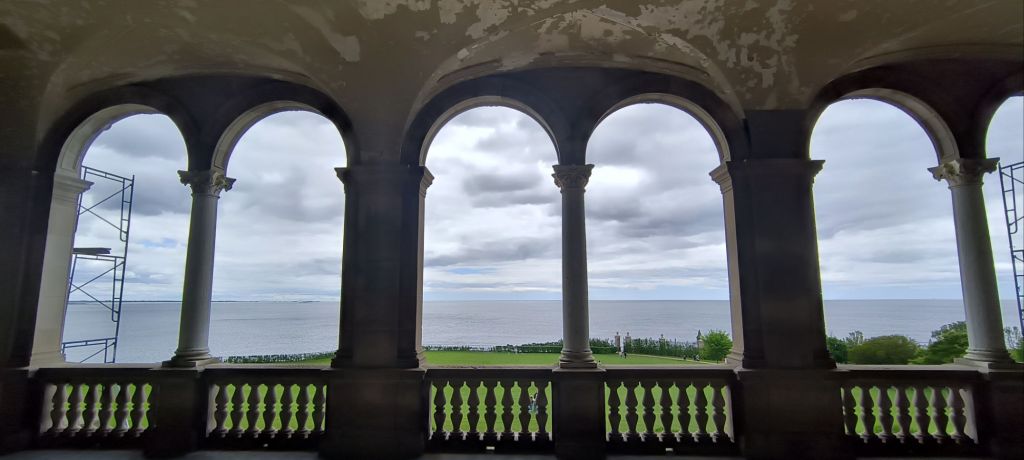
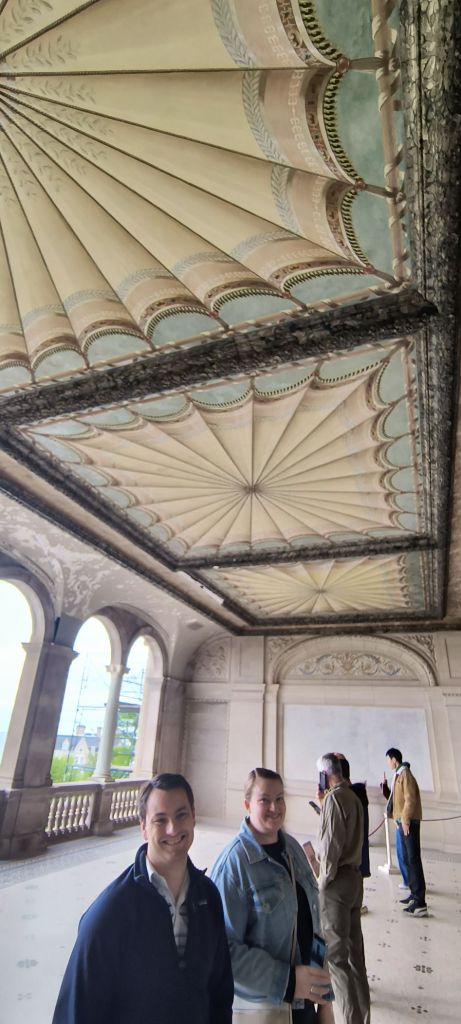
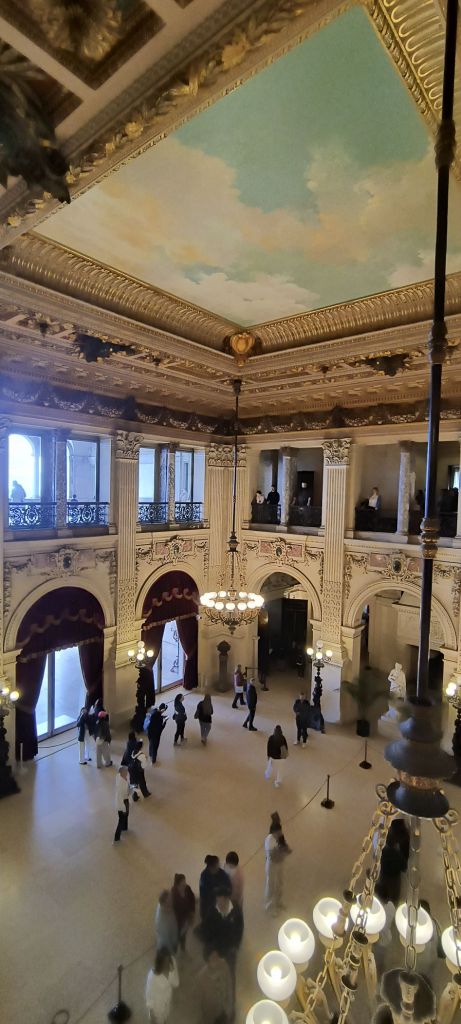
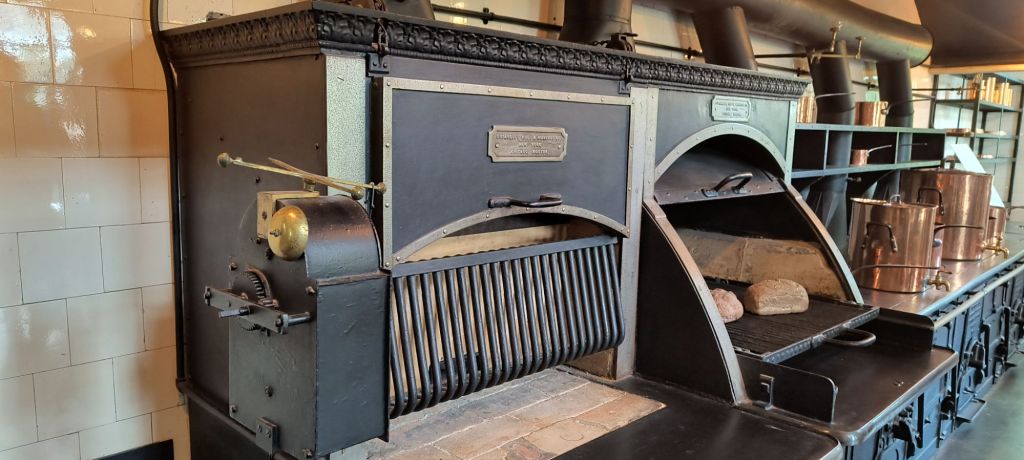
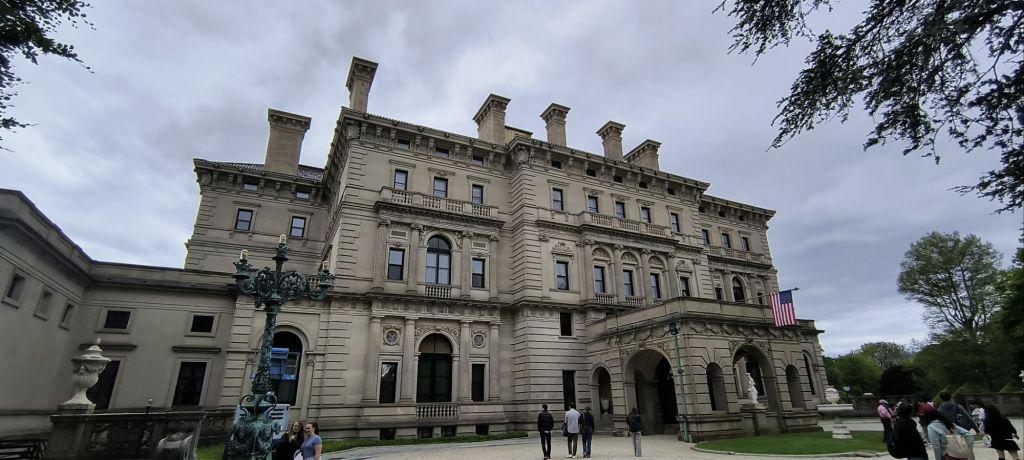
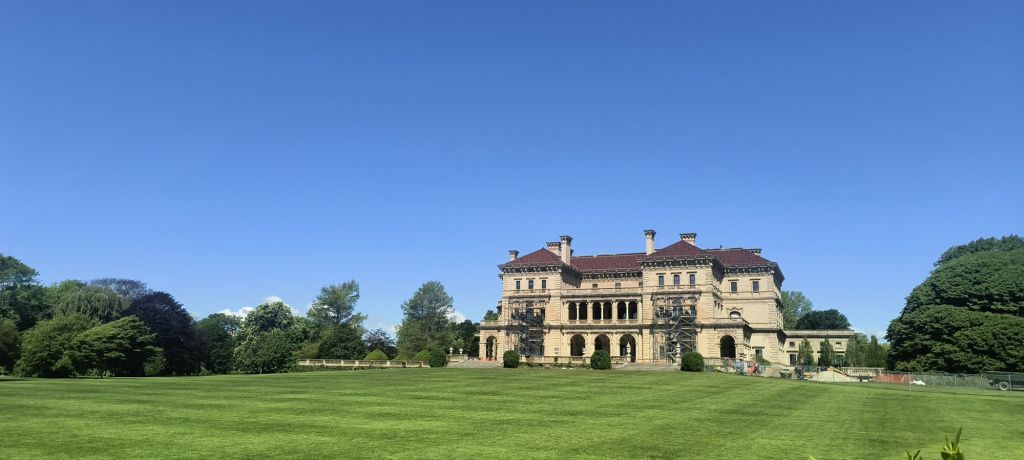
With this introduction, we began our “Gilded Age Tour” of The Breakers – the Vanderbilt’s family’s summer home that is built like an Italian-French Villa that is famous for being one of the largest residences in America. It has 70 rooms and is over 140,000 square feet. It is like Downtown Abbey on steroids. It is near where the Great Gatsby was filmed. It is an amazingly beautiful structure that has gold inlays and intricate mosaics everywhere, a grand ballroom with Italian marble, the sweeping grand staircase, and of course the tremendous ocean view off Newport Rhode Island. We get to take a behind the scenes tour to see where the large staff lived on-site and the more modest family bedrooms.
We learn that one daughter, Gertrude Vanderbilt, was concerned that she would only be known as an heiress and wondered as a 19 year-old if people would only see her for her money. Fortunately, she married into another wealthy family, the Whitneys, and was able to pursue her love of art and sculpture. She later went on to found the famous Whitney museum in New York.
We learn that CNN correspondent Anderson Cooper is also related, his mother was one of the Vanderbilt’s granddaughters…
I get caught up in this fascination of who’s who of the rich and famous. I wonder if it is a uniquely American obsession.
Fortunately, the museum curators and preservationists also are working to tell the whole story of this time. This is how we learn of a little girl who lived in one of the small rooms upstairs with her mom, who was a cook. She remembers the Grand parties that she would try to sneak a peek from the sidelines, always being told not to touch or be seen.
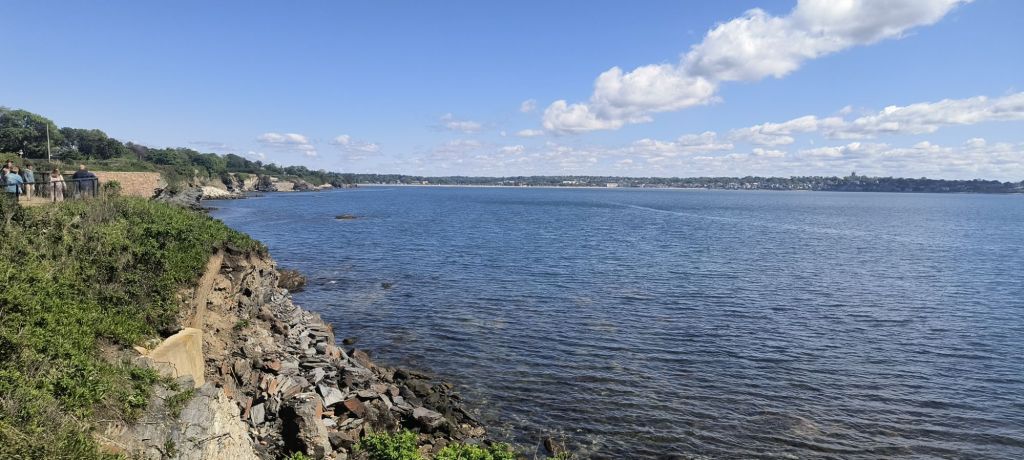
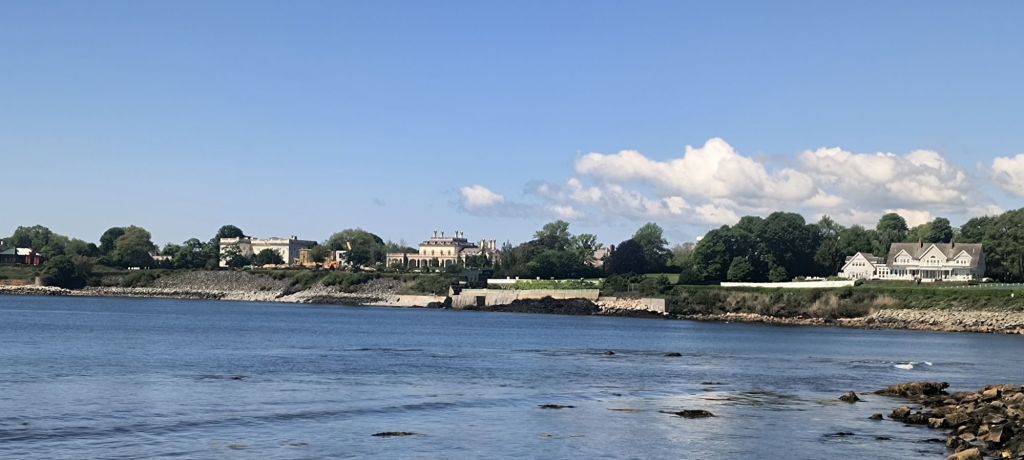
The next morning, we take the cliff walk which allows us to walk by the tremendous mansions and even a university now housed in these old buildings. It is the people’s walk, since with just our feet we are also able to enjoy the sweeping views of the ocean – no ticket required.
I am reminded of what spaces do we have now that brings together people of different backgrounds such as income, faith, and political beliefs? These were called “Third Places,” like the local church, tavern, or public park, and the lack of them has been seen as one reason we feel more polarized. We often just don’t mix as much across these lines.
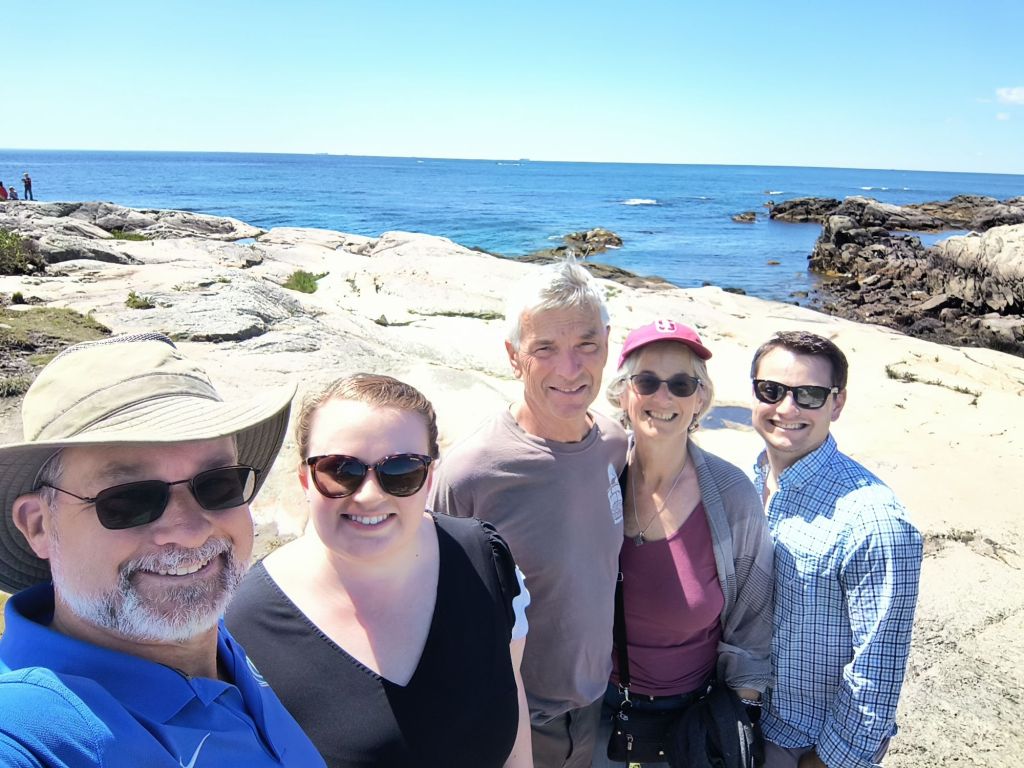
I wonder what I can do to help create more of these spaces. One idea is a community festival called “Porch Fest” which invites people to share live music on their front porches and everyone is invited to join in. We first experienced it in Black Rock, a small neighborhood in Bridgeport, Connecticut, with my brother-in-law and his family who are leading us on this Gilded Age tour. I think it is an idea that we could bring back with us from his trip.

 Siri and David Adventures