Women’s Rights National Historic Park: Seneca Falls, New York
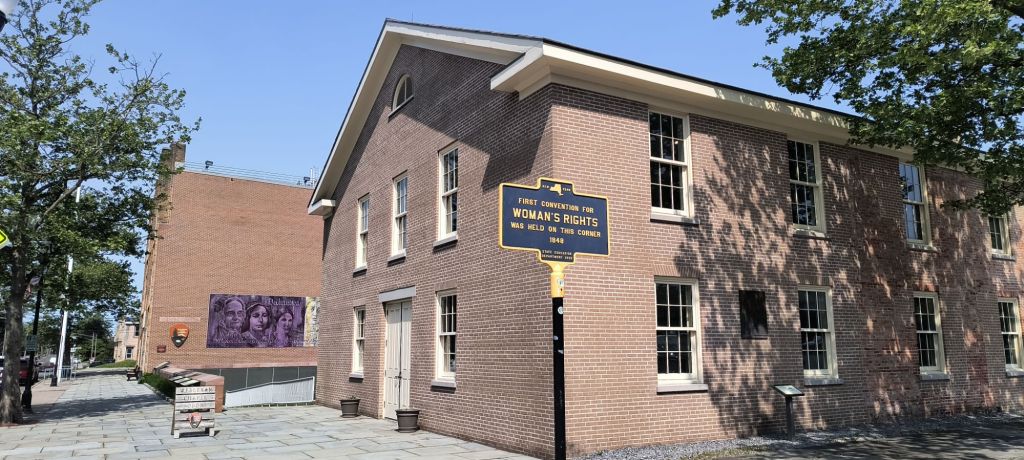
“We hold these truths to be self-evident, that all men and women are created equal,” reads the Declaration of Sentiments passed unanimously at the first women’s rights convention on July 19-20, 1848 in Seneca Falls at the Wesleyan Methodist Church.
The Declaration of Sentiments was written by Elizabeth Cady Stanton and Mary Ann M’Clintock, two of the five women who organized the convention. They and many others would continue the fight for equal rights for women, including the passage of the 19th amendment that gave women the national right to vote – 72 years later in 1920.
It is an amazing story of perseverance, challenges, and struggle, that continues today. It provides a backdrop of the grievances women faced in the 1800’s, such as property rights, voting rights, equal pay for equal work, education, division of labor at home, societal expectations of careers and dress, and how they challenged the status. It is also a stark reminder of how much more we still need to do.
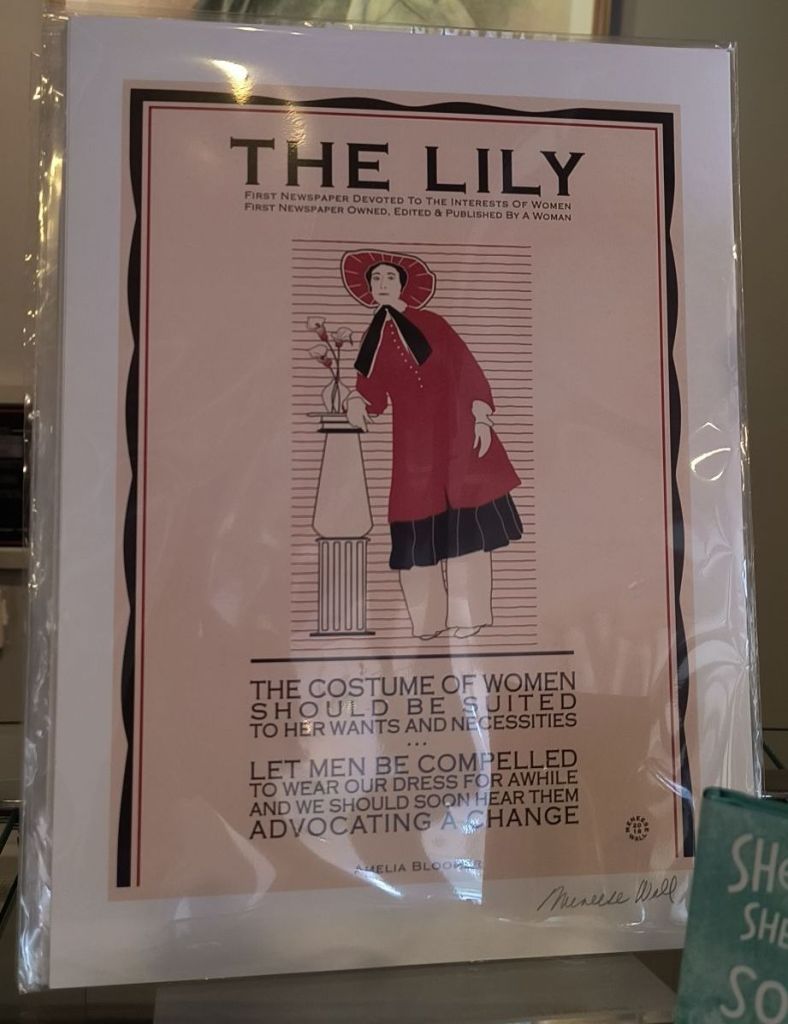
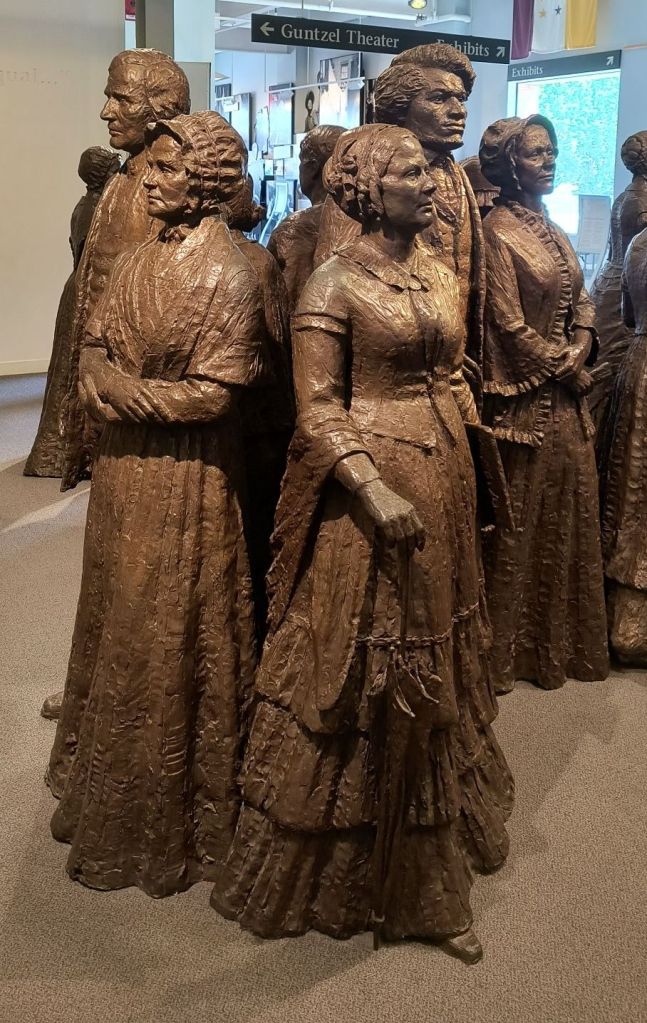
Elizabeth Cady Stanton, is a key star of the show. She helped give the spark to the women’s movement. In 1851 she would be introduced to Susan B. Anthony here in Seneca Falls by a mutual friend Amelia Bloomer. Together, Stanton and Anthony would be fearless advocates and agitators for women’s rights.
“I forged the thunderbolts and she fired them …together, we have made arguments that have stood unshaken through the storms of long years.” Wrote Elizabeth Cady Stanton in her autobiography to describe her 50-year relationship with Susan B. Anthony. Elizabeth Cady Stanton, partly because she had seven children, was not able to travel and speak in person as much as others, and therefore did a lot of writing that supported other suffragettes like Susan B. Anthony.
Having not heard of the Declaration of Sentiments prior to arriving at the national park, I am humbled by how much I still need to learn. I also learned that the values expressed by the women’s rights movement can be traced back to the matriarchal society of The Haudenosaunee -the native americans often referred to as the Six Nations Iroquois Confederacy. It was the Europeans that later imposed the more patriarchal society. Many in the movement were also key abolitionists in the 1800’s. Even the meeting place was created specifically to support the anti-slavery cause among other social justice issues.
There are also a lot of complex, difficult issues to acknowledge such as the role (or lack of one) of African American women in the majority suffragette cause, the ties with the Christian temperance organizations, the break up over the 15th amendment that guaranteed the equal right to vote for men based on race, but not for women. As is often the case with difficult issues, it is more complicated than it may seem at first.
What is clear is that it is important to agitate for your and other rights, and to defend equal rights for all. A key lesson as voting rights, and many of the rights we hold dear, are currently under attack.
It was uplifting to see that a few people committed to a great cause can make a difference for so many.
It challenges me to do the same.


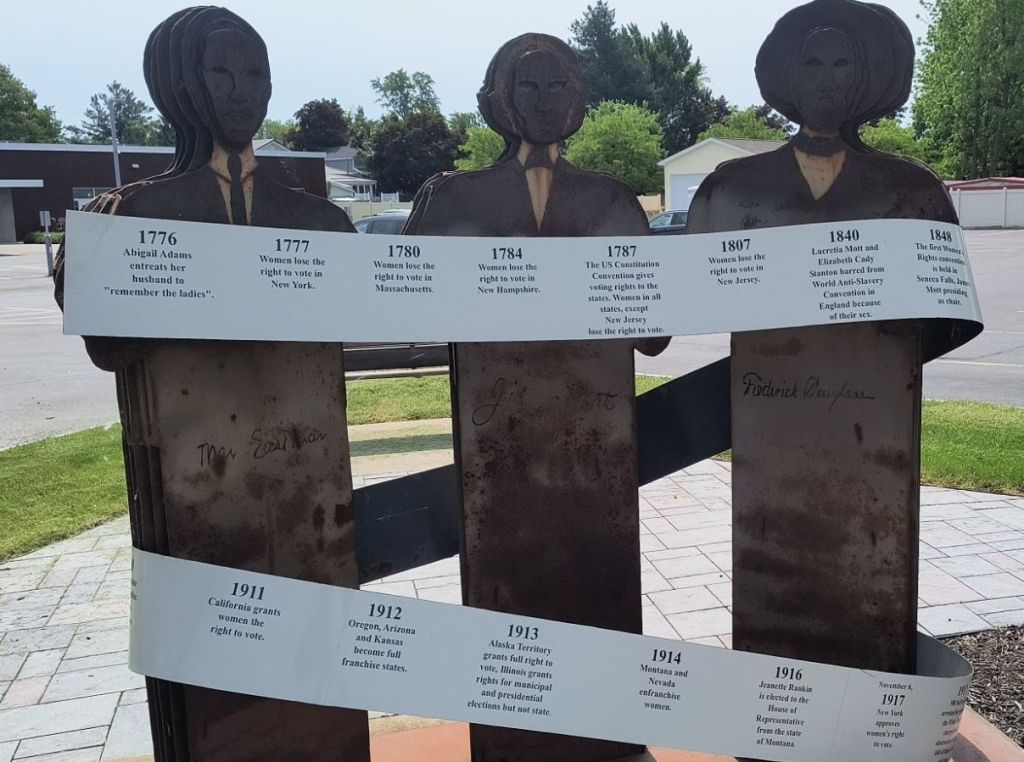
right. Wyoming is the first state to permanently recognize the right of women to vote in 1869. We met a mother, originally from Wyoming, with her daughter on a “Womens’ Power” vacation visiting historical sites.

 Siri and David Adventures