Tuesday, March 31, 2026
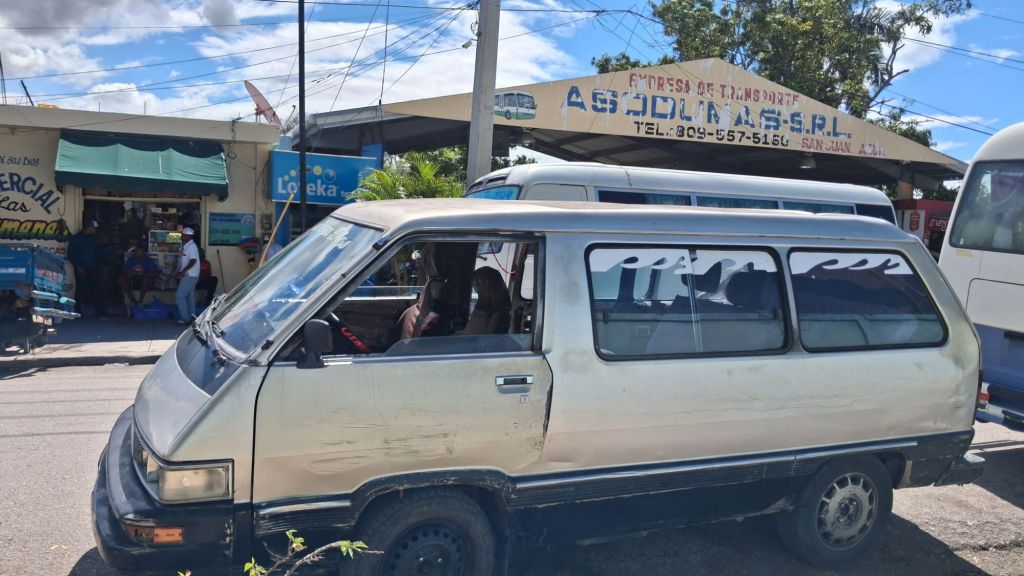
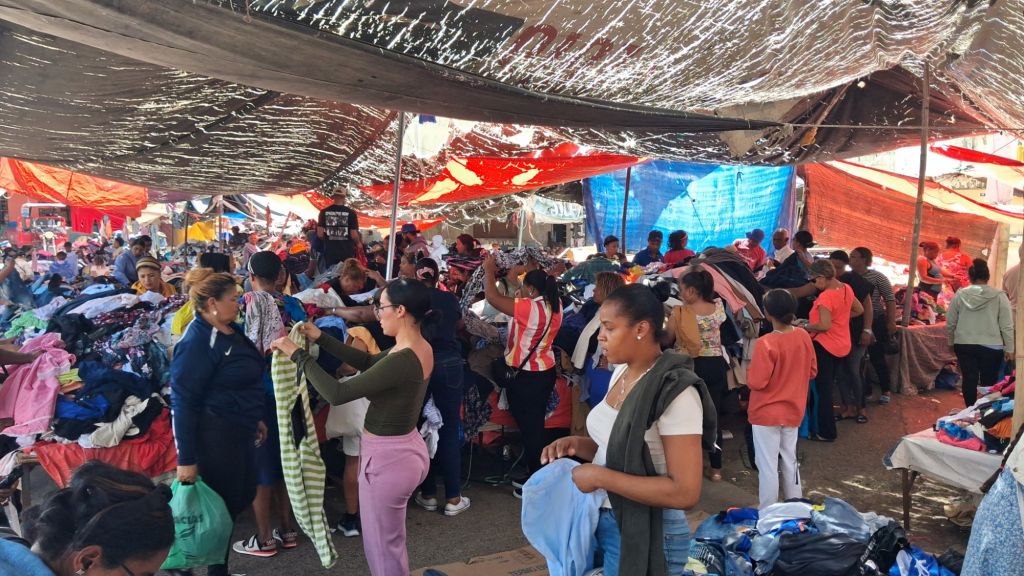
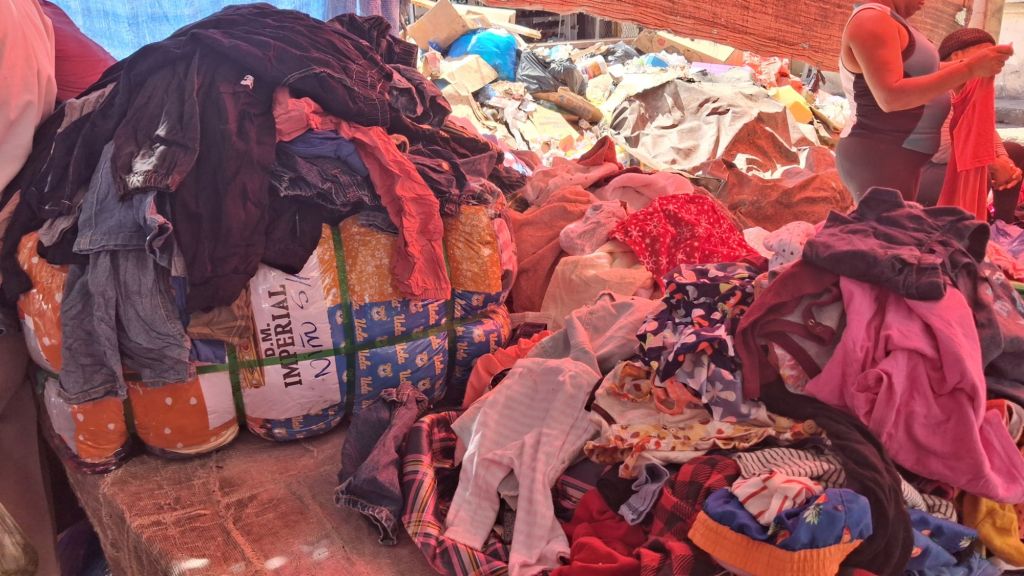
We spend our last day walking around town with a planned return to Laz Zanjas in the afternoon, when it will be cooler.
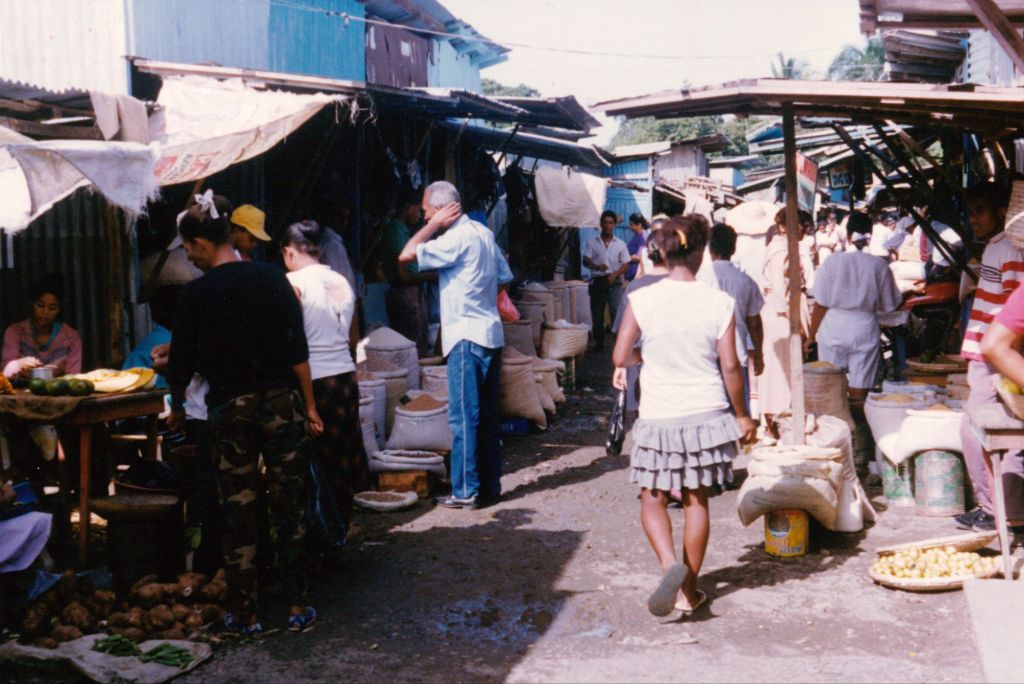
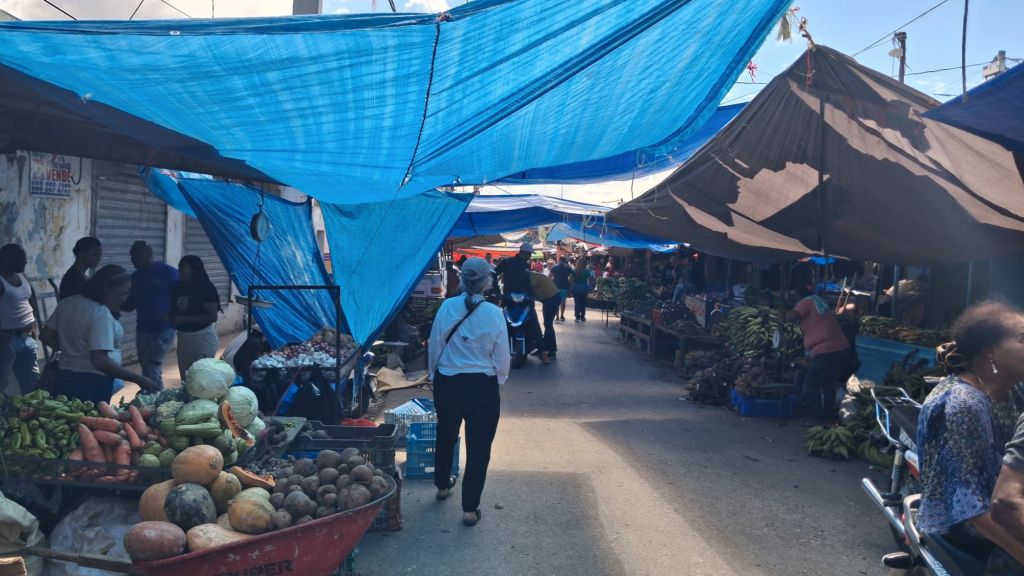
In the morning, we find the outdoor market in San Juan and purchase a dozen passion fruit that later Rivin makes into a refreshing juice – yum! I could just stay and drink fresh tropical juices all day. At the market, I enjoy seeing the sugar cane vendor in a cart selling pieces of fresh cane like it was ice cream. Thrre is the butcher using a machete to cut through the fresh meat. There is a bit more variety than we remember – more types of oranges and apples, and now a whole clothes section – which we last encountered in Haiti in 1991, literally bundles of clothes donated from the US end up in these markets – with shoppers digging through piles of clothes and shoes. It may be related to the surge in Haitian immigration these past few years.
Adjacent to the outdoor market is high-end supermarket with a parking lot and air conditioning. We can hear a few fruit vendors trying to entice those walking in to come to their outdoor stand instead to get a better price. Interesting dichotomies of class, wealth, and race playing out all around us.
We return home for lunch, more games, and to rest from the heat. As it cools down, we prepare to leave. Rivin and Fefen change into nicer clothes, which is common here. One has an indoor set of clothes – like a sundress, shorts, maybe a t-shirt – but if you are going outside you change into a nicer dress and button down blouse or shirt. I’m sure Dominicans must think us strange to stay in the same clothes all day.
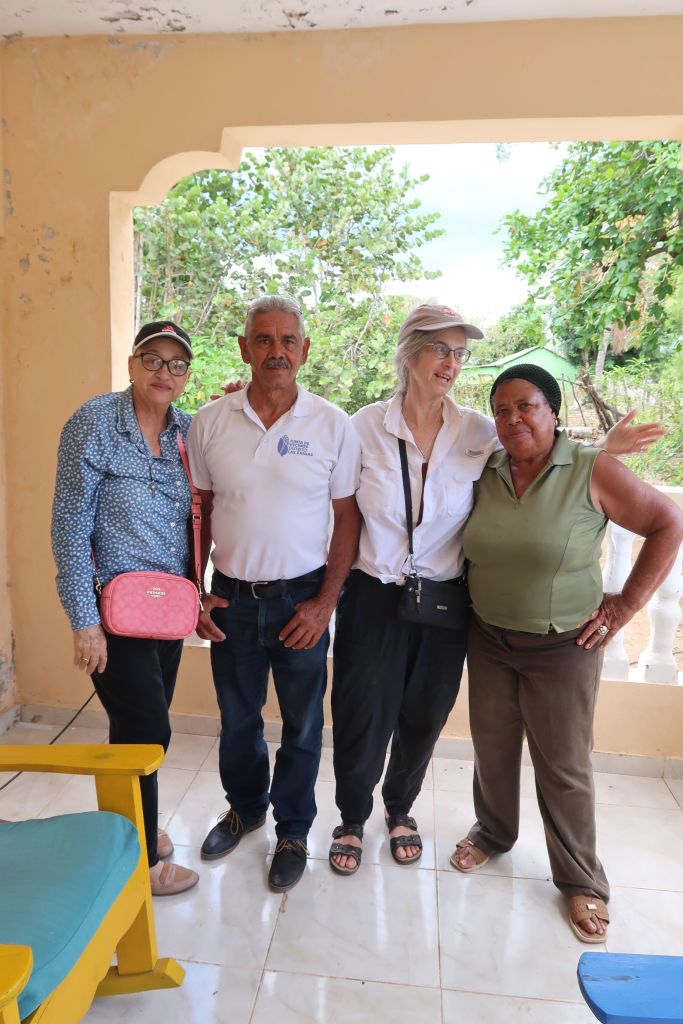
Today will be more stories and chats on people’s front porches and inside living rooms. There is the requisite rocking chairs and coffee at each stop. We start to realize that Rivin and Fefen are quite important and connected here. We found out last night that Rivin was on the local Laz Zanjas city council and had planned to run for the state legislature, but chose not to because of the party politics. Fefen, we learn, is the first cousin of the previous president, Danilo Medina, who they all speak of so reverently.
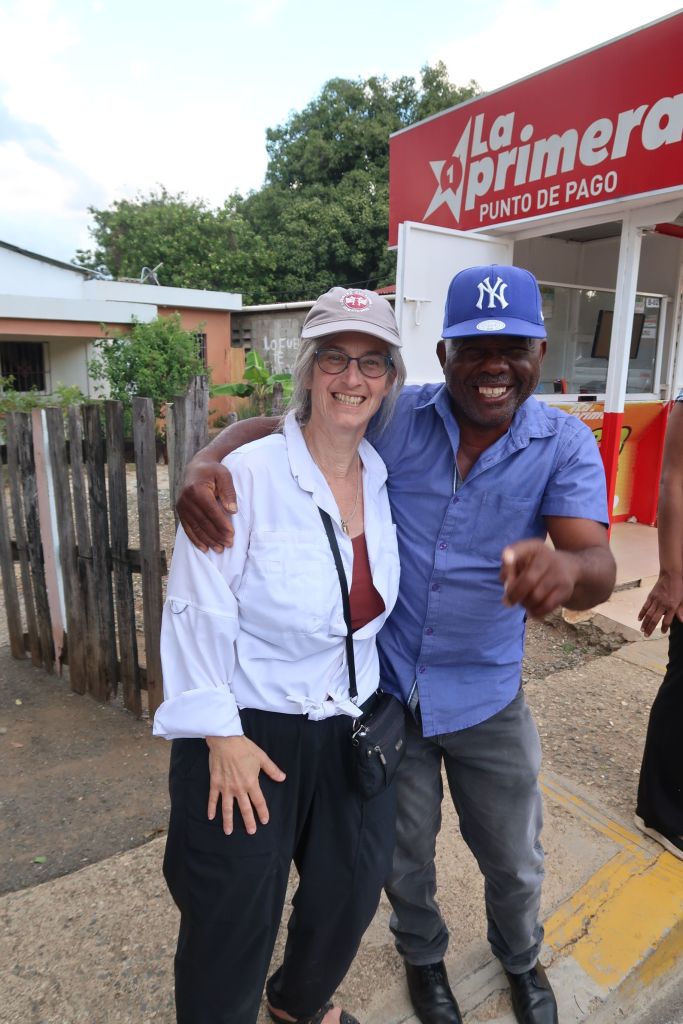
While we are at our first stop, several people stop by who were just walking by on the main road. There is where we catch up with Aquille, a memorable member of the Comite, who was gregarious, always the talker and looking for an angle. He loudly announces his arrival, gives big bear hugs, shows off his shirt with his current local committee association and informs Siri that he deserves a pension due to the all the work he has done. He is as I remember him. We find out that he is second cousin of Rivin as well. It is a small town.
As we take our leave and start down the road, we stop every 15 feet for Rivin to say hello to all her frends. Feo, who we had met two days ago, stops by as he passes on his motorcycle. We catch up with Fefen again at their now rented house and continue our journey in the pickup out to the fields.
Fefen was born in this village and his dad, who we have the honor of meeting later, still lives here at 96 (!) years old. His dad was also a farmer and (I assume) the land was passed down. This generational wealth – of owning your own land – has made an incredible difference in their lives.
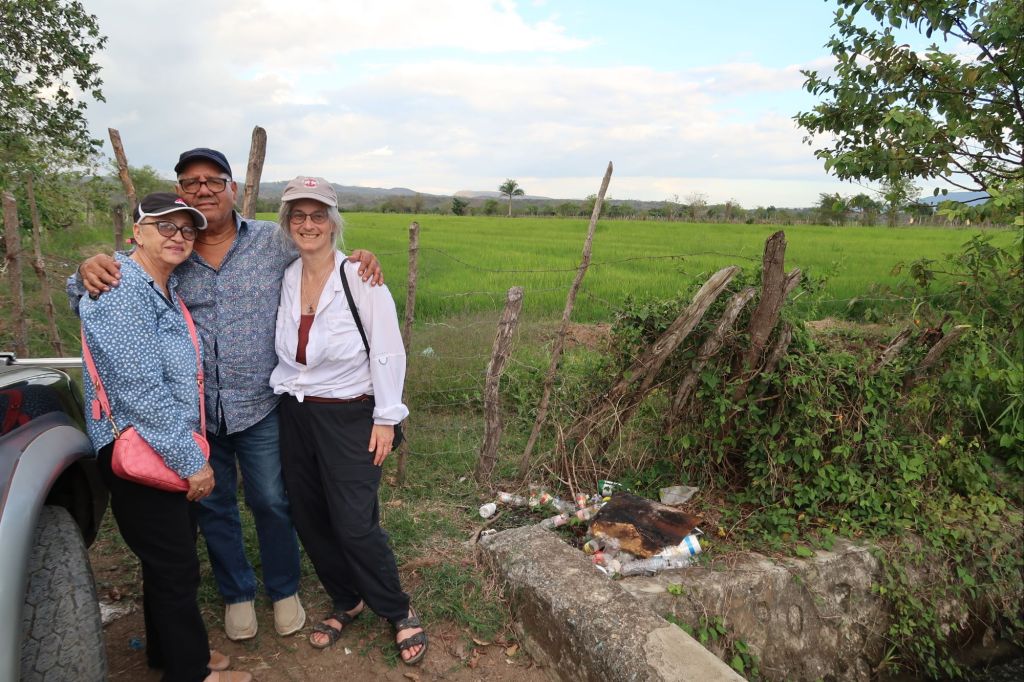
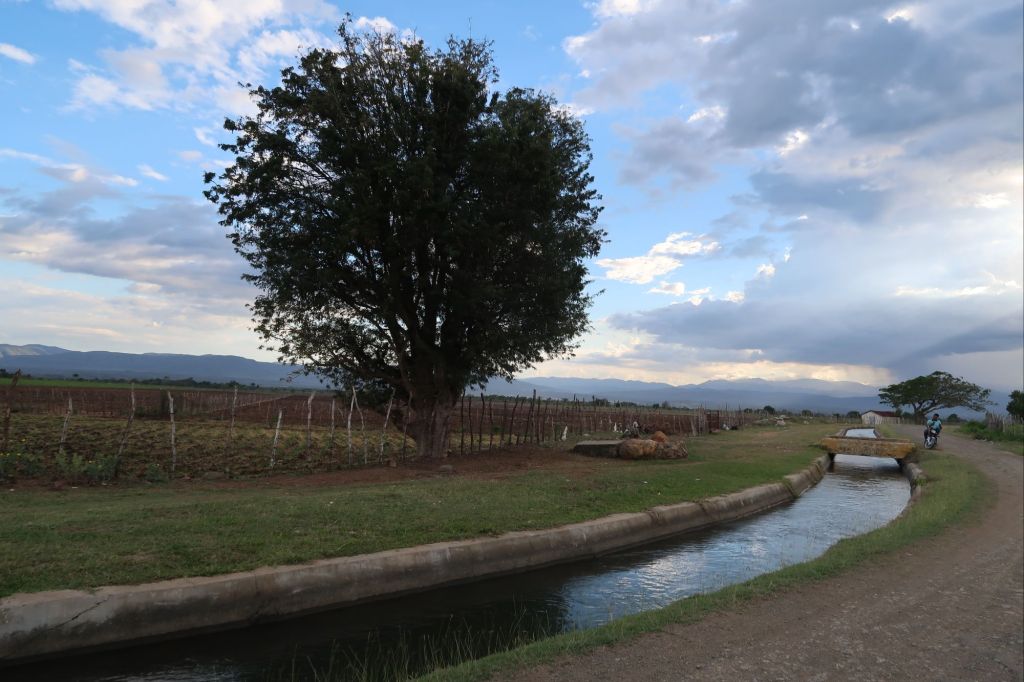
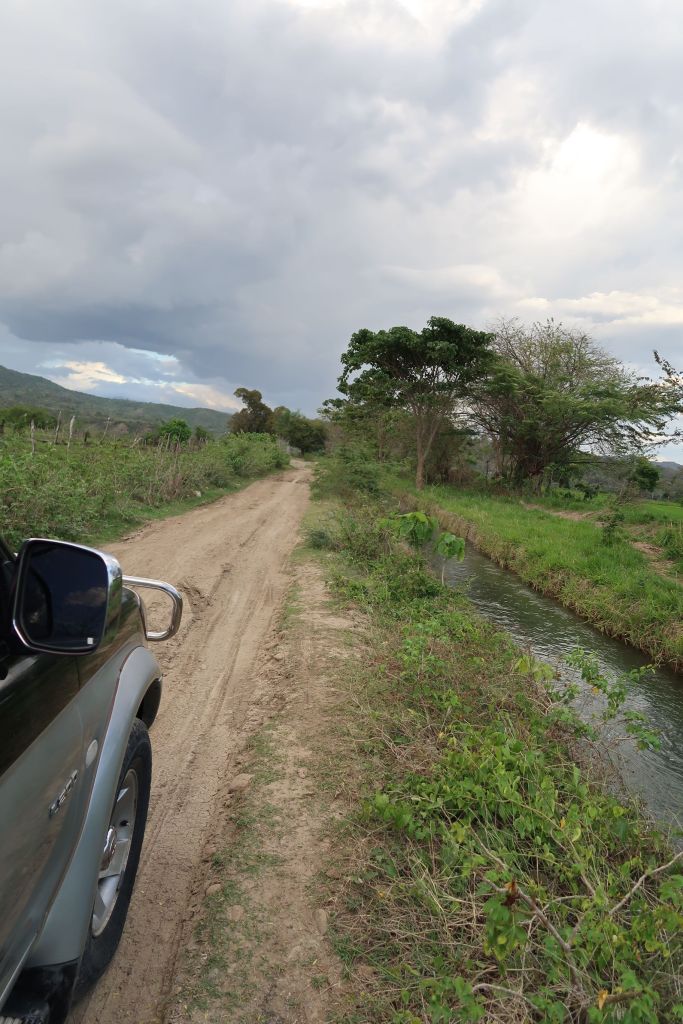
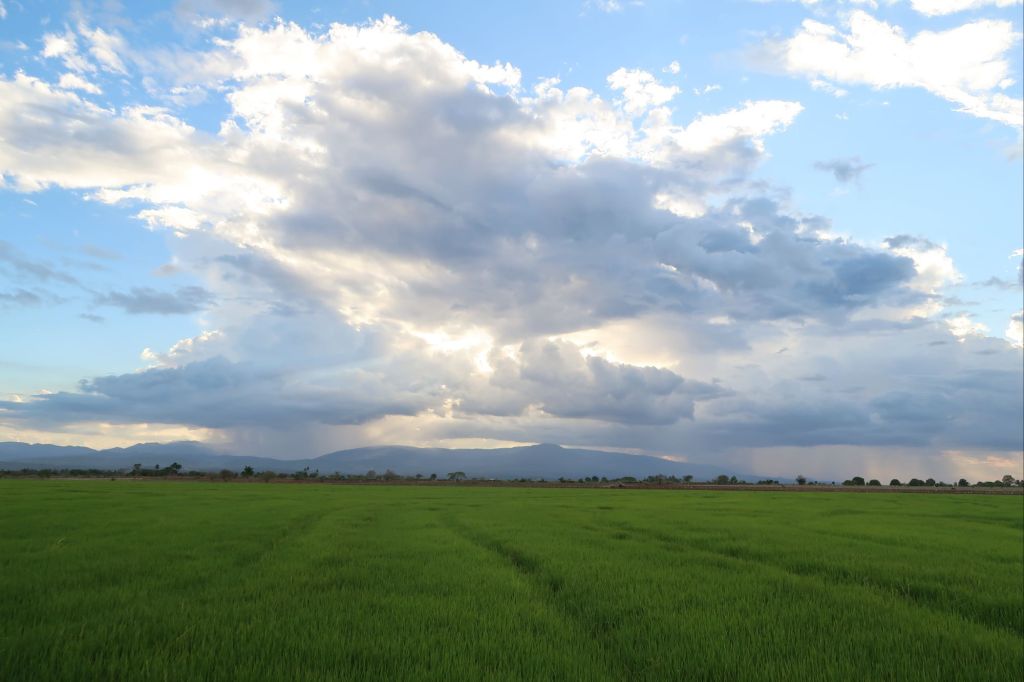
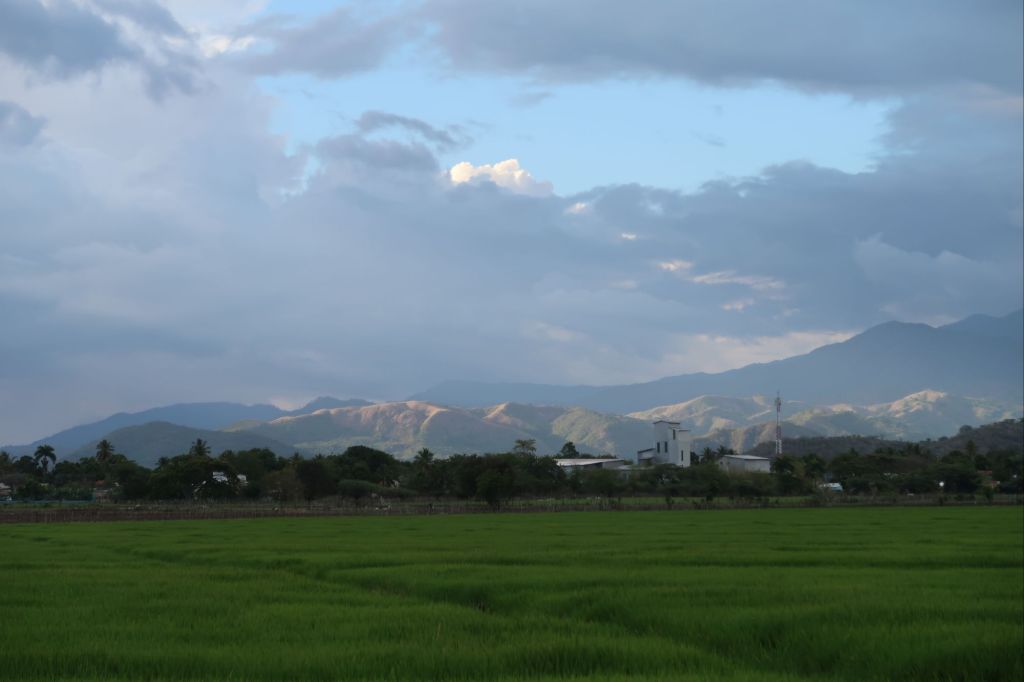
We head down the familiar one -lane dirt roads, past the (now cement) irrigation canal, and in between the barb-wire fences, we stop at Fefen’s 20 acres of fields. We ask and get a quick lesson on farming – he now uses machines that will do the work in a few hours which used to take several people two weeks. He still employes a few workers – mainly the Haitian immigrants (similar to the US in use of immigrant labor) and pays the equivalent to $12 per day. One problem, of many, is that there isn’t enough regular work every day, so it is very hard to live on these wages. Fefen, for his part, tells us that is not a good time to be a rice farmer. The government controls the price and it hasn’t kept up with the costs. He tell us that is was better when Danilo was president.
We leave the fields behind and take a longer route back to the main road. We find a few kids who still like to swim in the canals. A few other kids have made whips and the sharp “crack!” sounds like a firecracker.
Our final formal stop is at Fefen’s dad. Neither of us remember meeting him before, but he has been at this house just up the road the whole time. At 96, he seems bed ridden, or at least very frail, and is resting in an air-conditioned room when we arrive. We are welcomed into the formal living room and sit on the upholstered four rocking chairs next to the couches. We are served expresso with sugar in demi-tasse cups. The conversation is about his father’s health and they are hoping to attend Easter mass this weekend, God willing. There is talk about how hard it is to get help these days and then with a “crack!” in the background, there is the complaint about kids these days. We enjoy the pauses in conversation in the cool room and wait out the short afternoon rain shower. When is it time, we usher into the bedroom to say our good-byes to hia dad and thank our hosts, who gives us all sweets as a parting gift.
We stop a few more times on the way out to see who is at home. Rivin drops off clothes to one house and is given fruit from another. Our final stop is at a local who married the Peace Corps volunter who came right after Siri. He often comes to visit his hometown from the states. He seems about our age, but is dressed in a red leather jacket, several gold chains, and slicked back hair like he was still in his 20’s. More questions than answers and probably more stories than there is time. We chat about the village and all the changes, how much colder it is in the states, and we take our leave.
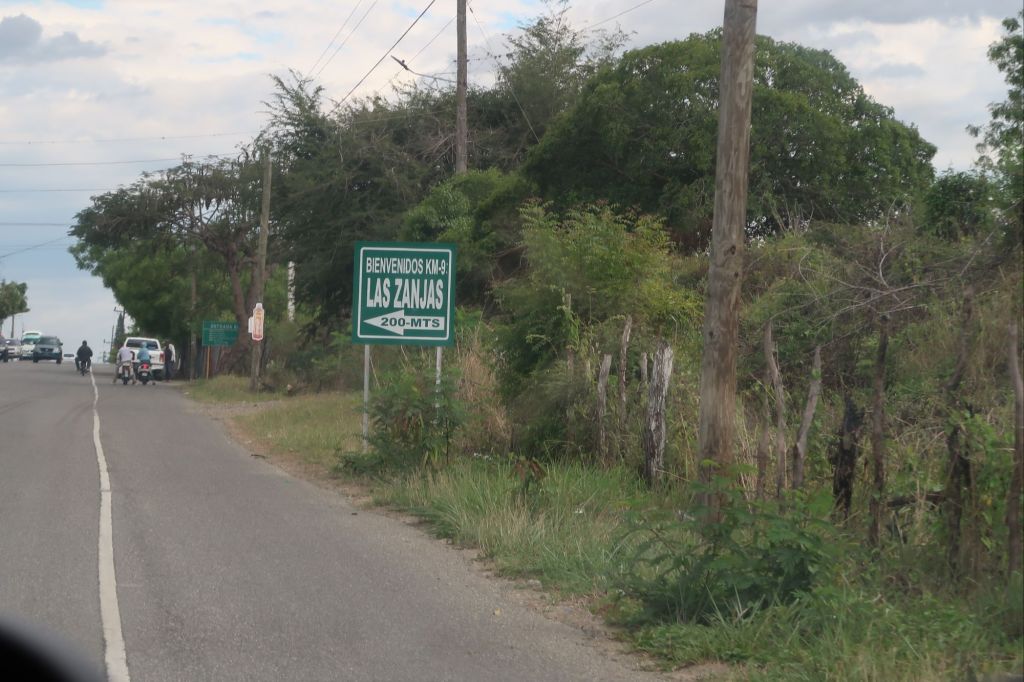
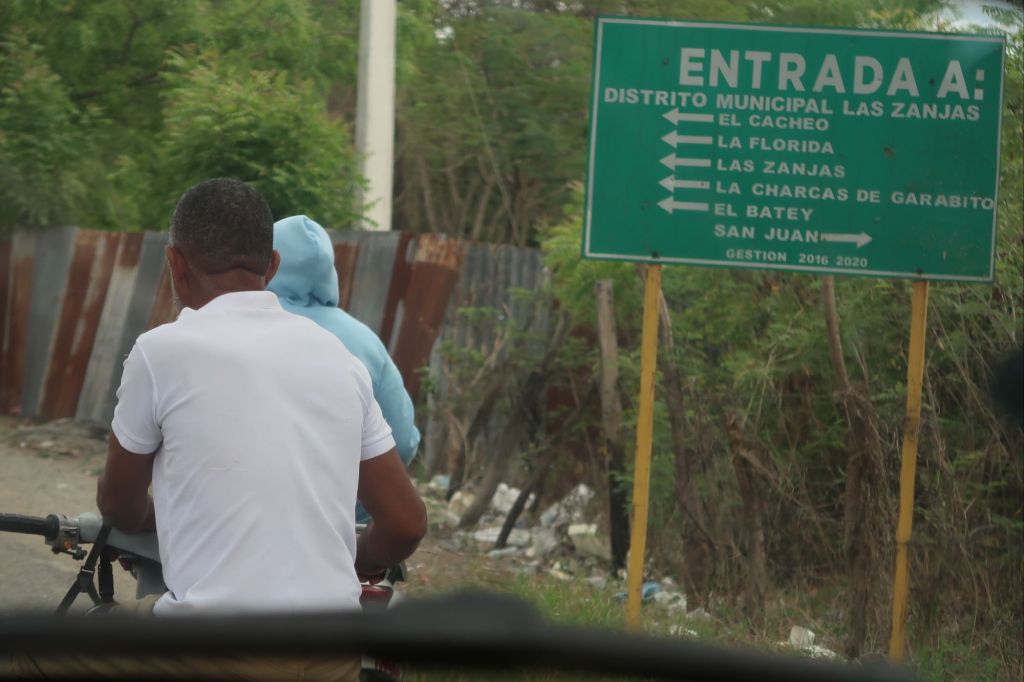
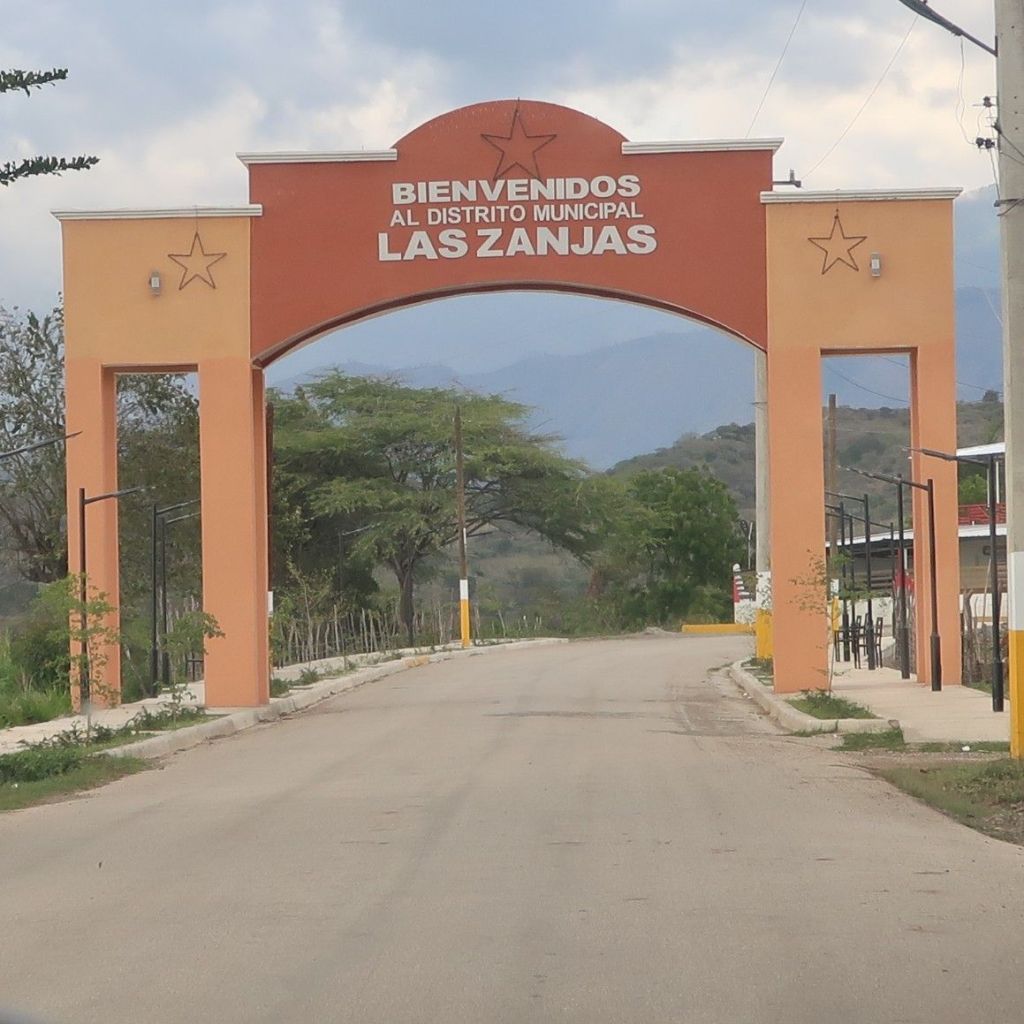
We pass under the arch and it appropriately wishes us “Bien Viaje” – ‘Have a good trip’ as we say good-bye again to Las Zanjas and prepare to leave this coutry in less than two days – and yes, it has been a very good trip.

 Siri and David Adventures