May 21, 2026 – Smithers to Prince Rupert, BC, Canada
First Nations have a strong prescence in Canada. My sister, Cecilia, who travels and works in Canada told me this and now I can experience it first hand. We see this in the signs which are first in the local langage and then in English, in the artwork and in stores, and in the Khutzeymateen Grizzly Sanctuary where we are headed tomorrow, the land is being managed by the First Nations.
Our eco-guide, Tim Irwin a Canadian from Montreal, reminds us that the First Nations have been on these lands for over 9,000 years, or 700 generations. This is not uninhabited – as is often said about these natural areas. Nor is it pristine – it has been extracted for gold, lumber and salmon. But to the newcomer like me it looks like the land is starting to heal as the landscape is dense with healthy looking forests. It is a story of reslience of the land and the people.
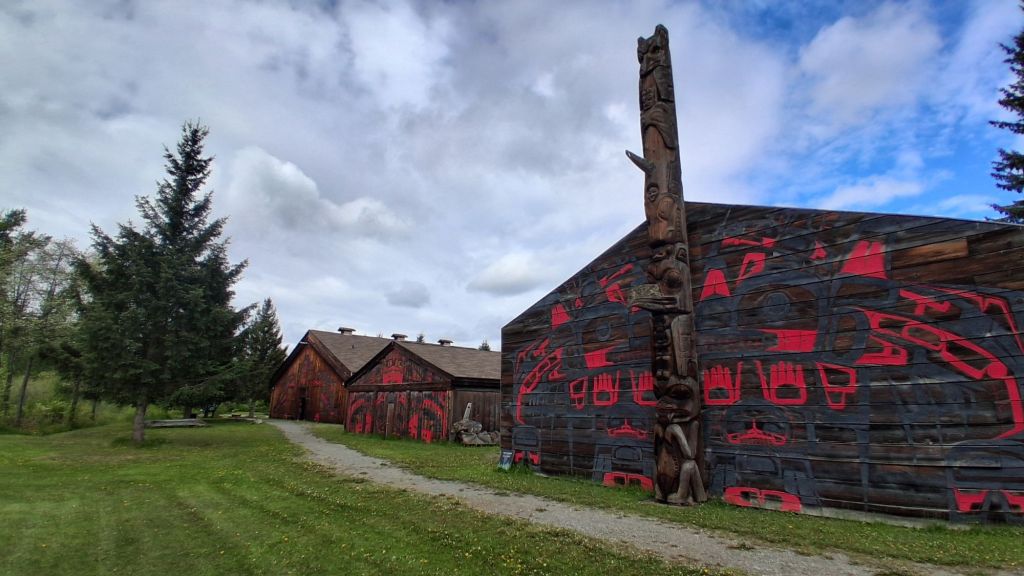
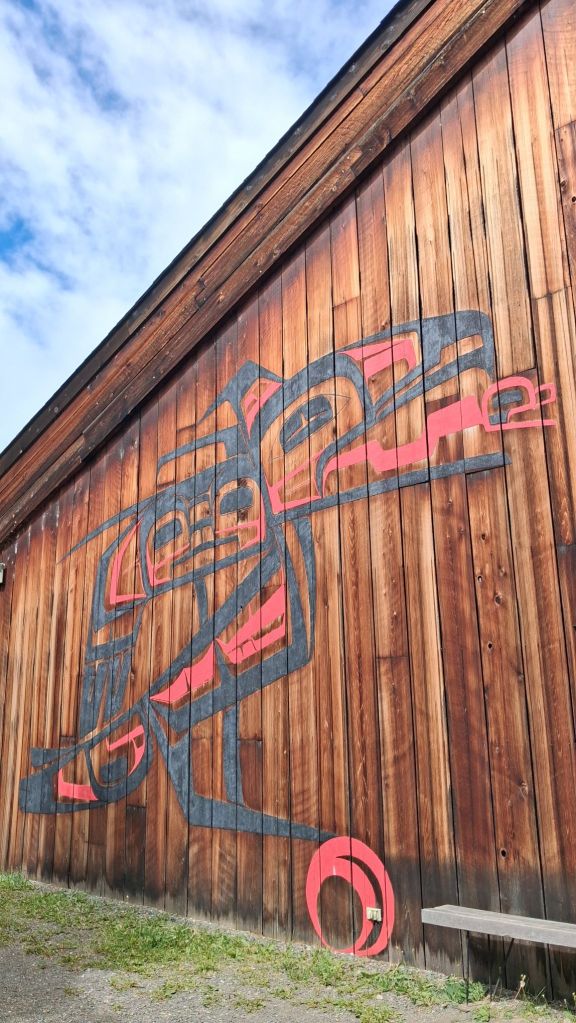
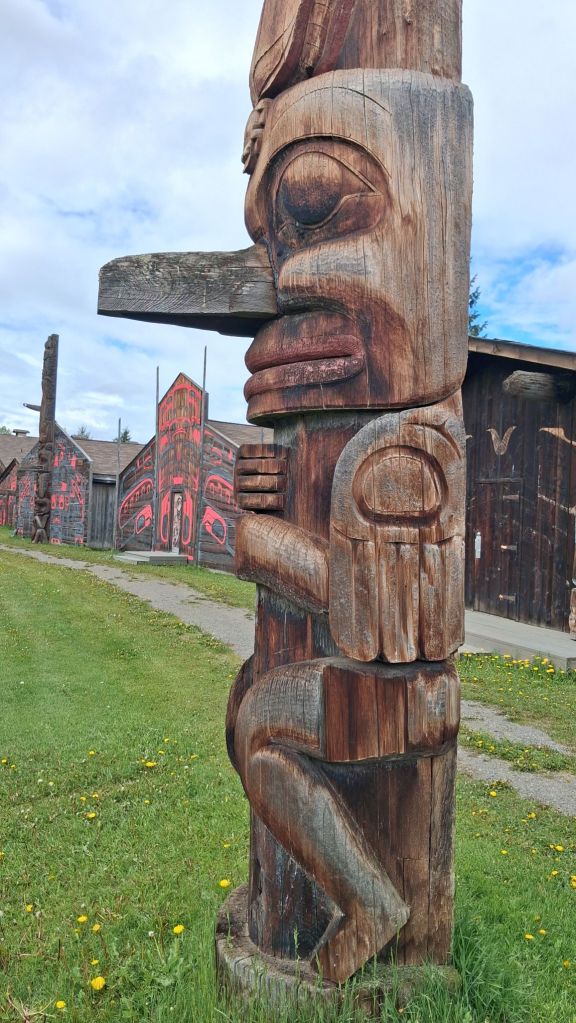
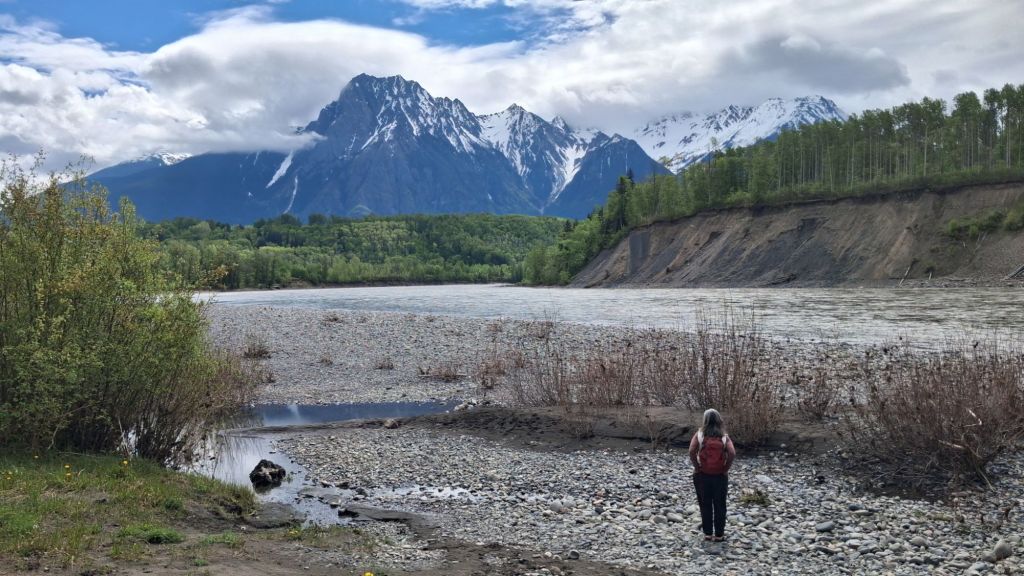
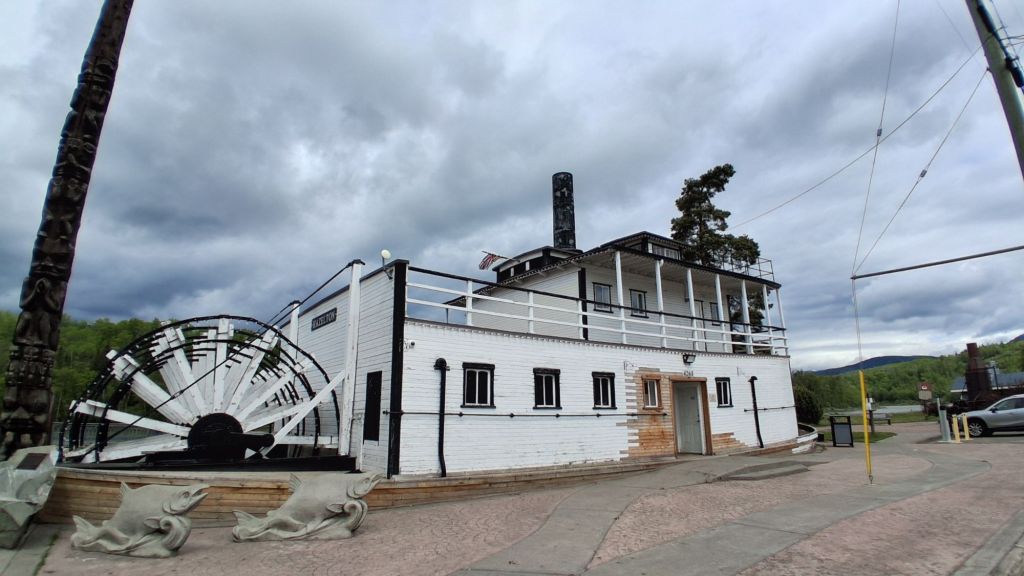
Today we visit the historical village of the ‘Ksan tribe on the Skeena river in Hazelton. There are six traditional long houses built in the 1970’s that are now used for their museum and to help introduce people to their history.
Our guide is a tribal member that grew up in Vancouver and who has returned to reconnect with his tribe and clan. He walks us through the buildings, telling us stories of daily life of fishing in the summers and winters spent inside these longhouses weaving, carving and other crafts. Each time we enter a longhouse, we enjoy the smell of the cedar and the smoke from past fires. He talks about life pre and post contact and how their traditions adapted over time. Our guide’s uncle is a famous carver with commissioned work in the Vancouver airport and one of his smaller intricately carved cedar plates is on display here. We hear about the rituals around the clan gatherings that used to go on for days. They are now compressed to a very long evening, but there are still rituals for the hosting clan, the observers, the elders and the invited clans. We see carved talking sticks used by the elected chiefs. We hear how it is a matriachal society and how clans are passed down through the mother. It feels less of history museum and more of a family reunion.
We finish our tour talking to an older guide who tells us of an historic canoe ceremony in 1994 that brought over 3,000 people from first nation tribes together on the west coast of BC. It was intended to help the tribes reclaim their own stories and place. Thirty years later, these canoe ceremonies are still taking place.
I liked this saying from the first longhouse thst reminds us that the people of this land are still very much here and still part of this land and culture.
“We are a new people
We are an old people
We are the same people
Deeper than before”